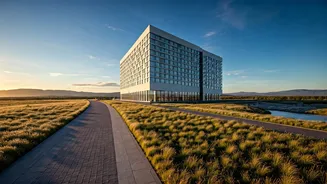








Bavarian Barn Aesthetic
Nestled beside Lake Chiemsee, with unobstructed views of the majestic Alps, the Chiemgauhof Lakeside Retreat embraces a design philosophy of visual harmony
with its natural setting. Its architecture is thoughtfully inspired by the unadorned forms and straightforward construction of traditional Bavarian barns. As dusk settles, a subtle illumination transforms the structure, making it glow like a gentle lantern beside the tranquil water. Inside, a sophisticated blend of natural stone, warm timber, and a minimalist aesthetic with Japanese influences creates a serene ambiance. Every finishing touch was developed in close collaboration with skilled local artisans, ensuring authenticity. Expansive windows are strategically placed to frame the ever-shifting landscape, capturing the delicate morning mist over the lake and the dramatic snow-capped peaks of winter. The lighting scheme itself was meticulously planned to minimize light pollution, thereby safeguarding the pristine natural environment that surrounds the retreat.
Mediterranean Coastal Charm
Situated directly on the rugged coastline of Le Lavandou, overlooking the shimmering Mediterranean Sea, Les Roches originally opened its doors in the 1930s. Architect Jean-Baptiste Pietri has masterfully reimagined the hotel, employing materials such as Bormes stone, reinforced concrete, and sleek metal footbridges, complemented by discreet stairways, to foster a more fluid and integrated relationship with the rocky seaside environment. For decades, this establishment has been a magnet for artists, writers, and designers, with notable past guests including literary figure Jean Cocteau and fashion icon Christian Dior, alongside Hollywood legends Humphrey Bogart and Lauren Bacall. This rich creative legacy is vibrantly alive today, showcased through a collection of contemporary artworks and installations thoughtfully placed throughout the property, from the welcoming lobby to the elevated rooftop garden. The building's design incorporates thick walls, carefully positioned openings, and precisely framed sea vistas, all contributing to heat reduction and maximizing natural shade within its walls.
Jungle Canopy Hideaway
Deep within the lush, verdant expanse of Tulum's Riviera Maya, Naboa eschews the conventional resort model by distributing numerous smaller structures discreetly amidst the jungle's dense foliage. The architectural layout draws inspiration from the organic patterns of historical Mayan settlements, featuring inviting shaded courtyards, open-air walkways, and distinct buildings interconnected by the surrounding natural vegetation. Remarkably, approximately 60 percent of the site's original flora was meticulously preserved during the construction process, resulting in pathways that often meander directly through the thick tropical growth. Ground-floor suites offer an almost seamless transition to the forest, even incorporating bathrooms enveloped by greenery, while rooms on upper levels provide panoramic views over the expansive canopy. The strategic use of timber pergolas and permeable communal spaces intentionally blurs the boundaries between indoor and outdoor living.
Desert Fortress Redefined
Constructed from compacted earth on the periphery of Morocco's Agafay Desert, Kasbah d'If is envisioned as a modern interpretation of a classic southern Moroccan kasbah. Its fortress-like structure is defined by substantial walls, distinctive corner towers, and intricately carved Amazigh motifs. The raw-earth construction method inherently provides efficient temperature and humidity regulation throughout the building. A significant emphasis was placed on revitalizing historical construction techniques and fostering collaboration with local craftspeople, particularly during the property's recent restoration and expansion phases. To meticulously control the ingress of light and heat, openings are intentionally kept narrow, thereby cultivating cool, shaded interiors that stand in stark contrast to the arid desert landscape beyond.
Tbilisi's Urban Oasis
Formerly a Soviet communications hub, The Telegraph hotel in Tbilisi has been dramatically transformed into one of the city's most architecturally daring accommodations, while skillfully preserving much of its original edifice. Majestic atriums, ornate coffered ceilings, and imposing facades remain intact, with new architectural elements artfully reinterpreting the building as a compact urban environment. Its corridors are designed to evoke the narrow, winding alleyways characteristic of Tbilisi, and communal balconies draw inspiration from the distinctive residential architecture found in Georgia's older apartment blocks. Restaurants, bars, a library, and various shared public areas all open onto a central courtyard, conceived to function as a vibrant urban square. The overall impression is less of a conventional hotel and more of a microcosm of the city itself.
Adriatic Seafront Serenity
Perched majestically above the Adriatic Sea, directly opposite Dubrovnik's historic old town, Villa Dubrovnik was initially conceived in 1961. It has since undergone a significant redesign by Studio Arthur Casas, whose work emphasizes understated elegance. The interiors eschew excessive ornamentation, favoring materials like limestone, oak, and stucco, paired with muted, natural color palettes that echo the surrounding coastline. Subtle details thoughtfully connect the property to authentic Croatian craftsmanship, such as the intricately perforated wardrobe panels inspired by traditional lacework. The hotel's prime location directly on the water ensures a constant presence of the sea, whether through expansive open terraces, uninterrupted vistas, or the soothing sound of waves moving beneath the structure. Rather than competing with Dubrovnik's rich historical context, the redesign intentionally recedes, allowing the breathtaking natural landscape to take center stage.
Matriarchal Lakeside Views
High above the serene Lugu Lake in Sichuan, The Arcadia Place is uniquely situated adjacent to two ancient Mosuo villages, remnants of one of the world's last surviving matriarchal societies. The hotel's architecture features graceful curved lines that emulate the surrounding mountain silhouettes, while floor-to-ceiling windows and open terraces ensure the breathtaking landscape remains perpetually in view. The interior design draws heavily from the lake itself, incorporating jade-toned bathtubs, handcrafted ceramics, and subdued color schemes that reflect the water's ever-changing hues. The atmosphere undergoes a dramatic transformation with the seasons, from mist-laden winters to vibrant summers bursting with wildflowers. An infinity pool, aptly nicknamed the 'Eye of the Sky,' offers unparalleled vistas of the lake and the surrounding peaks.
Historic Hangzhou Elegance
Positioned along Hangzhou's UNESCO-listed West Lake, The Silk Lakehouse has been thoughtfully redesigned to evoke the ambiance of a historic Jiangnan merchant's residence rather than a conventional hotel. Portions of the original structure were deliberately omitted to preserve the integrity of the lake's skyline and its timeless atmosphere, ensuring the surrounding landscape remains the focal point. The interiors artfully fuse Chinese design elements with European decorative influences, showcased through lustrous lacquered woods, striking textiles, and sumptuously layered furnishings. Large, framed openings are strategically placed to offer captivating views of the lake from nearly every vantage point. The overall mood is one of intimate, residential comfort, deliberately avoiding overt formality, resulting in a hotel deeply connected to Hangzhou's enduring legacy of silk production, poetry, and masterful landscape design.
Rock-Hewn Desert Hideaway
Concealed within the ancient rock formations of the Hijaz Mountains, Desert Rock was conceived to be almost absorbed by its environment rather than imposed upon it. Villas and suites are ingeniously integrated into caves, cliff faces, and rocky outcrops, capitalizing on naturally cooler microclimates and significantly reducing exposure to the harsh desert sun. During daylight hours, the majority of the resort visually merges with the mountainside, only gradually revealing itself after sunset through a subtly dispersed lighting scheme across the rock faces. The interiors, curated by Studio Paolo Ferrari, embrace a sculptural minimalism, employing textured stone, strategic shadow play, and carefully managed light to mirror the nuances of the surrounding terrain.
Prague's Cubist Revival
Housed within a restored Neo-Renaissance building dating back to 1884, Sir Prague skillfully blends the city's rich historical architecture with interiors inspired by Czech Cubism. Original features, including the classic timber parquet flooring, ornate iron railings, and a striking sculptural staircase, are preserved throughout the property. These elements are juxtaposed with vintage furniture and angular silhouettes, introducing a sharp, contemporary contrast. The hotel's location, in close proximity to Prague's National Theatre and Frank Gehry's iconic Dancing House, places it directly within one of the city's most architecturally diverse districts. Subtle nods to Princess Libuše, the mythical founder of Prague, are woven throughout the interiors, imbuing the property with a slightly surreal atmosphere that distinguishes it from the city's more traditional luxury establishments.
Parisian Cultural Hub
Located in the Batignolles district of Paris, La Fondation ingeniously integrates hotel accommodations with restaurants, wellness facilities, exhibition spaces, and verdant hanging gardens all under one roof. Designed by PCA-Stream, the building masterfully balances its robust mineral structure with numerous planted terraces, living green walls, and secluded courtyards, all contributing to a softened and inviting atmosphere throughout the property. The interior design, envisioned by Roman and Williams, emphasizes tactile materials, sculptural detailing, and subdued lighting, lending the hotel a more residential feel compared to many conventional Parisian luxury destinations. This ambitious project was conceived not merely as a hotel but as a dynamic cultural hub, featuring curated programming and social spaces designed to actively engage both local residents and visiting guests within the building's unique ecosystem.