



Embracing the Blooms
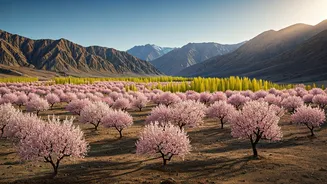
Ladakh transforms into a painter's canvas from late March to April, blanketed in the delicate 'Chuli Mentok,' or apricot blossoms. These pale pink and
white flowers herald the end of harsh winters and the start of the agricultural cycle for locals, symbolizing renewal and hope. Unlike many trees, apricots bloom before their leaves emerge, creating a striking visual against Ladakh's rugged, rocky terrain and snow-capped peaks. The ephemeral nature of these blossoms, each region flowering for a short period, makes witnessing them a truly special event. Their arrival is deeply intertwined with local culture, marking a time of revival for both the land and its people, and offering a prelude to the apricot harvest that follows later in the summer.
Blossom Trails & Polo
Immerse yourself in the apricot blossoms through curated experiences that highlight the season's charm. The Apricot Blossom Trail in Sham Valley offers a serene, slow walk through ancient orchards where trees grow close, forming continuous carpets of flowers. Here, you can relax on traditional carpets, sip tea brewed from apricot petals, sketch the scenery, or simply soak in the tranquility. For a more dynamic experience, head to Turtuk's Shagaran polo ground, where local matches unfold beneath blooming apricot trees, weaving the flowers into the very fabric of the game. These community-led events are a vibrant display of Balti traditions, offering an informal yet captivating spectacle of sport and nature intertwined.
Top Stays Amidst Orchards
For an unforgettable stay during the apricot blossom season, several unique accommodations place you directly amidst the beauty. Dolkhar, set around an apricot orchard, offers villas with views of blooming trees, with activities ranging from orchard lunches to exploring apricot blossom trails. In Stok village, Chulli Bagh Villas provides an intimate experience with just three villas nestled in an orchard, where tables at their Willow Kitchen are set under flowering trees. Nimmu House, near Leh, features heritage rooms and glamping tents within apricot orchards, ideal for exploring nearby villages. Apricot Heaven Homestay in Aryan Valley offers a truly local experience with guided walks through blooming fields and traditional meals. Finally, Lchang Nang Retreat in Nubra Valley provides guided walks, outdoor meals, wellness treatments incorporating apricots, and stargazing amidst blossoming trees.
Culinary Delights & Souvenirs
Ladakh's culinary scene embraces the apricot blossom season with creative dishes and delightful souvenirs. Restaurants like Tsas by Dolkhar offer apricot-infused cocktails and desserts, while Balti Kitchen in Turtuk serves farm-to-table vegan meals featuring apricot products. Local eateries in Leh's Main Market, such as Chimath’s Kitchen and Solja Café, offer apricot lassis, teas, and crumbles. For authentic experiences, Alchi Kitchen presents traditional Ladakhi dishes with apricot kernel oil, and HAHA Japanese Bakery offers apricot marble cake. When it comes to souvenirs, look for locally made apricot products like dried apricots, jams, kernel oil, wine, and lip balms. The highly prized Raktse Karpo and Halman apricot varieties are exceptional choices, representing the unique sweetness and cultural significance of this fruit.
Timing Your Visit
To best witness the apricot blossoms, timing your visit is crucial. While the season generally spans from late March to April, bloom timings can vary slightly across regions. This year, western parts of Ladakh saw early blooms, with eastern regions following. Currently, the peak bloom is expected to hold for a few more weeks, especially in Kargil and Nubra. Villages like Karkitchoo and Hardas in the Kargil belt are experiencing full blooms with fewer crowds. Turtuk, Tyakshi, and Tegar in Nubra Valley are predicted to be in full bloom for about another week. While some areas in Sham Valley are already past their peak, late mornings to late afternoons (11 am to 5 pm) generally offer the clearest visibility and easiest exploration, with early mornings and evenings being colder and more susceptible to wind.