
Monsoon Dependency Resolved
The shift towards solar irrigation was a defining moment for the Jharkhand farmer. Previously, she depended entirely on the monsoon season, making her
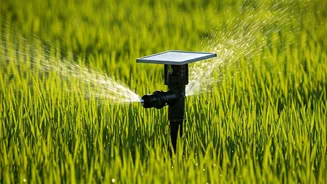
farming activities extremely unreliable and challenging. The erratic rainfall patterns frequently led to crop failures and financial instability. This dependence left her vulnerable, limiting her capacity to plan and manage her farming operations effectively. The introduction of solar-powered irrigation altered this fundamental constraint, granting her control over her water supply and mitigating the risks associated with uncertain weather conditions. This switch was not merely a technological upgrade; it represented a strategic move towards a more sustainable and prosperous farming model, reducing her reliance on environmental uncertainties.
Solar Power Revolutionized Farming
Implementing solar irrigation marked a dramatic transformation in her farming practices. With solar power, the farmer could now draw water from underground sources, allowing her to irrigate her fields regardless of the monsoon's behavior. This new irrigation system facilitated more consistent and reliable agricultural yields. Consequently, she was able to cultivate a diverse array of crops, which expanded her output. This advancement allowed her to optimize her planting and harvesting cycles, thereby boosting the overall productivity of her farm. Solar irrigation not only resolved water scarcity but also empowered her to enhance her farm’s efficiency and profitability, setting a new standard for sustainable agriculture within the region.
Income Surged, Opportunities Multiplied
The move to solar irrigation brought about a considerable improvement in her annual income. Previously constrained by the limitations of relying on rainfall, she now had the means to increase her crop yields substantially. This resulted in an increased supply of produce for the market, enabling her to secure greater revenues from her agricultural efforts. Ultimately, she was able to generate approximately Rs 3 lakh per year, which was a substantial enhancement over her previous earnings. This boost in income provided her with financial stability and new prospects, enabling her to reinvest in her farm, improve her standard of living, and potentially invest in further initiatives that could contribute to the expansion of her business.
A Role Model Emerged
Her success story has made her a prominent figure within her community. She became a source of inspiration for other farmers, who began to explore the advantages of solar-powered irrigation. Her journey demonstrates the potential for technology to solve important agricultural challenges, inspiring more individuals to embrace sustainable and climate-resilient farming techniques. This ripple effect encourages a shift towards a more resilient and prosperous agricultural sector. Her ability to navigate hurdles, paired with her triumph, positions her as an excellent example of innovation in rural India and a beacon for others keen on improving their farming practices.
Sustainable Farming's Future
The success of this Jharkhand farmer using solar irrigation showcases a hopeful vision for the future of farming in India. Her experience demonstrates the effectiveness of integrating technology to counteract the challenges of climate change and fluctuating weather conditions. The rise of solar-powered irrigation symbolizes a move towards environmentally friendly and economically viable farming methods. This transition not only enhances the stability of agricultural practices but also advances the economic conditions of farmers, paving the way for a more sustainable and robust agricultural future in India. The model she developed underscores the importance of technological and sustainable solutions in promoting economic growth and ecological stewardship.