





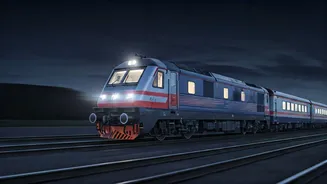

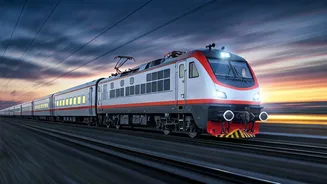
Railways Expansion Drive
Ramkrishna Forgings is making a substantial financial commitment, earmarking ₹2,000 crore for a brand-new manufacturing facility situated in Chennai. This
significant expansion is strategically designed to amplify the company's production capabilities, specifically to meet the escalating demand originating from the Indian Railways. By channeling resources into this new plant, the company intends to solidify its market presence within the critical railway component sector. This initiative aligns perfectly with the government's overarching emphasis on enhancing national infrastructure, positioning Ramkrishna Forgings to not only serve domestic needs but also to potentially tap into global markets. The operationalization of this plant is a key step in their broader strategy to diversify beyond their traditional automotive focus and establish a stronger foothold in high-growth industrial segments, ensuring long-term revenue streams and market leadership.
Joint Venture Powerhouse
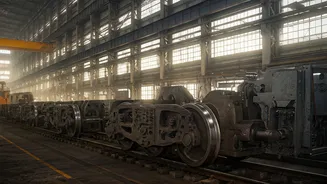
A pivotal development in this expansion is the formation of a joint venture with Titagarh Rail Systems, a collaboration that has led to the establishment of Asia’s second-largest forged wheels manufacturing plant in Chennai. This state-of-the-art facility boasts an impressive annual production capacity of 228,000 wheels. The joint venture has already secured a substantial ₹12,227-crore contract from the Ministry of Railways, committing to deliver 15.4 lakh wheels over a twenty-year period. Ramkrishna Forgings holds a commanding 51% stake in this venture, acting as the lead partner, which underscores their significant investment and strategic direction in the railway sector. This partnership leverages combined expertise to tackle large-scale railway projects and reinforces the company's commitment to becoming a major player in India's rail infrastructure development.
Global Market Reach
The newly commissioned Chennai plant is poised to become a significant contributor to both domestic and international markets. Company officials indicate that approximately 60-70% of the plant's production capacity will be dedicated to serving the Indian market, catering to the extensive needs of Indian Railways as well as supplying components for Titagarh Rail Systems' own metro projects. The remaining 30% of the output is slated for export, targeting manufacturers in North America and Europe. This export-oriented strategy is particularly noteworthy given the limited number of global players in this specialized segment – merely five or six companies worldwide. The company is capitalizing on a global trend where clients are actively seeking to diversify their supply chains away from China, presenting a substantial market opportunity for Indian manufacturers like Ramkrishna Forgings to establish a strong international presence.
Ambitious Revenue Goals
The Chennai project is instrumental in Ramkrishna Forgings' overarching ambition to dramatically scale its operations, with a target of processing one million tonnes of metal annually across both forging and casting by the year 2030, and a revenue goal of ₹10,000 crore. Currently, the company processes approximately 375,000 tonnes per annum; the Chennai plant alone will add an additional 220,000 tonnes to this capacity. Furthermore, the company has outlined plans to increase its total processing capacity to 750,000 tonnes within the next two years, with the eventual aim of reaching the one-million-tonne milestone thereafter. This planned capacity expansion is directly linked to their strategic diversification into non-automotive sectors, aiming to balance their revenue streams and ensure sustained growth in the coming years.
Diversification Strategy
Ramkrishna Forgings is actively pursuing a robust diversification strategy, aiming to reduce its reliance on the automotive sector and expand into several high-potential industrial segments. While the company reported a standalone revenue of ₹2,677 crore in the first nine months of FY26, with automotive contributing 74% and railways a mere 7%, this is set to change. The company projects that within the next two years, automotive's share will decrease to 65-70%, while railways will significantly increase its contribution to 10-15%. The remainder will be drawn from emerging sectors such as oil & gas, power, and off-highway applications, including mining, construction, and farm equipment. Within the automotive domain itself, the Commercial Vehicle (CV) segment is expected to remain the primary revenue generator, accounting for 60% of the auto segment's income, followed by passenger vehicles (30-35%) and two-wheelers (around 5%).