




The Hygroscopic Power of Salt
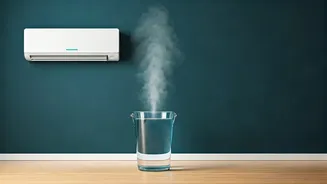
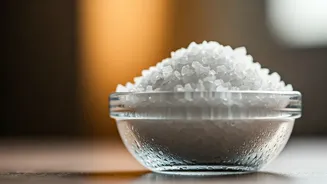
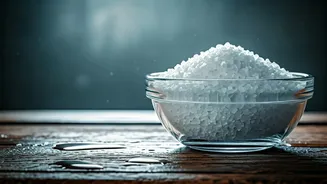
In a world increasingly reliant on technology, a remarkably simple home remedy for dampness is making waves again: placing a bowl of salt in humid areas.
This age-old trick, often championed by resourceful individuals, relies on the inherent scientific property of salt, specifically sodium chloride. When exposed to moisture-laden air, salt exhibits hygroscopicity, a characteristic that allows it to attract and absorb water vapor from its surroundings. This natural phenomenon explains why a bowl of coarse salt, left in a damp room like a bathroom or basement, will visibly change over time, becoming clumpy, hardening, or even appearing wet. This physical transformation is a direct indicator of the salt actively drawing moisture out of the air, underscoring that this isn't merely anecdotal belief but a principle grounded in chemistry. The science confirms that salt doesn't passively exist; it actively engages with its environment by capturing airborne water molecules, a process that can even lead to the salt dissolving into a liquid brine as humidity levels rise.
Salt's Moisture Amplification
Beyond simply absorbing water, salt demonstrates an intriguing ability to enhance the moisture-capturing capabilities of materials it interacts with. Scientific studies have indicated that salt can significantly increase a material's capacity to hold onto moisture, particularly in environments with elevated humidity. This means that in damp spaces, such as basements prone to moisture buildup or during the notoriously humid monsoon seasons, the presence of salt can amplify the overall moisture absorption. This reinforcing effect is a key reason why the salt bowl hack shows noticeable results in areas where dampness is a persistent issue. The principle is similar to how salt might be used to preserve certain items by drawing out moisture, but here, it's applied to the air itself, making the surrounding environment drier by facilitating the removal of water vapor.
From Home Hack to High-Tech
The same scientific principle that underpins the simple bowl of salt hack is being harnessed in sophisticated, cutting-edge environmental technologies. Researchers are leveraging salt-based materials for advanced water harvesting systems, especially in arid regions. These systems utilize the inherent property of salt to bind with water molecules within its crystal lattice, a process that determines its adsorption capacity. Essentially, scientists are employing salt to literally extract water from the air on a large scale, mirroring the micro-scale action observed in a home remedy. This connection highlights that the viral dampness hack is not just a quaint domestic trick but is rooted in fundamental scientific processes with significant real-world applications, demonstrating a shared mechanism between a basic household solution and advanced technological innovations designed to address water scarcity.
Effectiveness and Limitations
While the viral salt bowl method offers a visible and cost-effective way to manage dampness, it's important to understand its limitations. This hack can indeed absorb minor amounts of excess moisture, contribute to reducing unpleasant musty odors, and subtly enhance comfort in enclosed spaces. However, it is crucial to recognize that a bowl of salt is not a comprehensive solution for serious dampness issues. It cannot replace essential interventions like proper ventilation, the use of electric dehumidifiers, or addressing underlying structural problems that contribute to dampness in a home. Therefore, the salt bowl should be viewed as a supplementary, passive aid rather than a complete fix. Its popularity stems from its appeal: zero electricity, no chemicals, minimal cost, and a visible indicator of its function through the salt's transformation, making it an attractive option for those seeking simple, sustainable, and accessible home solutions.