




The Majestic Rhinoceros
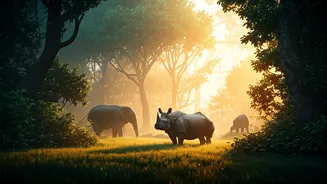
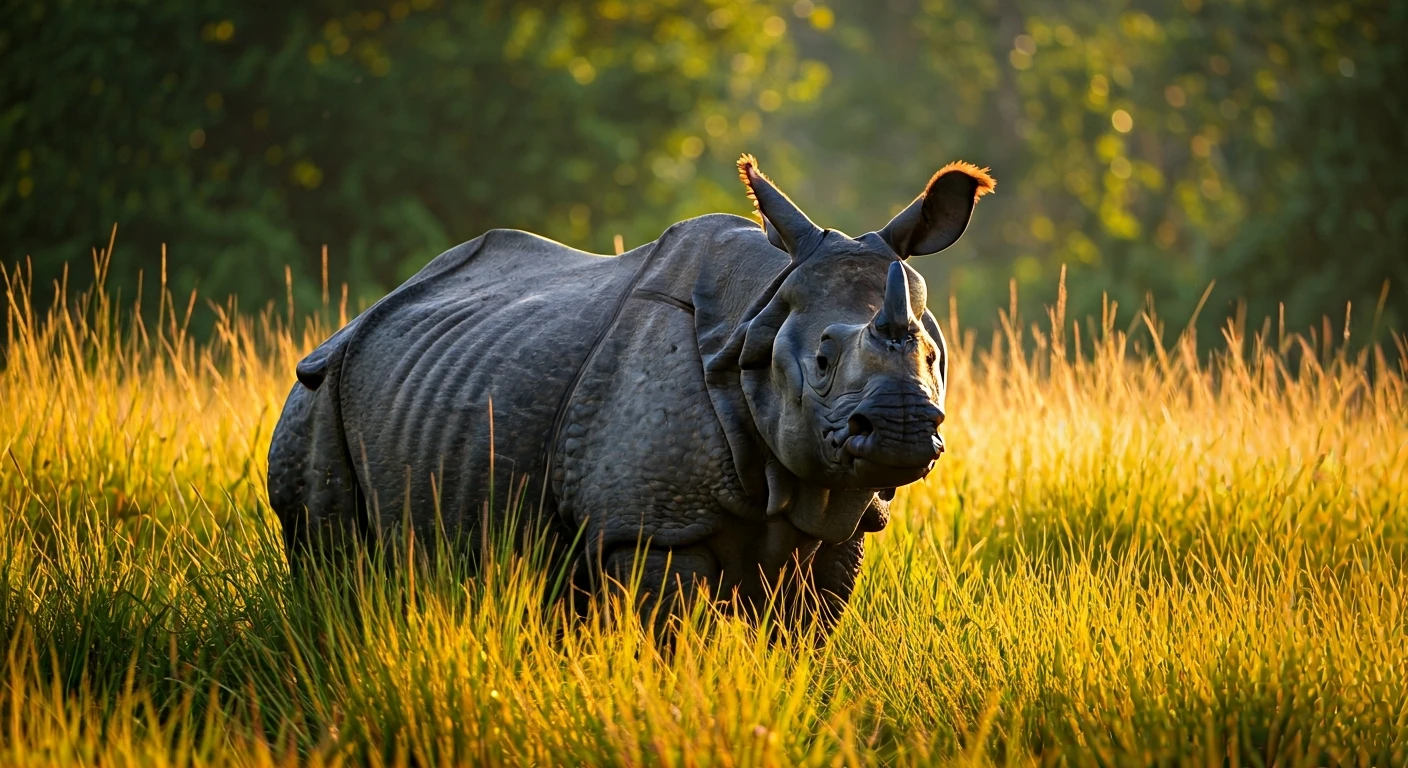
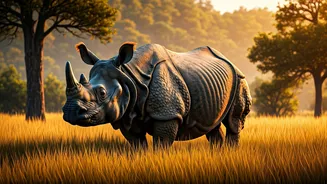
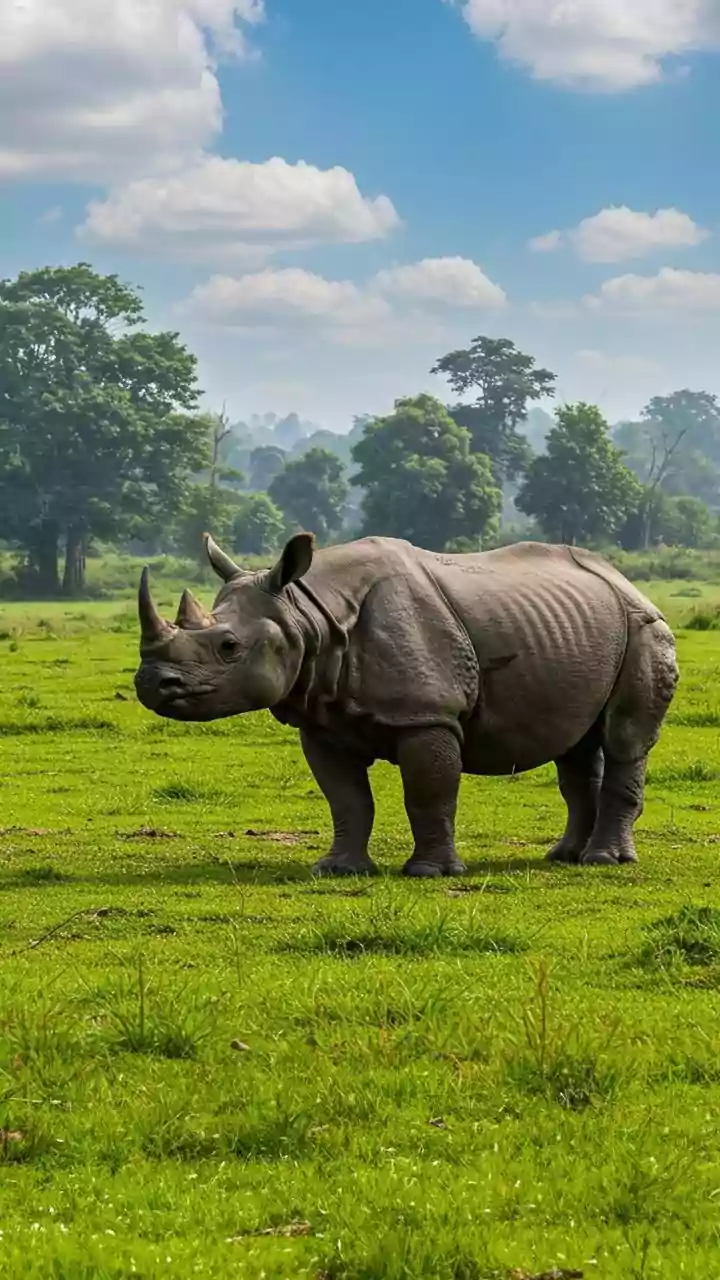
Kaziranga National Park proudly shelters the world's largest population of the Indian one-horned rhinoceros, a magnificent herbivore that was once critically
endangered. These powerful creatures, often found grazing in the park's vast grasslands or near tranquil water bodies, represent a significant conservation success story for Assam. Their presence is a testament to the dedicated efforts in protecting this species, making Kaziranga an essential sanctuary for their survival. Witnessing these robust animals in their natural habitat is an unforgettable experience, embodying the wild spirit of India.
Herds of Elephants
Another cornerstone of Kaziranga's wildlife is the Asian elephant. These intelligent giants frequently traverse the park's expansive grasslands and scattered wooded areas, forming impressive herds. The reserve plays a crucial role in supporting a substantial wild elephant population, underscoring their ecological importance. Through their grazing habits, they help shape the park's vegetation, and by dispersing seeds, they contribute to the regeneration of forest cover. Observing these majestic beings is a highlight for many visitors to Kaziranga.
Elusive Bengal Tigers
Kaziranga National Park boasts one of the highest densities of Bengal tigers found in any protected area across India. These apex predators, masters of stealth, inhabit the park's dense tall grass and forest interiors. While sightings are less frequent compared to the park's rhinos or elephants, Kaziranga's designation as a tiger reserve emphasizes its critical importance for the conservation of this iconic big cat. The thrill of a potential tiger sighting adds an element of profound anticipation to any safari experience.
Graceful Water Buffalo
The wild water buffalo, one of the planet's largest bovine species, is a common sight within the marshy environs of Kaziranga. The park safeguards one of the most significant remaining populations of this endangered animal, which thrives in the wetlands. Their presence is vital to the ecological balance of these aquatic habitats. Observing these powerful, dark-coated buffaloes wallowing in the mud or grazing near water sources provides a glimpse into a truly wild and untamed aspect of Kaziranga's biodiversity.
Swamp Deer's Realm
The eastern swamp deer, also known as Barasingha, flourishes within Kaziranga's unique wetland and grassland ecosystems. These graceful deer are easily recognized by their impressive, multi-tined antlers. They are frequently seen in open areas, peacefully grazing and browsing. The park's extensive wetlands provide the ideal environment for this subspecies, contributing to their healthy population. Their elegant movements across the landscape add a touch of serene beauty to the park's diverse wildlife tableau.
The Secretive Leopard
Though considerably more reclusive, the Indian leopard is another of Kaziranga's fascinating inhabitants. These adaptable felines tend to favor the forested regions of the park and are most active during the crepuscular hours of early morning and late evening. Consequently, spotting a leopard is a rare and special occurrence for visitors. Their elusive nature and keen camouflage make them masters of their environment, and a fleeting glimpse is a true privilege.
Common Hog Deer
Among the most commonly observed herbivores in Kaziranga is the hog deer. These smaller deer are distinguishable from their swamp deer cousins and prefer habitats characterized by tall grasses. They are frequently spotted near the park's numerous water bodies, where they graze. Their abundance makes them a reliable and charming sight for safari-goers, providing constant activity and a sense of the park's thriving herbivore population.
Intriguing Sloth Bears
The sloth bear is also a resident of Kaziranga, although encounters with these creatures are less frequent. These bears typically inhabit the denser forested sections of the park. Their diet is unique, consisting primarily of termites, ants, and a variety of fruits. Their shaggy appearance and specialized feeding habits make them an intriguing component of Kaziranga's rich biodiversity, adding another layer of discovery for keen wildlife enthusiasts.