






Self-Guided Martian Explorer
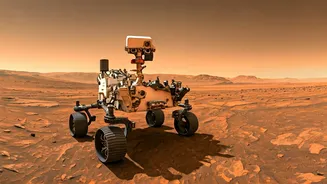
The Mars rover Perseverance has recently acquired a remarkable new capability: the ability to determine its precise location on the Martian surface without
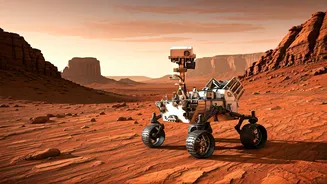
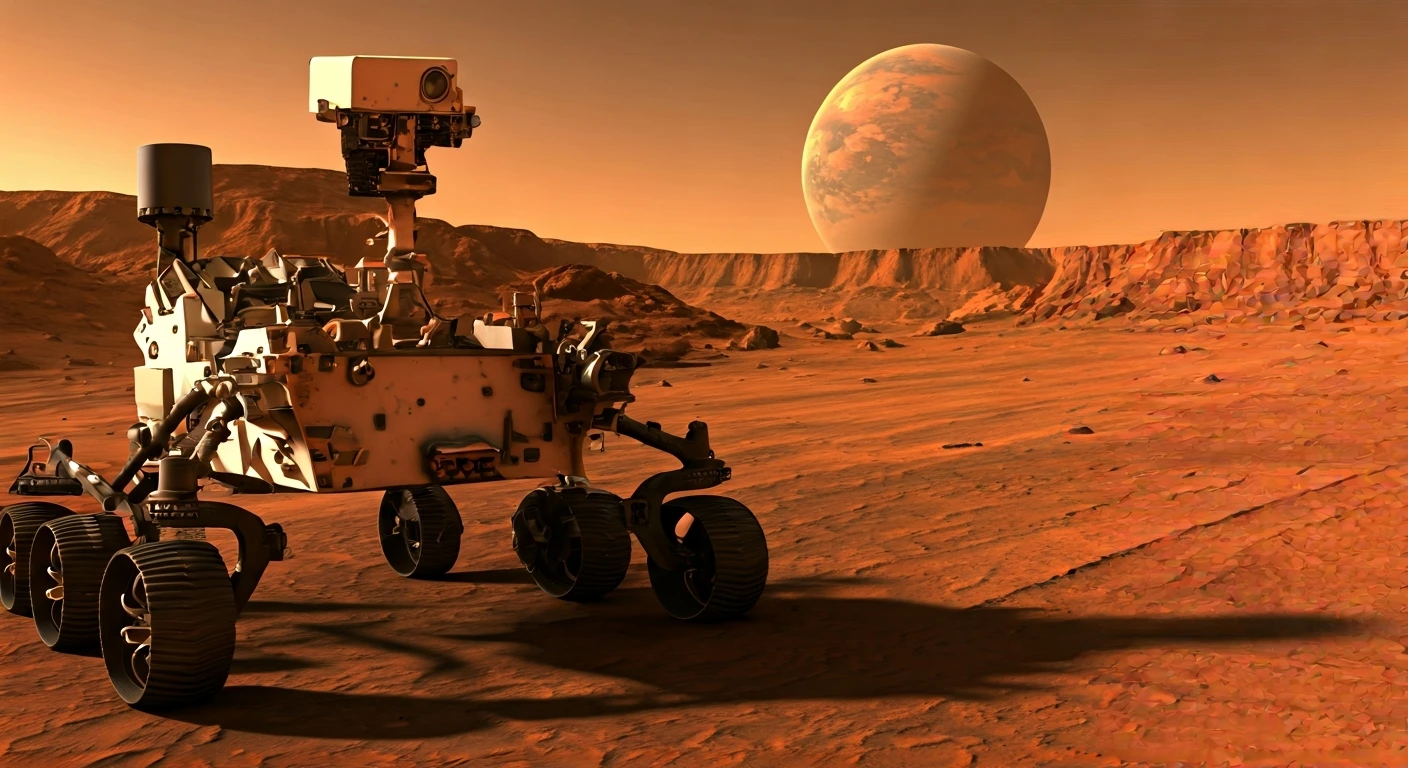
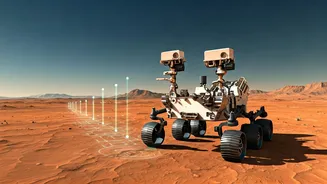
any reliance on GPS signals. This breakthrough is incredibly significant for upcoming missions that might venture into regions where Earth-based navigation signals simply cannot reach. The innovative system, which has been named "AutoNav," works by integrating data from the rover's onboard sensors with advanced computational processes to construct a detailed three-dimensional representation of the Martian landscape. By continuously comparing the information gathered by its sensors in real-time with its pre-existing digital map, Perseverance can accurately ascertain its current position and its orientation in space. This self-sufficiency empowers the rover to navigate autonomously, adeptly sidestepping obstacles and efficiently reaching its designated scientific objectives with a heightened degree of accuracy.
Beyond Earth's Reach
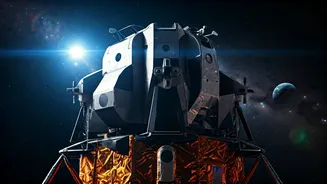
The autonomous navigation features of AutoNav are particularly vital for upcoming space exploration endeavors, including missions destined for the Moon and various other celestial bodies where traditional GPS infrastructure is entirely absent. This technological leap also unlocks exciting new avenues for more complex robotic operations on alien worlds. Imagine a future where multiple rovers can work together in a coordinated fashion, exploring vast territories, or where delicate scientific instruments can be strategically deployed in extremely remote and challenging locations. This advancement in self-localization is not just about getting from point A to point B; it’s about enabling bolder, more ambitious scientific undertakings across the cosmos. The ability to navigate without external signals is a fundamental requirement for establishing a more independent human and robotic presence beyond our home planet, ensuring that exploration can continue unhindered by geographical or signal limitations.
Pioneering Planetary Exploration
The successful development and implementation of the AutoNav system mark a monumental stride forward in the grand scheme of planetary exploration. It ushers in an era where we can investigate worlds like Mars and other distant bodies with a level of precision and autonomy that was previously unimaginable. This sophisticated navigation capability allows rovers to cover more ground, conduct more in-depth scientific analyses, and operate with greater confidence in unfamiliar territories. By minimizing the need for constant human intervention for navigation, scientists can focus more on interpreting data and planning scientific experiments. This increased efficiency and independence are crucial for accelerating our understanding of the universe and for paving the way for future human missions. The implications of this technology extend far beyond current missions, serving as a foundational element for the next generation of robotic and eventually human explorers in our solar system and beyond.