


A Royal Legacy
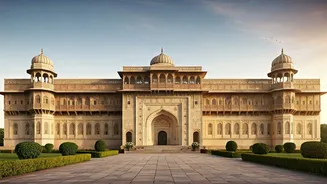
Originally a private hunting lodge for the Jaipur royal family, Maharaja's Lodge in Ranthambore transports guests back in time. Maharaja Man Singh II established
this sprawling estate in 1933, creating a space where royalty like Maharani Gayatri Devi and esteemed guests, including Queen Elizabeth II, once gathered. The lodge's design is deeply intertwined with this history, featuring a warm, wood-paneled lobby adorned with leather furnishings and striking taxidermy, most notably a full leopard preserved behind glass. The property's reception area was once the royal family's teakwood-clad dining hall, and the Sanctuary Lounge echoes the spaces where hunting companions convened. Even the luxurious two-bedroom Presidential Suite occupies the chambers where the royals themselves would retire. Black and white photographs showcasing the Maharaja, his family, and visiting dignitaries are prominently displayed, alongside 13 preserved trophy animals. While the taxidermy may evoke a different sensibility today, it serves as a poignant reminder of Ranthambore's past as a private royal hunting ground, where 'shikar' was a significant aspect of sport and power for the Jaipur royals. The property transitioned to IHCL in the 1980s, operating as the Sawai Madhopur Lodge before its rebranding under the Taj banner in early 2026. The lodge, comprising 39 keys, is spread across several low-rise, two-story buildings, with some structures dating back to its origins as a dak bungalow and former staff quarters, now thoughtfully integrated into the guest accommodation.
Culinary Delights
The dining experience at Maharaja's Lodge is a journey through diverse flavors, with the restaurant '1728' serving as a central hub. Named in honor of Maharaja Madho Singh's birth year, this establishment offers a comprehensive menu encompassing Italian, Chinese, and Continental cuisines. However, the true indulgence lies in its authentic Rajasthani thali, presented on a gleaming silver platter. This culinary snapshot of the region features iconic dishes such as lal maas (a spicy lamb curry), ker sangri (a tangy bean and berry preparation), dal bati churma (lentils with baked wheat balls and sweet crumble), papad mangodi (fritters), and gatte ki sabzi (gram flour dumplings in gravy). Guests also have the option to order any of these specialties individually. Among the house specials, the palak khara masala, prepared with spinach harvested from the lodge's own kitchen garden, and the charra aloo, featuring potatoes from the nearby town of Gangapur, are particularly noteworthy during winter. The safed maas is another highlight, prepared using a time-honored recipe inherited from the erstwhile royal family. Beyond these, the restaurant boasts an extensive selection of pan-Indian dishes, pizzas, pastas, and more. The outdoor dining venue, Neem Terrace (under development at the time of review), is set to feature kebabs along with Mediterranean and Continental fare. Dining here also offers a chance to connect with long-serving staff like Rajendra Singh, who can share captivating anecdotes about the lodge's past, including tales of 'jungli maas' prepared during hunts and his father's service as the maharaja’s personal chef during royal travels.
Signature Sips & Ambiance
The Camp bar at Maharaja's Lodge is more than just a place to enjoy a drink; it's a captivating space defined by a striking art installation of a Royal Bengal Tiger, its torso emerging from a dusty pink wall adorned with palm fronds. This powerful imagery is said to represent the 'last legal hunt from 1961,' a significant event associated with Queen Elizabeth II's hunting party. Complementing this unique ambiance, the beverage program, overseen by bar supervisor Praveen Singh Shekhawat, showcases an impressive array of spirits produced within Rajasthan. This includes renowned gins from Jodhpur and Jaisalmer, Godawan whisky, and three heritage liqueurs from Maharani Mahansar: Narangam (orange-flavored), Elaichi (cardamom-flavored), and Shahi Gulab (rose-flavored). These local spirits form the foundation of the lodge's signature cocktails, each thoughtfully crafted to evoke the spirit of the land and its history. Guests can savor creations like the 'Jaisalmer Negroni,' featuring Jaisalmer gin, or the 'Battle of Ranthambore,' which incorporates Narangam liqueur, Royal Ranthambore whiskey, cranberry and orange juices, and bitters. A tribute to one of Ranthambore's most famous tigers, 'Macchli,' the 'Lady of the Lake' cocktail is a creative rendition of the Pink Lady, made with Samsara pink gin, gulab liqueur, lime juice, and orange bitters, offering a sophisticated taste of the region's unique offerings.
The Wild Surroundings
The experience at Maharaja's Lodge is intrinsically linked to the stunning natural environment of Ranthambore, with days often revolving around exhilarating safari excursions. These adventures lead guests into the captivating dhok forest, a landscape characterized by rolling hills and deep ravines, dotted with perennial water bodies. Keep an eye out for mugger crocodiles basking on the banks and the elusive sloth bear foraging for termite mounds. The grasslands teem with diverse wildlife, including nilgai, sambhar, and chital. Naturally, the apex predators, the tigers, are a major draw, with individuals like Sultana, Noorie, Riddhi, and Siddhi frequently on visitor wishlists. Due to high demand, it's essential to book safari slots well in advance through the lodge. Beyond the big cats, Ranthambore is a paradise for birdwatchers. Back at the lodge, staff members like Praveen from the bar can assist in identifying local avian species such as hornbills, yellow-footed green pigeons, oriental magpie robins, sunbirds flitting among flowers, and parakeets congregating on the semal tree. For those venturing further afield, a visit to Palighat offers the opportunity to explore the National Chambal Gharial Sanctuary. A serene boat ride along the Chambal River, winding between grassy knolls, provides close encounters with the critically endangered gharial, a crocodile distinguished by its slender, pointed snout, a species quite distinct from the mugger that also inhabits these waters, often only revealing its eyes above the surface.