







Gluteus Maximus Power
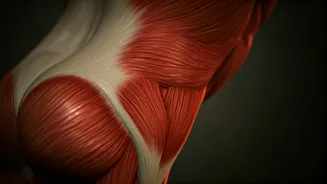
At the forefront of muscular might is the gluteus maximus, the most substantial of the gluteal muscles, defining the shape of our buttocks and hip region.
This robust muscle is instrumental in critical actions like rising from a seated position, ascending stairs, and extending the hip during locomotion, whether walking or sprinting. Its sheer size and formidable strength are indispensable for generating power in the lower body and maintaining an upright posture. This muscle is a cornerstone of our ability to move efficiently and powerfully, contributing significantly to our overall physical capability and stability throughout the day.
Quadriceps: Thigh's Engine
Dominating the anterior thigh, the quadriceps femoris is a substantial muscle group comprised of four distinct muscles: the rectus femoris, vastus lateralis, vastus intermedius, and vastus medialis. Collaboratively, these muscles are responsible for the vital action of extending the knee, a movement fundamental to a wide array of activities. They provide essential support for walking, running, squatting, and jumping, acting as a primary engine for lower body power and agility. This group is undeniably one of the most critical for strength and mobility, underpinning countless everyday movements and athletic endeavors with their considerable force.
Latissimus Dorsi's Reach
Extending across the majority of the lower back and reaching towards the upper arms, the latissimus dorsi is a broad, flat muscle with significant functional importance. Its primary role involves retracting, extending, and medially rotating the arm, movements essential for actions such as climbing, rowing, and lifting heavy objects. Beyond its contribution to limb movement, this muscle also plays a supportive role in forceful breathing, highlighting its multifaceted contribution to both locomotion and vital bodily functions. Its expansive nature and powerful pull make it a key player in upper body strength and movement dynamics.
Pectoralis Major's Push
Occupying the upper chest area, the pectoralis major stands out as the largest muscle of the anterior chest wall. This fan-shaped, powerful muscle is crucial for the intricate movements of the arm at the shoulder joint, enabling flexion, adduction, and internal rotation. It is indispensable for any activity involving pushing, lifting, or generating force with the upper body. Its prominent position and contribution to everyday tasks make it one of the most recognizable and functionally significant muscles in the chest region, essential for a wide range of upper body exertions.
Essential for Life
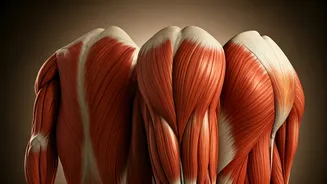
Collectively, these five titans of the muscular system—the gluteus maximus, quadriceps femoris, latissimus dorsi, and pectoralis major—are paramount for maintaining our body's equilibrium, facilitating movement, and ensuring overall strength. Their considerable size is not merely for aesthetics; it directly correlates with their indispensable roles in supporting posture, enabling balance, and executing fundamental actions like standing, walking, lifting, and pulling. These muscles are the workhorses that allow us to navigate our daily lives with stability and power, demonstrating the profound connection between muscular mass and functional capability.