






Market's Initial Reaction
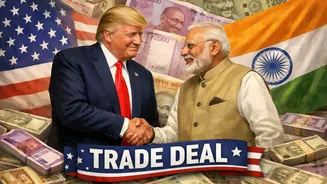
Following the positive development of the India-US trade agreement, both the Nifty and Sensex experienced a robust opening. The Nifty began trading at
a 2.7% higher point, while the Sensex saw an impressive surge of 2,400 points. This immediate positive response underscored the market's enthusiasm regarding the trade deal. Various sectors, including IT, auto-ancillary, and chemical stocks, were anticipated to benefit from the agreement. The initial surge reflected a strong positive sentiment from investors, encouraged by the prospects of enhanced trade relations and economic growth, although it was soon noted that this opening was not without potential risks.
Factors Behind the Surge
Multiple factors contributed to the significant rise in the Indian stock market. The primary catalyst was undoubtedly the India-US trade deal, which instilled confidence among investors. The boost from the deal sparked a rally. However, there were other important elements at play. The opening, while positive, also brought with it the awareness that heavy Foreign Institutional Investor (FII) short positions were in place. These positions, if the early gains held, had the potential to trigger sharp movements and also lead to possible short-covering spikes. The market's overall positioning was described as fragile, highlighting the potential for volatility in the near term.
STT and Valuations
While the market celebrated the trade deal, some industry experts offered a more measured perspective. Rajeev Thakkar, for example, highlighted that the trade deal and associated tariffs, would not necessarily alter the core valuations of the companies. This observation pointed toward the importance of considering the trade deal's impact in the broader context of existing market dynamics. Despite the initial euphoria, the underlying reality, and the impact of the Securities Transaction Tax (STT), continued to be significant factors in evaluating the sustainable strength of the market rally. The interplay between the initial positive sentiment and the more fundamental valuation considerations was key.
Volatility Ahead
Despite the initial gains, traders were bracing for volatility. The presence of heavy FII short positions was a key factor contributing to this caution. Should early gains sustain, the possibility of sharp moves, potentially triggered by short covering, was deemed high. Furthermore, the overall fragile positioning in the market amplified the potential for sudden fluctuations. This meant that while the initial reaction was positive, investors needed to remain vigilant and prepared for potentially significant price swings. The short-term performance would depend on how the market navigated these challenges.