


The Kitchen's Secret Weapon
In almost every seasoned home cook's refrigerator, you'll find a jar of something unassuming yet profoundly impactful: caramelised onions. This isn't a glamorous
ingredient, nor is it expensive to create, requiring only a couple of basic components. Yet, it's the magical element that rescues a lackluster dal, elevates a simple sandwich, adds instant depth to gravies, and provides a delightful accompaniment to Sunday morning eggs. These slow-cooked, jammy spheres of golden-brown goodness are a testament to the power of patient cooking, functioning as a culinary cheat code that can profoundly enhance a vast array of dishes. The process, demanding about an hour of largely hands-off attention, yields a flavour powerhouse that belies its simple origins.
Unlocking Onion Alchemy
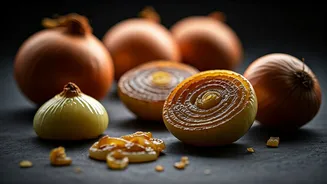
The transformation of a raw onion into its caramelised counterpart is a fascinating display of culinary chemistry. Raw onions possess sharp, pungent notes due to volatile sulfur compounds released when their cellular structure is disrupted. However, when subjected to gentle, prolonged heat, these sharp edges soften and evolve. The Maillard reaction, a complex process involving sugars and amino acids, initiates the creation of hundreds of new flavour molecules, imbuing the onions with a rich, savory profile. Simultaneously, the natural sugars within the onion begin to caramelise, lending them a deep golden-brown hue and a delightful sweetness. The once-irritating sulfur compounds break down into more pleasant aromatic compounds. The result is a texture akin to jam and a taste that is simultaneously sweet, savory, and brimming with umami – a world away from its raw state. Achieving this culinary alchemy requires patience, typically taking 45 minutes to an hour, a stark contrast to the often-misleadingly brief cooking times found in some online recipes.
A Global Embrace
Caramelised onions, known as 'beresta' in Bengali cuisine, have a long and storied history in Indian kitchens, forming the foundational flavour base for iconic dishes like biryani and korma. The Mughlai culinary tradition extensively uses a paste of browned onions to enrich its gravies, and the practice of 'pyaaz ka tadka' in curries is another manifestation of this caramelisation process. Both Indian and Western culinary traditions converge on the fundamental principles for creating this condiment: ample patience, low and consistent heat, and the use of a suitable pan. While Western cuisines often employ them as spreads for sandwiches and pasta, Indian cooking integrates them primarily to impart depth to gravies. This article proposes a harmonious approach: prepare a batch of caramelised onions, store them for convenient use, and then deploy this versatile condiment across an extensive spectrum of dishes.
The Foundational Recipe
This recipe serves as the essential starting point for unlocking the potential of caramelised onions. Prepare it once, store it properly, and then revel in its adaptability across a wide array of culinary applications. The quantities provided yield approximately one to one and a half cups of the golden condiment, which can be refrigerated in a sealed container for up to two weeks. For longer preservation, consider freezing them for up to three months, perhaps in ice cube trays for easy portioning. The key ingredients include 1 kg of yellow or brown onions, roughly six to eight medium-sized ones, sliced thinly and uniformly for even cooking. You'll also need 3 tablespoons of ghee, butter, or a neutral oil; ghee is particularly recommended for its superior flavour in Indian dishes, while butter offers a beautiful richness for other applications. Half a teaspoon of salt is crucial for drawing out moisture, and a teaspoon of sugar, though optional, can accelerate the caramelisation process. Finally, a tablespoon of balsamic or apple cider vinegar, added towards the end, provides a welcome touch of brightness to balance the sweetness.
Crafting the Caramelised Gem
Begin by peeling and thinly slicing your onions, ensuring uniformity for consistent cooking; a mandoline slicer is efficient, but a sharp knife works well too. In a wide, heavy-bottomed pan—a kadhai, a broad non-stick skillet, or a cast-iron pan are ideal for their surface area and heat retention—heat your chosen fat (ghee, butter, or oil) over medium heat. Add all the sliced onions at once; they will seem abundant but will significantly reduce in volume. Immediately sprinkle in the salt to kickstart the moisture release and softening process. Stir and cook, stirring every few minutes, for about 10 to 15 minutes until the onions soften and begin to release their liquid. Reduce the heat to medium-low; resisting the urge to increase the heat is vital to prevent burning and resultant bitterness. Continue cooking for another 30 to 40 minutes, stirring every five minutes and deglazing the pan with a splash of water if any bits stick to the bottom. You're looking for a deep, reddish-brown hue. If using sugar for enhanced caramelisation, stir it in during the final 10 minutes. For a touch of acidity, add the vinegar in the last 2 to 3 minutes of cooking. Allow the caramelised onions to cool completely before transferring them to a clean jar for refrigeration or portioning for freezing.
Indian Culinary Adaptations
The true brilliance of caramelised onions shines through their incorporation into diverse Indian dishes. For biryanis and pulaos, stir two to three tablespoons into the rice layers during assembly to impart the signature slow-cooked sweetness and depth, often achieved through laborious frying of 'beresta'. In any curry or sabzi, adding just one tablespoon to the onion-tomato masala base provides an immediate infusion of hours-worth of flavour, making quick dishes taste remarkably complex. This technique is particularly effective in hearty preparations like rajma and chole, or creamy gravies such as makhani and korma. Elevate your eggs by scrambling a spoonful into anda bhurji just before finishing, perhaps with a touch of green chilli and coriander for an extraordinary breakfast. Even a simple dal tadka benefits immensely from a tablespoon stirred in before the tempering, lending the lentil dish a satisfying body and sweetness. For stuffed breads like parathas, mix caramelised onions with grated paneer or mashed aloo for a filling that is both sweet and subtly spiced, offering a delightful contrast to traditional versions. Finally, a spoonful stirred into thick hung curd, seasoned with black pepper and salt, creates an elegant onion dip, a more sophisticated alternative to raita, perfect with rotis or as a vegetable dip.
Global Kitchen Applications
Beyond the Indian subcontinent, caramelised onions prove equally indispensable. Spread them on toast as a base for a fried egg, or layer them into sandwiches with cheese; grilled paneer is excellent, but even processed cheese melted over them on toast creates an unbeatable quick snack, echoing the beloved French onion soup concept. For homemade pizzas and flatbreads, use them as a flavourful base sauce instead of or alongside tomato sauce, topping with olives, paneer, and herbs for a sweet and savoury delight. In pasta dishes, toss drained pasta with caramelised onions, a splash of reserved pasta water, Parmesan or cheese, and chilli flakes for a gourmet meal in minutes. Stirring two tablespoons into vegetable or tomato soup as it simmers adds a restaurant-quality depth and sweetness, dissolving to enrich the broth. They are a game-changer for burgers and kathi rolls, their sweetness beautifully contrasting with spicy fillings and tangy chutneys, offering an instant upgrade. Lastly, serve them as a standalone condiment, much like pickle or chutney, alongside dal-chawal or any simple meal to add complexity and a gentle sweetness that cuts through richness.
The Convenience Factor
The strategic advantage of preparing a substantial batch of caramelised onions lies in consolidating the effort into a single cooking session, thereby distributing the culinary rewards over subsequent weeks. Having a jar readily available in your refrigerator fundamentally alters your weeknight cooking routine, granting immediate access to a flavour component that typically requires an hour of dedicated time. This convenience fosters a greater likelihood of preparing delicious meals, even on evenings when fatigue or time constraints might otherwise lead to simpler, less satisfying options. The process of making them is remarkably efficient, with the majority of the time spent in largely unattended slow cooking, punctuated only by occasional stirring and heat adjustments. The end product is a concentrated essence of deeply savoury flavour, an indispensable asset for any discerning home cook. Make a batch this weekend, store it in a jar, and discover over the next fortnight just how many dishes are noticeably improved by a small spoonful of this golden-brown treasure.