






Baldness: A Persistent Problem
For those experiencing hair thinning or loss, the journey often involves a cycle of hope and disappointment. Many have tried a variety of remedies, from
specialized shampoos and scalp treatments to considering costly hair transplant procedures. For decades, a genuine biological solution to baldness has remained largely in the realm of imagination, akin to a science fiction trope rather than a tangible reality. However, recent advancements in regenerative medicine are starting to shift this perception, bringing the possibility of a true cure closer than ever before. The ongoing quest for a biological solution has been a long and often frustrating one for individuals worldwide, impacting self-esteem and personal identity.
The Bioengineering Challenge
Creating hair in a laboratory has been a significant hurdle for researchers. Traditional methods focused on combining two key cell types: epithelial stem cells, which form the physical hair shaft, and dermal papilla cells, responsible for signaling hair growth. The fundamental flaw in these earlier attempts was that while the initial follicle 'seeds' could be created in a petri dish, they failed to sprout independently. To achieve any form of growth, these lab-created follicles had to be surgically implanted into a living organism, a process that limited their potential for widespread application and further development. This critical dependency on a host environment highlighted a significant missing element in the bioengineering equation.
The Breakthrough 'Scaffold'
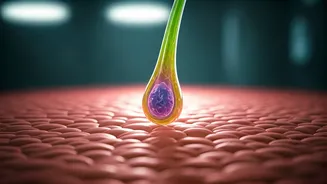
The turning point in lab-grown hair follicle development came with the realization that a crucial component was absent: physical support. A joint research team discovered that introducing a third cell type, accessory mesenchymal cells, acted as a microscopic scaffolding system. When integrated early in the follicle's formation, these helper cells enveloped the follicle's 'bulge' and dermal sheath, providing essential structural integrity. This addition was the missing piece that allowed the follicles to not only survive but to flourish and integrate with surrounding tissues entirely within the laboratory setting, eliminating the need for surgical transplantation.
Functional Follicles Created
The culmination of this research is the successful creation of fully functional hair follicles in an artificial environment. These lab-generated structures exhibit the remarkable ability to cycle through natural growth phases, mirroring the behavior of hair on a living scalp. This development signifies a monumental leap forward in regenerative medicine. While the immediate application for human baldness treatment is still some years away, primarily due to the complexities of human biology and the necessity of rigorous clinical trials, the implications are profound. The successful creation of these bioengineered follicles represents a significant scientific foundation for future hair restoration therapies.
Future Implications & Research
Even before human applications are realized, these lab-grown hair follicles offer immense value. In the near term, they can serve as invaluable tools for testing new hair-loss medications and for studying the intricate mechanisms of hair growth and cessation, thereby reducing the reliance on animal testing. Looking further ahead, companies like OrganTech envision scaling this three-cell strategy to engineer permanent, lab-grown hair transplants. Beyond hair restoration, the principles learned from successfully growing a complex mini-organ like a hair follicle could potentially be applied to regenerate larger, vital human organs, opening up revolutionary possibilities in transplantation and regenerative medicine.