





A Journey Beyond
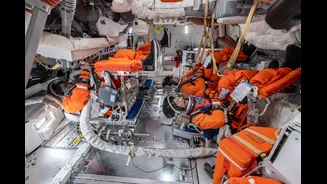
The Artemis II mission represents a significant step in humanity's renewed push towards lunar exploration. This ambitious endeavor aims to carry four astronauts,
Reid Wiseman, Victor Glover, Christina Koch, and Jeremy Hansen, on a 10-day voyage orbiting the Moon. It’s not a landing mission, but rather a crucial test flight for the Space Launch System (SLS) rocket and the Orion crew capsule. This flight signifies the first crewed mission to venture beyond Earth's orbit since the Apollo era, pushing the boundaries of what humans have previously achieved in space. The astronauts are not just on a mission; they are setting new records and paving the way for future lunar habitation.
Setting New Records
During its extended journey, the Artemis II crew achieved a monumental feat, surpassing the previous distance record set by the Apollo 13 mission. At over 252,756 miles from Earth, these astronauts have traveled farther than any humans before them. This record was a key objective, marking a significant milestone in deep space travel. The crew celebrated this achievement with a touching crater naming ceremony, honoring personal connections and the spirit of exploration. This extended range showcases the capabilities of the Orion spacecraft and the SLS rocket, crucial for future long-duration missions.
Cosmic Views Captured
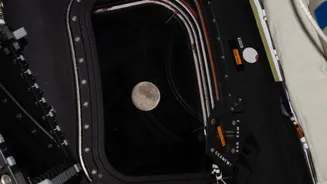
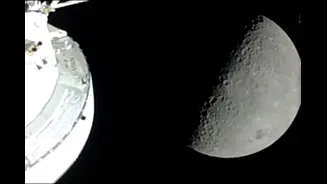
The Artemis II mission has provided a spectacular visual diary of humanity's reach into space. Astronauts aboard the Orion capsule have captured awe-inspiring images, including a breathtaking view of the Earth as seen from the vastness of space, a sight reminiscent of iconic photographs from earlier lunar missions. Furthermore, the mission offered unprecedented views of the Moon's far side and the magnificent Orientale basin, a massive impact structure. These images not only serve as a testament to the mission's success but also offer invaluable scientific data, aiding in the understanding of lunar geology and potential future landing sites, enriching our cosmic perspective.
Navigating Technological Seas
While venturing into the cosmos, the Artemis II crew encountered familiar technological hurdles. The mission highlighted the reliance on tested, albeit older, technology, with a notable instance involving a glitch with Microsoft Outlook on a Surface Pro device. This issue, though minor, underscored the rigorous testing and certification processes required for spaceflight hardware, where opting for previously approved tech can streamline development and reduce costs. Mission Control's adept handling of the situation demonstrated the resilience and adaptability of ground support, ensuring the mission continued smoothly. The crew also utilized smartphones for capturing photos and videos, a modern touch in this historic space endeavor.
A Glimpse of Future Bases
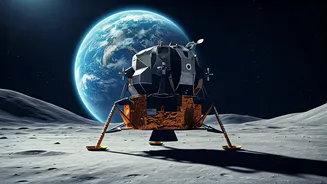
Artemis II is more than just a flyby; it's a foundational mission for NASA's grander aspirations of establishing a sustainable human presence on the Moon. While this mission doesn't involve a landing, it rigorously tests the systems and hardware essential for future lunar surface operations. The ultimate goal of the Artemis program, including Artemis III and subsequent missions, is to move beyond temporary visits to creating a long-term lunar base. This ambitious vision aims to allow astronauts to live and work on the Moon for extended periods, potentially weeks or months at a time, marking a significant evolution from the short exploratory missions of the past and setting the stage for deeper space exploration.