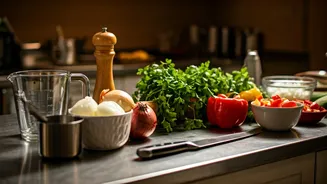

Prep Ahead, Save Time
One of the fundamental tips involves pre-preparation. This means washing, chopping, and measuring ingredients before you even begin cooking. This seemingly
small step can significantly reduce the amount of time spent in the kitchen during the cooking process. For instance, chopping vegetables in advance and storing them in airtight containers can save valuable time during a busy weeknight. Similarly, measuring out spices and other dry ingredients ahead of time streamlines the cooking process. Chefs know that organization is key to efficiency, and these prep steps are designed to make cooking a less overwhelming and more pleasurable experience. By adopting this practice, you can transform your kitchen into a well-organized and time-saving space, paving the way for a more enjoyable cooking experience.
Knife Skills Matter
Mastering basic knife skills is essential for any cook. Proper knife techniques not only make food preparation easier but also enhance the final presentation and consistency of the dish. Learning how to chop, dice, and mince efficiently can significantly reduce cooking time. For example, a well-executed dice of vegetables ensures even cooking and a more appealing texture. Furthermore, sharp knives are safer than dull ones, reducing the risk of accidents in the kitchen. Practicing these skills is a worthwhile investment for any home cook looking to improve their culinary abilities. By dedicating time to sharpen your skills, you will find cooking to be easier, safer, and ultimately more rewarding.
Seasoning Savvy
Learning when and how to season your food is crucial for bringing out its flavors. A common tip is to season food in layers, meaning adding salt and other spices at different stages of the cooking process. For instance, seasoning the meat before cooking, during cooking, and after plating can enhance the taste significantly. Taste as you go, and adjust seasoning as needed, as different ingredients may require different amounts of salt and spices. Understanding the interplay of flavors is key to becoming a proficient cook. A small addition of salt or spice can completely change the way a dish tastes. Developing this skill allows cooks to control the flavor profiles of their dishes, resulting in more delicious meals.
Stock Essentials
Having homemade or high-quality store-bought stocks readily available can elevate the flavor of your dishes. Stocks form the base for many sauces, soups, and stews, providing depth and richness that is difficult to replicate with water. You can make stock by simmering bones, vegetables, and herbs. A good stock enhances the overall taste profile of any dish it is used in, making it more flavorful and satisfying. If making stock from scratch feels too time-consuming, using a good quality store-bought option is a practical alternative. Incorporating stock ensures you will achieve better flavor in all your cooking efforts. Making stock is one of the most effective ways to boost the flavor of your cooking and elevate the taste of your dishes.
Smart Storage Practices
Proper storage is essential for extending the life of your ingredients and preventing food waste. Store food properly by using airtight containers and proper wrapping techniques. Different ingredients require different storage conditions. For example, fresh herbs can be stored with a damp paper towel in the fridge to maintain freshness, while cooked food should be cooled before refrigerating. Smart storage practices help maintain food quality and minimize spoilage. Following these tips ensures your ingredients stay fresh longer, reducing the risk of waste and ensuring ingredients are available whenever you need them. Effective storage minimizes food waste and helps home cooks make the most of their ingredients.
Clean as You Go
Maintaining a clean kitchen workspace while cooking not only makes the process more enjoyable but also helps to prevent cross-contamination and makes cleanup easier. As you cook, wipe up spills, wash utensils, and put away ingredients as you are done with them. This practice helps to reduce clutter and stress. A clean workspace also reduces the risk of foodborne illnesses by minimizing the risk of contamination. Adopting this habit makes the entire cooking process more efficient and less stressful. Cleaning up as you go means less time spent scrubbing pots and pans. This simple adjustment ensures a more positive cooking experience.
Utilize Your Tools
Knowing how to use kitchen tools correctly can make cooking easier. Understanding the functions of different tools, such as the various types of pans, measuring cups, and spoons, helps ensure better results. For instance, using the right pan for the correct task can prevent food from sticking or burning. Make use of your kitchen gadgets to simplify tasks, such as blenders, food processors, and other appliances designed to make food preparation easier and faster. This also makes it possible to tackle a broader range of recipes, enhancing your culinary skills and confidence. Proper use of tools is a basic skill, and by understanding how to use your kitchen equipment you can achieve more consistent and more flavorful results.
Embrace Leftovers
Making the most of leftovers can be a great way to reduce food waste and save time. Repurpose leftover ingredients into new meals. For example, leftover roasted chicken can be used in salads, sandwiches, or tacos. Leftover vegetables can be incorporated into soups or stir-fries. Planning for leftovers is a smart way to simplify meal preparation throughout the week, and to make your food budget stretch further. This also helps reduce food waste, making it an eco-friendly approach. Embracing leftovers provides multiple benefits, including time savings and reduced costs, making them a cornerstone of efficient cooking.
Taste and Adjust
Taste your food throughout the cooking process. Adjust seasoning and flavors as needed. This simple practice ensures that your dish is well-balanced and flavorful. Taste the food, and then evaluate whether more salt, pepper, or other seasonings are needed. Adjusting seasoning as you go lets you control the flavor profile of the dish, resulting in more delicious results. Tasting regularly also allows you to catch any potential problems early on, such as overcooking or under-seasoning. This allows you to correct the issue before it ruins the entire dish. This is one of the most important aspects of cooking and ensures you end up with a satisfying meal.
Read the Recipe
Before you begin cooking, read the entire recipe. This will help you understand the steps involved, the ingredients needed, and the estimated cooking time. Reading the recipe in advance allows you to gather all the necessary ingredients and equipment before you start. This prevents mid-cooking surprises. Having a full overview of the cooking process means you can organize your prep and reduce wasted time. Reading through the whole recipe beforehand prevents any potential complications, ensuring the overall process goes smoothly. It also boosts confidence.
Master Basic Techniques
Understanding and mastering basic cooking techniques forms the foundation of all great cooking. Learn techniques such as sauteing, boiling, braising, and grilling. Each technique impacts the flavor and texture of food. Mastering these fundamentals enhances your culinary versatility and boosts your confidence. Many cooking tasks will become much easier once the basics are understood. Taking time to learn the basic principles pays off. This will allow you to explore a wider range of recipes and dishes, improving your skills. Investing in mastering the basics will give you a wealth of culinary knowledge.
Organize Your Spices
Organizing your spices not only makes it easier to find what you need but also helps you to understand the array of flavors you have at your disposal. Organize spices by type, alphabetically, or in any way that makes sense. Store spices in a cool, dark place to maintain their flavor and potency. Clean out old spices that have lost their flavor. Knowing where your spices are and having them in good condition will significantly improve your cooking efficiency. A well-organized spice rack enhances the culinary process. This simplifies the act of cooking and makes the culinary process more enjoyable.
Use the Right Temperature
Using the correct cooking temperatures is crucial for achieving desired results. Ensure your oven is at the correct temperature before placing food inside. Using a thermometer is key. When sautéing, make sure the pan and oil are hot enough before adding ingredients. Different cooking techniques require different temperatures. Following the temperature instructions in the recipe will help your food cook correctly. Using the correct temperature makes the entire process more efficient and ensures that your food cooks properly. Maintaining accurate temperatures helps to guarantee that food is cooked to perfection.
Don't Be Afraid
Cooking should be enjoyable. Experiment with new recipes, ingredients, and techniques. Don't be afraid to make mistakes; they are part of the learning process. Learning to cook is a journey of discovery. Many of the most rewarding meals are the product of experimentation. Approach cooking with a sense of adventure and a willingness to try new things. By embracing a positive attitude, you will find that cooking becomes an enjoyable experience. Trying new recipes can also improve your skills and open up new options. So relax and enjoy the culinary process.