





The Rail-Free Enigma
In a nation boasting one of the world's most extensive railway networks, connecting urban centres to the most remote corners, it's surprising to find an exception.
Indian Railways traverses vast plains, formidable deserts, and soaring mountains, yet one state remains distinctly off the rail map. Sikkim, a jewel in the Himalayan crown, stands as the only Indian state currently devoid of any operational railway stations or active train routes. This peculiar isolation is a direct consequence of Sikkim's dramatically challenging topography. Characterized by precipitous mountain slopes, deep, plunging valleys, and an environment that demands utmost care, the construction of railway lines here necessitates immense engineering feats, particularly extensive tunnelling. This lack of rail access, however, is not a permanent fixture.
Bridging the Gap
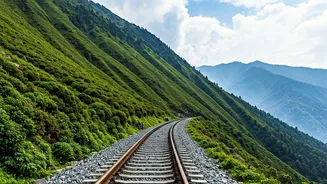
The temporary nature of Sikkim's rail isolation is becoming increasingly apparent with a significant ongoing infrastructure project. The railway line currently under construction between Sevoke in West Bengal and Rangpo in Sikkim is poised to finally integrate the state into the national rail network. This ambitious undertaking spans approximately 44–45 kilometers, winding through the formidable Himalayan landscape. The project demands considerable expertise in constructing deep tunnels and high bridges, particularly along the scenic Teesta River valley, positioning it as one of India's most complex railway endeavors. Substantial progress has been made, with a significant portion of the work already completed. The anticipated completion date for this vital line is set for 2027. Once operational, it promises to revolutionize connectivity to Sikkim, with plans already in motion for future extensions towards Gangtok, thereby significantly boosting both tourism and regional accessibility for residents and visitors alike.
Reaching Sikkim Today
While the railway connection is on the horizon, travelers currently have several practical and scenic ways to experience Sikkim. The most popular method involves a combination of train and road travel. Most visitors opt for a train journey to New Jalpaiguri (NJP) in West Bengal, a major railway hub well-connected to major Indian cities like Delhi and Kolkata. From NJP, the journey continues by road. Siliguri, a city near NJP, offers abundant options for onward travel, including shared jeeps, taxis, and buses heading towards Gangtok, Sikkim's capital. This road segment typically takes four to five hours, offering picturesque views along the Teesta River. For those seeking quicker transit, air travel is an option. Sikkim has its own airport in Pakyong, located about 30 kilometers from Gangtok, though flights here can be infrequent and are highly dependent on weather conditions. A more reliable aerial gateway is Bagdogra Airport, which boasts better flight connectivity across India. From Bagdogra, road transport to Gangtok takes approximately four to five hours. For the adventurous, driving to Sikkim offers an immersive road trip experience. Sikkim is well-connected by road to West Bengal and surrounding regions, with most routes originating from Siliguri. The drive itself is a highlight, gradually transitioning from the plains to the mountainous terrain, making it a favorite for bikers and road trip enthusiasts. The absence of railway access has, in many ways, helped Sikkim preserve its serene remoteness, turning the journey into an integral part of the travel experience.