









Market Momentum Unleashed
The long-awaited trade pact between India and the United States has finally lifted a significant cloud of uncertainty for investors, creating a more optimistic
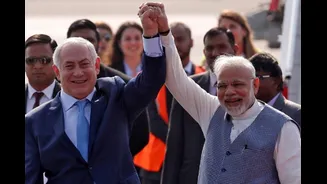
environment for the Sensex, Nifty, and the Indian rupee. This agreement, confirmed after a call between President Donald Trump and Prime Minister Narendra Modi, has provided immediate clarity to the markets. Consequently, benchmark stock indices experienced a substantial surge in early trading on Tuesday, with the Sensex jumping over 2,500 points and the Nifty gaining more than 700 points. This broad-based rally across various sectors reflects a widespread sense of relief and renewed confidence among market participants. The core of the agreement involves a reduction in US tariffs on Indian goods, from a previous 50% down to 18%, alongside the elimination of an additional duty on Russian crude oil, further streamlining trade dynamics.
Economic Upside Ahead
Experts are hailing the tariff reduction as a transformative development, with industry analysts describing it as a "game changer" for India's economy and its stock markets. The positive ripple effects are expected to permeate the broader macroeconomic landscape. Projections suggest that India's GDP growth could reach an impressive 7.5% by FY27, fueled by a strengthening export sector. Corporate earnings are anticipated to see an accelerated growth rate, potentially ranging between 16% and 18%. Furthermore, the Indian rupee is poised for appreciation, driven by the clarity in trade flows and the prospect of renewed foreign investment. The market's sharp upward movement is also attributed to significant short-covering activity, as traders who had bet against the market are now rushing to close their positions, amplifying the rally. This upswing is predicted to be widespread, with banking, non-banking financial services, telecommunications, IT, and capital goods sectors expected to lead the charge. Notably, the textile industry stands to be one of the primary beneficiaries due to the substantial tariff reduction.
Competitive Edge Secured
This trade agreement significantly enhances India's competitive standing in the US market compared to its Asian peers. At an 18% tariff rate, India now boasts a lower rate than countries like Bangladesh, Sri Lanka, Taiwan, and Vietnam, all of whom face a 20% tariff. This shift provides India with a distinct advantage in exporting goods to the United States. Sectors heavily reliant on labor, such as textiles, gems and jewellery, and engineering goods, are expected to experience immediate benefits. A substantial wave of short-covering by foreign portfolio investors, who were reportedly heavily positioned for a downturn, is anticipated. The deal is also likely to stabilize the rupee and alleviate pressure on domestic interest rates. Furthermore, with the previous restrictions on Russian crude removed, India's oil import strategy is expected to pivot more towards supplies from the US and Venezuela.
Reclaiming Market Favor
From a strategic viewpoint, the trade deal positions India on much more competitive terms with the United States, reversing a previous disadvantage where India was one of the most poorly placed countries in terms of trade tariffs. India now finds itself in a better position than China, and on par with Vietnam and Bangladesh, with only the EU, UK, and Japan having lower tariff rates. However, there is a cautionary note regarding complacency; the unpredictability of trade policies necessitates a strong focus on internal reforms. Strengthening institutions and enhancing overall competitiveness are paramount for navigating a volatile geopolitical landscape. The previous 50% tariff, while not directly impacting large listed corporations significantly, created a substantial geopolitical overhang that deterred foreign investment. Smaller businesses and low-margin exporters bore the brunt of these earlier tariff shocks. This period also spurred crucial domestic reforms, including GST rationalization and labor law changes, while encouraging diversification of foreign exchange reserves and prompting India to explore deeper engagements with markets like the European Union.
Euphoria and Renewed Outlook
The market's euphoric reaction is understandable, as the previous tariff situation, despite not crippling major listed firms, acted as a significant deterrent for foreign investors due to geopolitical concerns. This uncertainty, coupled with the impact on smaller enterprises, had contributed to a year-long underperformance in Indian equities, driven by foreign portfolio investor outflows rather than weak corporate fundamentals. With the stabilization of India-US relations, the geopolitical risk premium attached to Indian assets is expected to diminish. Consequently, Indian equities, which were essentially trading at a 'geopolitical discount,' are now poised for a recovery. This upswing is anticipated to be fueled not only by upward revisions in earnings forecasts but also by the reversal of pessimism that stemmed from the tariff shocks. The improved export prospects and anticipated rise in foreign inflows have already led to an early strengthening of the rupee in offshore trading, with a clearer trade environment and stable crude prices likely to support further currency appreciation.
Sustained Market Ascent
Analysts suggest that the significant market rally witnessed is more than just a fleeting reaction. The confluence of factors, including robust short-covering, an uptick in foreign investment flows, an improved macroeconomic backdrop, and a strengthened export positioning, provides a solid foundation for a sustained upward trend in both the Sensex and Nifty. With the removal of the tariff-related uncertainty, the market is entering a phase where a firmer rupee, a renewed appetite from investors, and greater global economic clarity are expected to drive a more durable uptrend. This positive shift creates an environment conducive to long-term investment and economic growth, marking a significant turning point after a period of considerable market apprehension.