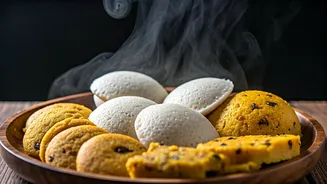

Idli: Soft South Indian
Idli, a steamed savory cake, holds a special place in South Indian cuisine. Prepared by fermenting a batter of rice and urad dal (black lentils), this
dish is celebrated for its fluffy texture and mild flavor. The fermentation process is crucial, as it enhances digestibility and imparts a slightly tangy taste. Traditionally, idlis are steamed in special molds, giving them their characteristic round shape. Served with sambar (a lentil-based vegetable stew) and coconut chutney, idli offers a complete and balanced breakfast, providing carbohydrates, protein, and essential nutrients. The preparation time includes soaking and grinding the ingredients, followed by fermentation (usually overnight), and finally steaming for a few minutes. It is a light yet filling option, perfect for those seeking a nutritious and easily digestible breakfast.
Dhokla: Gujarati Delight
Originating from Gujarat, Dhokla is a steamed snack made from fermented batter, typically comprising gram flour (besan), rice, and spices. The fermentation process creates a light and airy texture, making it a favorite amongst all age groups. Variations exist, including the use of rava (semolina) or lentils in the batter. The cooking process involves steaming the batter until it solidifies into a spongy cake. Once steamed, dhokla is often tempered with a flavorful tadka of mustard seeds, curry leaves, and green chilies, further enhancing its taste. Dhokla is often served with a sweet and tangy chutney, adding another layer of flavor. This dish offers a good source of carbohydrates, protein, and fiber, making it a wholesome breakfast option. Its versatility allows for various modifications, like adding vegetables or different types of spices to tailor the flavor to your preferences.
Uttapam: Savory Pancake
Uttapam is a South Indian pancake made from a fermented batter, similar to the idli batter but with a slightly thicker consistency. The batter usually consists of rice and urad dal (black lentils). The key difference is the addition of chopped vegetables, such as onions, tomatoes, and green chilies, directly to the batter before cooking. Uttapam is cooked on a griddle, resulting in a soft and slightly crispy texture. The vegetables contribute to both the flavor and nutritional value of the dish. It is a customizable breakfast, and the choice of vegetables can be adjusted to personal preferences. Uttapam is often served with sambar and chutney, providing a complete meal with carbohydrates, protein, and vitamins. The preparation involves fermenting the batter, chopping the vegetables, and cooking the pancake on a griddle until both sides are lightly browned. It is a quick and easy option for a fulfilling breakfast.
Modak: Steamed Sweet Treat
Modak is a sweet dumpling, a popular delicacy, especially during festivals like Ganesh Chaturthi. The outer layer is made from rice flour or wheat flour and is filled with a sweet mixture. The filling typically consists of grated coconut, jaggery, and spices like cardamom. The traditional method of cooking involves steaming the modaks until they are soft and tender. The steaming process ensures that the flavors of the filling meld together, creating a delicious and aromatic dessert. Modaks symbolize prosperity and good fortune, making them a significant part of Indian cultural celebrations. They can be enjoyed as a breakfast or as a sweet treat. The preparation requires careful handling to seal the filling within the dough. There are many variations in the filling and preparation of the dough, making this dish adaptable to regional tastes.
Puttu: Kerala's Breakfast
Puttu, a steamed cylindrical cake, is a popular breakfast dish from Kerala. It is made from coarsely ground rice flour, layered with grated coconut, and steamed in a special puttu kutti (steamer). The combination of rice flour and coconut creates a unique texture and flavor. Traditionally, puttu is served with kadala curry (black chickpea curry) or sweetened with sugar and ghee. The cooking process involves steaming the puttu until it becomes soft and fluffy. The contrasting textures of the rice and coconut make it a satisfying and enjoyable meal. Puttu is not just a breakfast item but a cultural icon. It provides carbohydrates and fiber from the rice flour and healthy fats from the coconut. The simplicity of its ingredients belies its rich and complex taste profile. The process of preparing puttu, from the mixing of the rice flour and coconut to the final steaming, is a testament to traditional cooking methods.
Khaman: Spiced Steamed Snack
Khaman is a Gujarati steamed snack, similar to dhokla but with a different batter composition. It is generally made from chana dal (split chickpeas) and spices. The process involves fermenting the batter, followed by steaming. The use of chana dal provides a protein-rich base, and the spices contribute to its unique flavor profile. Khaman is often served with a flavorful tadka, including mustard seeds, asafoetida, and curry leaves. It offers a slightly tangy taste and a soft, spongy texture. This dish is usually garnished with fresh coriander and sometimes served with chutney. It is a light yet fulfilling breakfast option and is a popular street food. The batter's fermentation contributes to better digestibility and improves the flavor of the snack. Khaman’s versatility makes it easily adapted to different taste preferences, making it a diverse and widely liked breakfast choice.
Vada: Fried, Then Steamed
Vada, commonly found in South India, is often steamed as an alternative to the usual deep-fried version, making it a healthier option. The preparation involves making a batter, typically from urad dal (black lentils), which is then shaped into a donut-like form and steamed. This offers a fluffy texture. This method drastically reduces the oil content, making it a low-fat choice. Steamed vada is typically served with sambar and chutney. The steam ensures the preservation of the nutrients in the ingredients. This breakfast option provides a good balance of carbohydrates and protein. Steamed vada retains the flavors of the spices and the urad dal, offering a delicious and light meal. The use of steaming as a cooking method makes vada more inclusive for those who wish to avoid fried foods. Its versatility allows for the addition of various spices to adjust the taste.
Momos: Steamed Tibetan Delight
Momos, although originating from Tibet, have become a popular breakfast choice across India, particularly in the northern regions. These are steamed dumplings filled with various ingredients. The fillings range from vegetables like cabbage and carrots to seasoned minced meat. Steaming is a fundamental part of the cooking process, sealing in the flavors and creating a tender texture. Momos are typically served with a spicy dipping sauce, enhancing their taste. They provide a balanced meal containing carbohydrates from the dough and protein from the filling. This makes them a nutritious breakfast option. Their wide variety of filling options makes this dish versatile to cater to diverse palates. Momos offer a quick and convenient option, suitable for busy mornings.
Idiyappam: String Hopper Breakfast
Idiyappam, also known as string hoppers, is a breakfast dish popular in South India and Sri Lanka. Made from rice flour, these are steamed, finely pressed noodles. The rice flour dough is pushed through a sevai press or idiyappam maker to create the noodle-like strands, which are then steamed until tender. Idiyappam has a soft texture and a mild flavor. It is commonly served with vegetable stew, coconut milk, or egg curry. This breakfast is light, easily digestible, and often consumed by all age groups. They are a good source of carbohydrates, providing energy for the day. Its simplicity makes it a quick breakfast option. The use of rice flour adds to the dish's lightness and the choice of accompaniments adds to its taste and flavor.
Thukpa: Steamed Noodle Soup
Thukpa, a Tibetan noodle soup, is a hearty and wholesome breakfast choice, particularly in the Himalayan regions of India. It comprises noodles, vegetables, and sometimes meat, all simmered in a flavorful broth. Steaming isn't the primary cooking method; however, the ingredients are often steamed or gently cooked before being added to the soup. This creates a tender texture. Thukpa provides a warming meal, ideal for colder climates. It is often customized with different vegetables and spices, offering a versatile meal. The rich broth is filled with essential nutrients, making it a filling breakfast choice. It is a complete meal, with carbohydrates, proteins, and essential nutrients. It is known to offer a comforting start to the day. The blend of flavors and textures makes thukpa a satisfying and nutritious option.