



Ants' Underground Cities
Ants are truly remarkable engineers of the natural world, renowned for their elaborate nest construction. While some species meticulously excavate complex
underground networks, complete with distinct chambers for various purposes like living and food storage, others opt for above-ground structures fashioned from readily available materials such as twigs, sand, and gravel. A particularly captivating example is the weaver ant, which demonstrates incredible ingenuity by drawing leaves together and then employing silk produced by its larvae to secure these leaves, forming a cohesive and protective arboreal home. These intricate dwellings are vital for the entire colony, offering a safe haven and facilitating the organized execution of daily tasks, from foraging to defense, thereby ensuring the colony's survival and prosperity.
Termites' Climate-Controlled Mounds
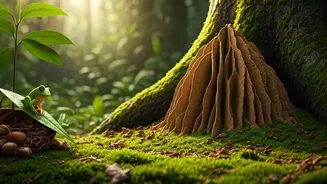
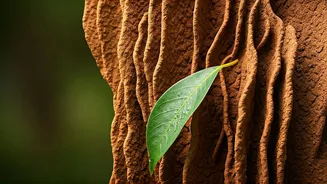
Termites construct some of the most sophisticated nests found anywhere in the animal kingdom, creating environments remarkably suited to their delicate physiology. These subterranean or above-ground structures are deliberately kept warm, damp, and dark, crucial conditions that prevent the termites from succumbing to dehydration. Many termite mounds are further enhanced with intricate ventilation systems designed to precisely regulate airflow, maintain optimal temperatures, and control humidity levels within the nest. In certain species, these nests evolve into massive mound-like formations or extensive underground complexes that function as highly efficient, naturally regulated living spaces, demonstrating an advanced level of environmental engineering.
Stickleback's Sticky Abodes
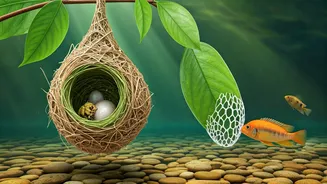
The aquatic realm also boasts impressive nest builders, with the three-spined stickleback fish standing out as a prime example. The male of this species undertakes the diligent task of constructing a nest primarily from collected plant fragments. To bind these materials together, he utilizes a unique adhesive secretion produced by his own kidneys, a remarkable biological adaptation. This meticulously built nest serves a dual purpose: it acts as an attractive display to entice potential mates and, crucially, provides a secure location for the protection of the eggs. For many fish species, the act of nest building is intrinsically linked to their reproductive cycle and the subsequent parental care they provide.
Frogs' Frothy Nurseries
Certain species of frogs have also evolved fascinating nesting behaviors, most notably the creation of foam nests. In these particular frog species, the eggs are deposited within a mass of frothy material. This unique construction serves as a vital protective barrier, shielding the developing eggs from a range of threats including predators, harmful parasites, extreme temperatures, and the risk of desiccation. The foam possesses remarkable stability and can endure for several days, even in the humid conditions typical of tropical climates. This ingenious survival strategy ensures a consistently moist and secure environment for the eggs, significantly enhancing their chances of successful hatching.
Squirrels' Cozy Dreys
When squirrels build their homes, these structures are known as dreys. Typically, a drey is an artfully constructed sphere made from intertwined twigs, creating a robust framework. This architectural shell is then lined with a variety of soft, insulating materials, such as moss, dried grass, fallen leaves, and shredded pieces of tree bark. Squirrels prioritize safety in their nest placement, almost always constructing their dreys at elevated positions, usually close to the main trunk of a tree. This strategic location offers significant protection from ground-dwelling predators, ensuring the safety of the squirrel and any potential young within its home.