





The Silent Sanctuary
Nestled within Kerala's verdant embrace, the Kunthipuzha River earns its moniker, the "Silent River of India." This title stems from its passage through
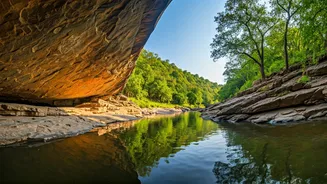
the Silent Valley National Park, a remarkable expanse representing India's sole undisturbed tropical rainforest. Unlike many of its counterparts across the nation, which have been extensively harnessed for human endeavors, the Kunthipuzha remains a testament to nature's enduring power. Its pristine flow offers a window into an ancient ecosystem, largely shielded from external influences, allowing us to witness the intricate web of life that has thrived for eons. This untouched quality is fundamental to its ecological significance, providing a vital water source and supporting a rich biodiversity that is increasingly rare in the modern world. The river's gentle journey underscores the profound value of preserving such natural sanctuaries for future generations to appreciate and study.
Source of Life
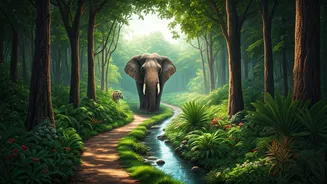
Emerging from the majestic Western Ghats, a region recognized globally as a biodiversity hotspot by UNESCO, the Kunthipuzha River embarks on its journey through the Silent Valley National Park in Kerala. This protected area is celebrated for its dense, ancient tropical evergreen forests, a haven for a wide array of wildlife, and notably, a sanctuary free from significant human encroachment. The Kerala Forest Department highlights Silent Valley as one of India's most ecologically diverse territories, harboring unique species such as the critically endangered lion-tailed macaque and the elegant Nilgiri langur. Within this vibrant ecosystem, the Kunthipuzha plays an indispensable role, supplying pure water essential for the survival of its aquatic inhabitants and contributing to the overall health and stability of the flora and fauna. Its remarkable purity, a stark contrast to many Indian rivers burdened by industrial and urban pollution, is a direct result of dedicated conservation efforts and stringent protective measures implemented to safeguard its pristine condition.
Echoes of Silence
The very name 'Silent Valley' evokes a sense of tranquil mystery, and its origin is far more nuanced than a simple lack of sound. While not entirely devoid of noise, the forest's 'silence' refers to the notable absence of cicadas, insects whose incessant chirping is a hallmark of most tropical rainforests. This relative quietude, combined with the unhurried, almost imperceptible flow of the Kunthipuzha River, cultivates an atmosphere of profound serenity. Both environmentalists and scientific communities have consistently championed the preservation of this undisturbed environment, recognizing its critical importance for maintaining ecological equilibrium. Research has underscored that such untouched habitats, exemplified by Silent Valley, are fundamental to the health and balance of the planet's ecosystems, offering invaluable insights into natural processes.
A Battle for Nature
The narrative of the Kunthipuzha River is intrinsically linked to one of India's most pivotal environmental struggles. During the 1970s, a proposal to construct a hydroelectric power plant within Silent Valley posed a grave threat to its irreplaceable natural heritage. This ambitious project ignited fierce opposition from a coalition of scientists and passionate activists who recognized the devastating and irreversible ecological damage it would inflict. Their persistent advocacy ultimately triumphed, leading to the project's cancellation and securing the valley's future. In 1984, Silent Valley was officially designated as a national park, a landmark achievement recognized by India's Ministry of Environment, Forest and Climate Change as a significant milestone in the nation's conservation history. Today, the Kunthipuzha stands as a powerful emblem of successful environmental stewardship, demonstrating that free-flowing rivers are paramount for sustaining biodiversity and essential ecosystem services. In an era of increasing global resource depletion, its existence serves as a potent reminder of humanity's capacity for collective action and successful conservation when driven by a shared commitment to protecting our natural world.