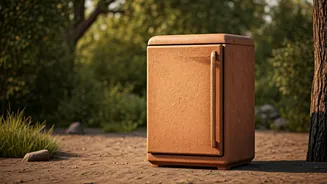





Necessity Breeds Invention
In the sweltering heat of rural India, keeping food fresh is a daily struggle. Following the devastating 2001 Gujarat earthquake, Mansukhbhai Prajapati,
a skilled potter, witnessed firsthand the profound impact of power loss on families' ability to preserve essential items like milk and vegetables. This crisis spurred him to develop a low-tech solution that bypassed the need for electricity entirely. His vision was to create a practical cooling device that could be accessible to those most affected by such disruptions. This challenging period became the crucible for an invention that would eventually extend its reach far beyond his immediate community, offering a sustainable alternative to modern refrigeration.
Years of Clay Mastery
Prajapati's revolutionary clay refrigerator wasn't an overnight success; it was the culmination of years of dedicated experimentation. It's reported that he spent roughly four to five years meticulously refining his clay mixtures. By incorporating materials such as sawdust and sand into the clay, he created a porous structure. This porosity allows water to gradually seep through the outer walls of the refrigerator. As this moisture evaporates into the surrounding air, it actively draws heat away from the interior chamber. This natural process generates a cooling effect, completely eliminating the need for compressors, intricate coils, or any form of electrical power. The National Innovation Foundation has recognized this invention as a naturally functioning refrigerator, meticulously crafted from clay and perfected through extensive trial and error.
Evaporation's Cooling Magic
The underlying principle behind this refrigerator is remarkably straightforward. Water is introduced into an upper reservoir and then allowed to trickle down the exterior surfaces of the clay body. As this water evaporates, it effectively carries heat away from the inner compartment, resulting in a cooler internal environment compared to the ambient temperature. According to the National Innovation Foundation, this evaporation-based system is capable of preserving the freshness of fruits, vegetables, milk, and drinking water for a period of two to three days. The organization also notes that the device functions optimally in arid, warm climates where the rate of evaporation is highest. In practical terms, it can achieve a temperature reduction of approximately 5–8°C below the outside temperature, providing a significant cooling advantage.
Affordable Household Solution
This innovative refrigerator was intentionally designed not as a luxury item, but as a vital solution for ordinary households. Its primary purpose was to address the financial burdens associated with purchasing and maintaining conventional refrigerators, particularly the ongoing cost of electricity. The United Nations Conference on Trade and Development highlights this invention as a prime example of 'frugal innovation,' noting its affordability, with a price point typically under $50 (approximately ₹2,500), and its capacity to keep food fresh for two to three days. From its inception, the product was conceived as an accessible alternative rather than a high-end appliance. The core objective was never to showcase cutting-edge technology but to solve a persistent, everyday problem for families in areas with unreliable power and limited financial resources.
From Village Craft to Fame
The enduring appeal of this refrigerator lies in its seamless integration of traditional craft, practical necessity, and ingenious invention. Prajapati was not an engineer from a corporate background but a potter whose deep understanding of clay led him to reimagine its potential. His innovation garnered national recognition, including an award from the National Innovation Foundation in 2009 for grassroots innovations, and a feature in Forbes in 2010 among rural Indian entrepreneurs making a difference. He subsequently expanded his business to include other clay-based products like water filters and pressure cookers. The true power of his invention goes beyond its electric-free operation; it is deeply rooted in the context it serves. In a country where heat, power outages, and affordability remain daily challenges for many, this clay refrigerator represents more than a novelty—it’s a symbol of innovation born from understanding local conditions. It demonstrates that solutions can emerge from those closest to the problem, using readily available materials and simple principles, rather than solely from expensive, high-tech approaches.