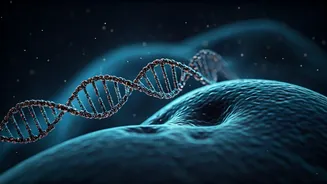







DNA: From Code to Construction
The very molecule that defines life, DNA, is now being harnessed as a sophisticated building material for microscopic machines. Scientists are leveraging
its predictable self-assembly properties, where specific base pairings dictate how DNA strands connect, to create intricate structures. Unlike traditional manufacturing which struggles with atomic precision, or protein-based systems that are challenging to control, DNA offers a robust and programmable framework. Its double-stranded form provides rigidity akin to rods, while single strands act as flexible connectors, offering a versatile toolkit for designing mechanical systems at an unprecedented scale. This unique combination allows researchers to construct everything from rigid frames to dynamic hinges, all from the same fundamental building block, paving the way for a new era of molecular engineering.
Engineering Nanoscale Motion
Creating functional nanomachines requires more than just a structural blueprint; it necessitates controlled movement. Scientists have devised ingenious methods to impart motion to these DNA-based systems. A prominent technique involves 'DNA strand displacement,' where one strand effectively nudges another out of place, acting as a precise molecular switch that can initiate structural changes or trigger movement. Beyond chemical manipulation, physical forces also play a crucial role. The inherent electrical charge of DNA allows it to be manipulated by electric fields, while magnetic particles can be attached to DNA structures for external guidance. Environmental factors like light and heat can also be employed to induce transformations. Each approach comes with its own advantages and disadvantages; chemical methods offer fine-tuned control but may generate waste, while physical methods can be swift but might impact surrounding biological components. The art lies in skillfully combining these strategies to achieve predictable motion, even within the complex and dynamic environment of the human body.
From Simple Forms to Complex Systems
The journey of DNA nanomachines began with relatively simple designs, demonstrating fundamental principles like opening, closing, and linear movement along predefined paths, thereby validating the feasibility of nanoscale motion. A significant leap forward was achieved with the advent of 'DNA origami,' a revolutionary technique that allows for the precise folding of long DNA strands into incredibly complex, three-dimensional shapes. By employing hundreds of shorter DNA strands as guides, researchers can orchestrate a single long strand into intricate forms, akin to folding a piece of paper into a specific shape. These meticulously crafted structures can take the form of miniature boxes, rotating gears, or molecular cages, with some advanced designs comprising thousands of individual components. Furthermore, these complex creations are evolving beyond static forms to incorporate sensing capabilities, movement, and even rudimentary logic. Some DNA systems can now detect specific molecules and initiate a programmed response, while others can dynamically alter their shape in reaction to their environment, signaling a transition from passive structures to truly active molecular machines.
Medical and Technological Frontiers
The potential applications for DNA nanomachines extend far beyond theoretical concepts, holding immense promise for practical advancements in medicine and technology. In the realm of healthcare, these tiny biological robots could function with unparalleled precision within the human body. Imagine systems designed to specifically target and deliver therapeutic agents directly to diseased cells, or to identify and neutralize harmful entities like viral particles before they can cause widespread damage. Early prototypes have already demonstrated the capacity to recognize viral components. Beyond medicine, DNA nanomachines offer a novel approach to manufacturing, acting as precise templates for the assembly of materials at the nanometer scale, potentially leading to the creation of advanced electronics and optical devices. Moreover, DNA's inherent structure makes it a candidate for next-generation computing systems, with theoretical storage capacities vastly exceeding current technologies, promising an future where machines operate at a level previously unimaginable.
Navigating Scaling Challenges
Despite the remarkable progress, the widespread deployment of DNA nanomachines faces several significant obstacles. A primary concern is the inherent unpredictability of molecular-scale operations; random molecular jiggling, known as Brownian motion, constantly influences these tiny systems, making precise control a considerable challenge. Another hurdle is the complexity required for real-world applications. Many current DNA structures function in isolation, lacking the integrated systems for sensing, movement, and decision-making necessary for practical tasks. Furthermore, there's a persistent need for more detailed data on how these DNA structures behave under various conditions, as simulation tools, while improving, still have limitations. Finally, the manufacturing process itself presents a challenge. Producing large quantities of identical, functional DNA machines reliably and cost-effectively requires robust, scalable methods. Addressing these issues will likely involve developing standardized design libraries, enhancing simulation capabilities, and potentially leveraging artificial intelligence to streamline the development process.
A Field at the Inflection Point
The current state of DNA nanotechnology signifies a pivotal moment, transitioning from exploratory concepts to the development of more functional and sophisticated systems. While these machines are becoming increasingly capable, substantial challenges still impede their immediate practical use. Experts anticipate that future breakthroughs will hinge on interdisciplinary collaboration, bringing together insights from biology, engineering, and computer science. Progress in one field often catalyzes advancements in others, accelerating the overall development trajectory. The ultimate aspiration is not merely to create smaller machines, but to engineer systems that can autonomously sense their environment, process information, and act with intent at the molecular level. This ambitious vision, though still a work in progress, appears increasingly attainable given the steady pace of innovation in this dynamic field.