


Navigating the Japan Visa
For Indian passport holders planning a trip to the Land of the Rising Sun, securing a visa is a mandatory prerequisite. Fortunately, Japan has streamlined
its tourist visa application process, introducing an eVisa facility for short-term leisure travel. This visa, typically issued for a single entry, permits a stay of up to 90 days, ideal for sightseeing, cultural immersion, and, of course, witnessing the ephemeral beauty of cherry blossoms. While the eVisa offers convenience, it's important to note that independent applications are not permitted. All submissions must be channeled through authorized entities, such as the Japanese Embassy or its accredited partners like VFS Global, ensuring a structured and verifiable application journey.
Essential Visa Documentation
Compiling the correct documents is paramount to a smooth visa application and is often where applicants face the most scrutiny. For Indian citizens, a typical Japan tourist visa application requires a completed and signed application form, alongside a valid passport that boasts at least two blank pages and maintains a validity of a minimum of six months beyond your intended return date. Recent passport-sized photographs (2x2 inches) are also necessary. Additionally, you'll need to provide proof of financial stability, such as bank statements demonstrating sufficient funds, or a sponsorship letter if applicable. Evidence of your travel plans, including confirmed hotel bookings and a day-wise itinerary, alongside flight reservations showing your entry and exit from Japan, is crucial. Depending on your employment status, you may need to submit salary slips from the last six months, Income Tax Returns (ITRs) for the past two years, or a GST certificate if you are self-employed. If employed, an employer-issued leave approval or a No Objection Certificate (NOC) is also required. Lastly, comprehensive travel insurance covering your entire trip to Japan is a mandatory inclusion.
Step-by-Step eVisa Application
Applying for a Japan tourist eVisa from India involves a straightforward, albeit guided, process. Begin by visiting the official VFS Global Japan visa webpage. From there, select the 'Japan Tourist Visa / eVisa' option. You will then need to download the application form, which must be filled out meticulously and accurately. Following this, prepare scanned copies of all the aforementioned required documents. The next step is to submit your complete application package through VFS Global or another authorized agent. Once submitted, you will be required to pay the applicable visa fee along with any service charges. Upon successful processing and approval, your Japan eVisa issuance notice will be sent to you via email, which you can then present on your mobile device at the airport upon arrival.
Visa Application Centers & Fees
In India, Japan visa applications are accepted at VFS Global centers located in several major metropolitan areas, including Delhi, Mumbai, Chennai, Bengaluru, Kolkata, and Hyderabad. This network ensures accessibility for applicants across the country. The standard processing time for a Japan tourist visa for Indian citizens is typically between 5 to 7 working days. However, it's important to anticipate potential extensions during peak travel periods, particularly the highly sought-after cherry blossom season. Regarding the costs, a single-entry tourist visa generally incurs a fee of approximately ₹500. For those eligible for a multiple-entry visa, the fee will be higher. Please note that VFS service charges are applied separately to the visa fee. Given that these fees are subject to change, it is always advisable to verify the most current amount directly with the relevant authorities or VFS Global before initiating your application.
Optimal Cherry Blossom Timing
The enchanting cherry blossom season, known as sakura, transforms Japan into a picturesque landscape of delicate pink and white blooms, typically spanning from late March to early April. This period is immensely popular, drawing significant crowds, and consequently, it is also the busiest and most expensive time to visit. Advance bookings for flights and accommodation are essential, and visa appointments can fill up rapidly. For instance, in Tokyo, the cherry blossoms are forecasted to start flowering around March 20th and reach full bloom by March 27th. Kyoto anticipates its peak bloom around April 1st, while Osaka expects it around March 31st. Further north, cities like Sapporo will experience their bloom later, with a forecasted flowering date of April 27th and full bloom on May 1st. Planning your visit according to these forecasts ensures you maximize your chances of witnessing this spectacular natural phenomenon.
Prime Sakura Viewing Spots
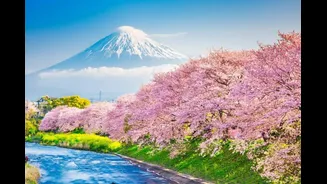
If your primary motivation for visiting Japan is to witness the breathtaking cherry blossoms, several locations offer particularly stunning displays. In Tokyo, Ueno Park, Shinjuku Gyoen National Garden, and Chidorigafuchi moat are renowned for their abundant sakura. Kyoto provides iconic scenes with cherry trees framing ancient temples, particularly along the Philosopher’s Path and within Maruyama Park. Osaka Castle Park presents a magnificent backdrop of historical architecture complemented by wide avenues lined with cherry blossoms. For a truly postcard-worthy vista, the Mount Fuji area, especially around Lake Kawaguchi, offers unparalleled views of the iconic peak framed by blooming sakura. In Hiroshima, the Peace Memorial Park transforms into a beautiful pink spectacle during the peak bloom, blending solemn reflection with natural beauty.
Flights From India
Numerous airlines facilitate travel between India and Japan, offering both direct and connecting flight options. Major Indian cities such as Delhi, Mumbai, Bengaluru, and Chennai serve as primary departure points for these international journeys. Carriers like Air India, All Nippon Airways (ANA), and Japan Airlines (JAL) are among the primary airlines operating these routes, ensuring convenient travel. Singapore Airlines also offers connecting flights. The average flight duration for these routes typically ranges from 7 to 9 hours, depending on the specific route and whether it involves layovers. Booking your flights well in advance is highly recommended, especially if you are planning to travel during the peak cherry blossom season, to secure the best fares and convenient schedules.