








The Car's Digital Pulse
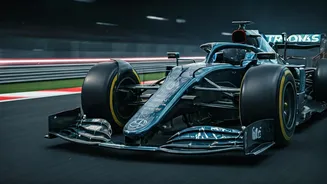
Formula 1 cars are essentially rolling supercomputers, equipped with an astonishing array of sensors that capture every nuance of their operation. These
sensors, numbering in the hundreds, continuously monitor vital parameters like engine temperature, oil pressure, fuel flow, and throttle input, providing engineers with a granular view of the powertrain's health. Simultaneously, critical aerodynamic forces such as downforce and drag are measured, alongside intricate details of suspension movement and tire dynamics, including pressure and wear. Even the driver's direct inputs, like steering angle and brake pressure, are meticulously logged. This vast data stream is managed by the car's standard ECU, which also ensures precise timestamps for each measurement. This allows engineers to correlate data from disparate systems, understanding how adjustments in one area, such as engine mapping, ripple through the car's overall performance, a crucial step in maximizing efficiency and speed during a race weekend.
Live Feed to the Pit Wall
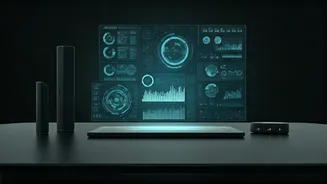
The data generated by these numerous sensors is not confined to the car; it's wirelessly transmitted to the pit garage in real-time via a high-bandwidth telemetry link. This constant stream of information gives engineers an unparalleled, live dashboard of the car's performance and condition. They can monitor brake temperatures across all four corners, tire pressures and temperatures from sensors embedded in the wheels, and fuel flow rates against regulatory limits. Furthermore, the complex energy management systems, including MGU-K deployment and harvesting rates against the energy budget, are meticulously tracked. Even the status of active aerodynamic modes, indicating whether the car is in a specific configuration for optimal downforce or drag reduction, is visible. This comprehensive, real-time visibility allows pit crews to proactively identify potential issues, such as a cooling system nearing its limit or a brake duct performing below expectations, often before the driver even senses a problem. Addressing these issues early can be the difference between a strong finish and a race-ending failure, directly impacting lap times and overall race results.
Strategic Insights Unlocked
Telemetry data serves as the bedrock for critical real-time strategic decisions during an F1 race. Strategy engineers meticulously analyze the incoming data, monitoring fuel load, tire degradation rates, and energy deployment against regulated limits. This information feeds sophisticated predictive models that forecast lap times under various scenarios, influencing crucial calls like pit stop timing and the optimal moments to utilize overtake systems. The evolving regulations, particularly the energy management structures for 2026, add layers of complexity. For instance, tracking the energy budget, which has a specific delta per lap, becomes a dynamic challenge. If a car underperforms in regenerative harvesting, for example, due to low speeds during a safety car period, engineers must swiftly adjust the energy deployment strategy for the subsequent laps. While direct driver coaching on driving lines is prohibited by sporting regulations, engineers can transmit updated system modes and alert drivers to critical operational states. The telemetry record serves as a complete log of all communications, allowing the FIA to monitor and enforce the boundary between operational guidance and prohibited coaching, ensuring the driver's judgment remains paramount.
Post-Race Deep Dives
Beyond its immediate race-day utility, the data collected during a session becomes invaluable for post-race analysis. Engineers meticulously correlate telemetry logs with video footage, GPS traces, and physical component inspection data. This comprehensive review helps them build a detailed understanding of the car's performance characteristics and the underlying reasons for its behavior. Simulation models are then refined using this real-world data, leading to more accurate predictions for future sessions and races. Setup decisions for subsequent events are directly informed by any discrepancies between the car's actual performance and its simulated behavior. For example, with the introduction of active aerodynamic data, engineers can scrutinize the precise timing of aerodynamic mode transitions in relation to corner entry, braking points, and throttle application to determine if the chosen profile was optimal. Investigating correlations between lift-off regeneration and specific aerodynamic modes can lead to adjustments in harvesting strategies, potentially enhancing cornering stability and feeding directly into crucial software calibration work for future races.
The Human Element Reigns
While the advanced telemetry systems and vast data streams are fundamental to modern Formula 1, the true competitive advantage doesn't solely stem from having access to this information. Every team possesses comparable data capabilities. Instead, success hinges on the expertise of the human analysts who can interpret this data more rapidly and accurately than their rivals. Identifying subtle anomalies within the 'noise' of hundreds of simultaneous sensor readings and translating raw numbers into actionable strategic and performance decisions requires a level of expertise that technology alone cannot replicate. Teams invest heavily in these highly skilled individuals who possess the capacity to transform data into faster lap times, an area where closing the performance gap through technological investment alone remains a significant challenge. The 2026 F1 Electronics guide, for instance, outlines the intricate regulatory structure and the specific systems that populate the data streams, underscoring the complexity that analysts must navigate.