



Addressing the Chip Shortage
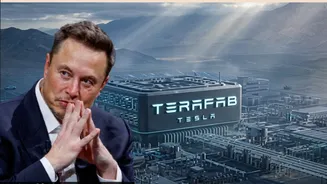
Elon Musk is embarking on a monumental undertaking to establish a vast semiconductor fabrication facility, christened 'Tera-fab,' primarily situated near
Tesla's existing hub in Austin, Texas. This ambitious project is a direct response to the escalating demand for specialized chips, a critical bottleneck threatening to impede the rapid advancement of artificial intelligence, sophisticated robotics, autonomous driving systems, and even his futuristic orbital data center concepts. The facility is slated to be a collaborative effort between Tesla and SpaceX, underscoring Musk's commitment to vertically integrating key technological components. He has voiced concerns that the current pace of semiconductor production by external partners is insufficient to meet the burgeoning needs of his ventures, particularly as Tesla intensifies its focus on AI and robotics. Musk's stark statement, 'We either build the Terafab or we don’t have the chips, and we need the chips, so we build the Terafab,' highlights the critical nature of this endeavor for his companies' future growth and innovation trajectory.
Tera-fab's Dual Purpose
The 'Tera-fab' facility is designed with a clear strategic vision, aiming to churn out chips crucial for two distinct yet interconnected technological frontiers. One category of semiconductors will be meticulously optimized for 'edge' computing and 'inference' tasks, making them ideal for deployment in Tesla's groundbreaking robotaxis and the highly anticipated Optimus humanoid robots. These chips will enable real-time decision-making and processing directly at the point of need. Concurrently, the facility will manufacture high-power chips specifically engineered for SpaceX's ambitious orbital data centers and xAI, which is now fully integrated under SpaceX's umbrella. While the precise construction timelines remain undisclosed by Musk, he has indicated that xAI will be the primary consumer of the vast majority of chips produced by Tera-fab, signaling a significant investment in bolstering the computational power necessary for advanced AI research and space-based data processing infrastructure.
Powering the Space Network
Beyond terrestrial applications, Musk envisions 'Tera-fab' as instrumental in powering his audacious plans for a network of orbital data centers. This initiative is set to commence with a compact 'mini' AI data center satellite, capable of delivering approximately 100 kilowatts of computing power. This initial satellite is merely a building block for a much larger constellation, with individual data centers envisioned to scale up to megawatt capacities. Musk's long-term vision extends even further, contemplating the launch of satellites from the lunar surface as part of his overarching objective for achieving unprecedented 'abundance.' To support this grand aspiration, Musk has formally approached the US Federal Communications Commission (FCC) seeking authorization to deploy one million data center satellites into Earth's orbit. This proposal, however, has encountered a degree of opposition, notably from Amazon's Project Kuiper division, indicating the complex regulatory and competitive landscape surrounding space-based internet and data infrastructure initiatives.