





Conquering the Rail Network
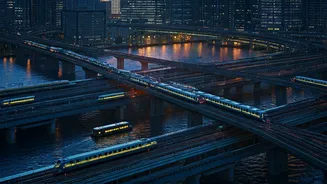
Tokyo's subway and train system is a marvel of efficiency, forming the backbone of urban mobility. Operated by multiple companies, including JR East and Tokyo Metro,
it offers unparalleled coverage across the sprawling city. Understanding the different lines, their color-coding, and transfer points is key to navigating this complex web. For instance, the JR Yamanote Line, a distinctive green loop, circles many of Tokyo's major hubs like Shibuya, Shinjuku, and Tokyo Station, making it an indispensable tool for tourists. The extensive subway networks, with their own distinct color schemes and lettered lines (e.g., Marunouchi Line in red, Ginza Line in orange), reach even further into residential and commercial districts. Purchasing a Suica or Pasmo card, a rechargeable smart card, simplifies fare payment immensely, allowing you to tap and go at turnstiles without fumbling for cash or tickets. These cards can also be used for purchases at many convenience stores and vending machines, adding another layer of convenience to your daily travels. Mastering the art of reading station maps and understanding signage, which are often bilingual, will significantly enhance your journey, making even the most daunting transfers feel manageable and efficient.
Beyond the Rails: Other Options
While trains are paramount, Tokyo offers a spectrum of alternative transport methods that cater to different needs and preferences. Tokyo's buses provide extensive coverage, particularly in areas less served by rail lines, and are a great way to experience local neighborhoods at a slower pace. Navigating them can be slightly more challenging than the trains, but understanding the route numbers and payment methods (often an all-day pass or exact change) makes them a viable option. For a truly unique perspective, the Tokyo Water Bus offers a scenic cruise along the Sumida River, connecting areas like Asakusa with Hamarikyu Gardens and Odaiba, providing stunning city views from the water. Taxis are readily available, offering door-to-door service, though they are generally more expensive than public transport. They are ideal for late-night travel when trains might be less frequent, or for transporting luggage. While renting a car is possible, it's generally not recommended for navigating within central Tokyo due to heavy traffic, complex road systems, and exorbitant parking fees. Cycling is gaining popularity, with many rental options available, offering a flexible way to explore smaller streets and parks, but be mindful of pedestrian traffic and designated cycling paths.
Smart Travel Passes
To maximize convenience and savings, consider Tokyo's various transport passes. These passes can significantly reduce your daily travel expenses, especially if you plan to utilize public transportation extensively. The Japan Rail Pass, while primarily for inter-city travel, can be used on JR lines within Tokyo, including the Yamanote Line, offering excellent value for those exploring beyond the city as well. For unlimited travel within specific zones on subways and buses, the Tokyo Metro 24/48/72-hour tickets are invaluable, providing unrestricted access to the vast subway network for a set period. Some passes also cover JR East local lines within a designated area. For budget-conscious travelers or those seeking flexibility, rechargeable smart cards like Suica and Pasmo are essential. While not technically a 'pass' in the traditional sense, their ease of use and ability to be topped up at any station make them indispensable. They eliminate the need to purchase individual tickets and can be used across most public transport systems in Tokyo, and even in many other major cities across Japan, as well as for retail purchases, seamlessly integrating into your daily routine and simplifying your Tokyo adventure.