







Lessons from the Past
The tragic sinking of the RMS Titanic on April 15, 1912, remains a stark reminder of maritime perils. With over 2,200 individuals on board for its maiden
voyage, the ship, deemed 'unsinkable,' met its fate after striking an iceberg. Distress signals were sent, and lifeboats were deployed, but the immense loss of over 1,500 lives underscored critical shortcomings. Only 705 souls were eventually rescued by the RMS Carpathia, reaching New York. This historical event serves as a crucial benchmark for understanding how far safety has come, prompting us to question the survival odds in a similar situation today, given the vast technological leaps made since that fateful night.
Tech to the Rescue
In stark contrast to 1912, modern maritime safety is fortified by sophisticated technology. Captain Edward Smith's overconfidence in 'modern shipbuilding' and the crew's lack of essential tools like binoculars, coupled with dismissed iceberg warnings and unreliable radio operations, proved disastrous then. The Titanic's radio operator even transmitted incorrect coordinates. Today, advanced ice patrols use radar-equipped aircraft, global satellites provide continuous updates, and GPS ensures precise location data. Ships are mandated to have 24/7 radio operator coverage, and SOS messages are reliably received and acted upon. These advancements allow vessels to detect and avoid hazards like icebergs with ample warning, making a repeat of the Titanic's navigational failures exceptionally unlikely. Even incidents like the Costa Concordia grounding in 2012, while serious, highlight differences due to proximity to shore and warmer waters, allowing for quicker, more accessible rescue.
Lifeboat Preparedness
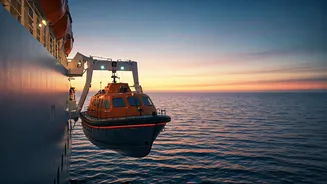
The Titanic's insufficient number of lifeboats, stemming from an overestimation of its buoyancy and an expectation of swift rescue by nearby ships, was a critical failure. It carried only 20 lifeboats, far short of its 64-person capacity. Today's maritime regulations are vastly different and far more stringent. Ships are now legally required to carry enough lifeboats to accommodate every single person on board. Crews undergo rigorous training for effective evacuation procedures. In any detected distress situation in 2026, immediate action is triggered, with the Coast Guard, neighboring vessels, and aerial support dispatched without delay. The emphasis is on ensuring every passenger has a means of escape, a significant improvement from the era when the Titanic sailed with inadequate life-saving equipment.
Survival No Longer Chivalry
The tradition of 'women and children first' dominated the Titanic's evacuation, a practice rooted in chivalry rather than formal maritime law. Many men were left to face the frigid waters without a place in the lifeboats. However, in 2026, survival during evacuations is determined by circumstances and individual actions, not gender or age. Modern research suggests that while historical traditions favored women and children, contemporary maritime disasters may see men and crew members with slightly higher survival rates due to their roles and proximity to safety equipment, though this gap has narrowed. Being a woman or child no longer automatically guarantees a better chance of survival; preparedness and emergency protocols are paramount for all passengers.
Modern Odds: Excellent
Considering all advancements, the odds of surviving a modern-day Titanic disaster are exceptionally high. The combination of sophisticated technologies like sonar and radar, coupled with unwavering safety standards and well-rehearsed evacuation protocols, makes a repeat of the 1912 tragedy exceedingly improbable. Should a vessel encounter a hazard and begin sinking in 2026, the provision of ample motorized lifeboats and comprehensive emergency plans would ensure every passenger's safety, regardless of the sea's unpredictability or the potential for human error. Crucially, nearby ships would be instantly alerted and able to provide swift rescue. These cumulative improvements mean your chances of survival in any modern maritime emergency are excellent, irrespective of personal characteristics or location at sea.