







King Fahd's Kingdom
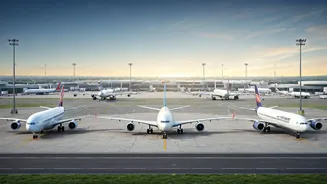
King Fahd International Airport in Saudi Arabia claims the title of the world's largest airport by land area. Spanning an incredible 776 square kilometers,
this airport is a city in itself. To put this in perspective, imagine a vast expanse where multiple towns could comfortably fit. This expansive space is essential for accommodating the airport's extensive operations, including multiple runways, terminals, and supporting infrastructure. This airport showcases the scale of modern aviation, efficiently managing a massive volume of traffic and services, making it a crucial hub for international travel and cargo.
Denver's Vast Terrain
Denver International Airport in the USA occupies a significant 137.8 square kilometers. This massive footprint is not just about size; it's about strategic planning. The airport's design supports efficient aircraft movement, passenger flow, and operational needs. Its scale allows it to handle substantial passenger and cargo volumes, making it a vital hub for the central United States. The Denver International Airport's immense size and design support its role as a key player in global air travel, linking communities far and wide.
Kuala Lumpur's Scale
Kuala Lumpur International Airport in Malaysia boasts an impressive 100 square kilometers. Its vast area supports its role as a significant international gateway for Southeast Asia. This large size is key to providing comprehensive facilities, including multiple terminals, extensive cargo handling areas, and robust support systems. The airport’s sprawling design offers a smooth and efficient transit experience for millions of passengers. The ample space also allows for future expansion and innovation, securing its place as a crucial hub for international connectivity and economic growth in the region.
Istanbul's Aviation Hub
Istanbul Airport in Turkey is another major player, covering an area of 76.5 square kilometers. This substantial area is vital for its capacity to handle a large volume of flights and passengers. The airport's design caters to both domestic and international travelers, offering modern facilities and services. With this vast space, Istanbul Airport connects the East and West, establishing itself as a crucial intersection for global air travel. The airport's size is a testament to its role in facilitating commerce, tourism, and cultural exchange across continents.
Dallas/Fort Worth's Size
Dallas/Fort Worth International Airport, located in the USA, spreads over 69.7 square kilometers. This large footprint is a testament to its importance in the North American aviation network. It handles numerous flights, serving as a significant hub for both domestic and international travel. The airport’s size enables effective operations and ample space for expansions. This extensive space allows the airport to handle high volumes of passengers and cargo efficiently. The airport's well-organized layout makes it a major center for connectivity and travel.
Orlando's Dimensions
Orlando International Airport in the USA covers an impressive 46.9 square kilometers. Its size facilitates its ability to efficiently manage high passenger traffic. This significant area allows for multiple terminals, runways, and extensive support facilities. Orlando's airport is essential for tourism and travel in Florida, supporting a range of services and operations. The expansive layout aids in smooth passenger flow and accommodates the substantial needs of the airport, which greatly contributes to the region’s economic growth.
Washington Dulles' Spread
Washington Dulles International Airport in the USA takes up 47.8 square kilometers. This large area enables it to serve as a key international gateway to the nation’s capital. The airport’s size supports a diverse range of operations, including multiple terminals and various flight services. With this massive space, the airport provides travelers with efficient services and facilitates considerable volumes of domestic and international flights. Its strategic location and infrastructure help reinforce its role as an important hub for global aviation.
Beijing Daxing's Design
Beijing Daxing International Airport in China extends across 47 square kilometers. This large-scale construction reflects China's ambition to create a world-class aviation hub. Its size makes it capable of handling a significant number of passengers and flights. This large area encompasses advanced facilities and well-organized operations, ensuring a seamless experience for global travelers. The airport’s infrastructure provides efficient transport services, contributing to China's increasing global influence.
George Bush's Footprint
George Bush Intercontinental Airport in the USA covers an area of 44.5 square kilometers. This ample space supports the airport’s ability to manage high volumes of passengers and cargo. Its layout helps facilitate its role as a pivotal hub for both domestic and international travel. The airport offers an efficient and organized environment that supports a smooth flow of passengers and aircraft operations. This impressive infrastructure greatly contributes to the regional economy and global connectivity.
Shanghai's Operations
Shanghai Pudong International Airport in China spans 40 square kilometers. This significant land area is crucial for the airport’s high operational capacity and ability to handle large volumes of air traffic. Its size accommodates multiple runways, terminals, and expansive support facilities. This layout makes sure that millions of passengers can enjoy a smooth travel experience. The airport's infrastructure supports extensive services and plays a crucial part in international connectivity. It also enhances Shanghai’s prominence as a major global business and trade center.