






Data Collection Clash
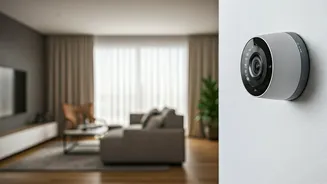
Amidst the ongoing scrutiny of Bengaluru-based startup Pronto for reportedly recording activities within its customers' homes to gather data for AI training,
a significant counterpoint has emerged from Rushil Agarwal, the founder of Human Archive. This company specializes in amassing extensive datasets of human behavior, aimed at improving artificial intelligence systems, particularly those designed for physical robots. Agarwal has publicly stated that he had previously discussed these very methods with Anjali Sardana, the founder of Pronto, months before the current controversy erupted. However, he claims his ideas were met with ridicule and disbelief at the time, with Sardana allegedly dismissing his approach as foolish. This contrast in reception and subsequent developments has fueled the ongoing debate about privacy and innovation in the rapidly evolving field of AI development, particularly as Pronto itself faces intense public backlash over its data collection methods.
Mockery and Momentum
Rushil Agarwal, at the helm of Human Archive, a firm dedicated to compiling vast repositories of human behavior data for AI training, shared a personal anecdote regarding his past interactions with Anjali Sardana, CEO of Pronto. Agarwal asserts that in January, he engaged in a conversation with Sardana about the very concept of collecting such detailed human interaction data to train AI. According to Agarwal, Sardana's reaction was one of dismissal, characterized by laughter and labels of him being "stupid." He further suggested that Sardana possesses a tendency to disparage fellow early-stage founders. Agarwal's public statement, "Look at them now, Iwk props for catching onto the trend," directly alludes to Pronto's current predicament, implying that Sardana's company has now adopted similar practices that were once dismissed by her. This situation underscores the high-stakes nature of the AI industry, where differing strategies and past interactions can become central to public discourse during times of controversy.
Pronto's Business Model
Pronto, a prominent player in the domestic services sector based in Bengaluru, has recently found itself at the center of a significant privacy debate. The company connects users with trained domestic workers for a variety of household tasks, including sweeping, dishwashing, kitchen and bathroom cleaning, and laundry, all bookable through their mobile application. In a remarkably short period, Pronto has achieved a valuation of $100 million, a testament to its rapid growth and market traction since its inception. However, the core of the controversy lies in reports that some of its service professionals have been utilizing cameras during home service appointments to capture data intended for training artificial intelligence systems. This practice has understandably raised concerns about user privacy and the ethical implications of data collection in personal spaces, creating a challenging situation for the high-flying startup and its founder, Anjali Sardana.
CEO's Background
Anjali Sardana, the driving force behind Pronto, is a 23-year-old entrepreneur who founded the company in April 2025. Her professional journey prior to launching Pronto includes valuable experience gained at Bain Capital and the venture capital firm 8VC, providing her with a strong foundation in finance and investment. Her educational background further complements her business acumen, having studied at Georgetown University in the United States. This combination of corporate and investment experience, coupled with her academic achievements, positions Sardana as a formidable figure in the startup ecosystem. Her leadership at Pronto, a company rapidly scaling in the competitive AI data collection and domestic services market, highlights her ambition and strategic vision, even as the company navigates the complexities of its data-gathering methods.
Pronto's Clarification
In response to the escalating public outcry and accusations concerning the use of cameras to collect AI training data within customer homes, Pronto has issued a formal clarification. The company emphasized that participation in their data collection program is strictly opt-in and requires explicit customer consent. Pronto detailed that this initiative is limited in scope and operates on a pilot basis, involving a very small fraction of their user base – approximately 0.1%. They stated that the camera is only present when a customer has personally opted in and paid for the specific program, and this consent must be reaffirmed before each booking. The company assured that significant efforts were made over several months to ensure full compliance with data privacy regulations, specifically mentioning the DPDP (Digital Personal Data Protection) Act. Furthermore, Pronto pointed out that they are not the sole entity in the market employing such data collection strategies for AI and robotics advancement.