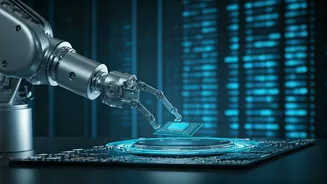









AI's Impact on Jobs
Goldman Sachs analysts have pinpointed Artificial Intelligence as a primary catalyst for an upcoming wave of job reductions. The financial institution
projects that this transition will affect a broad spectrum of industries, compelling companies to reassess their workforce strategies. The core reason behind this anticipation lies in AI's capacity to automate numerous tasks currently performed by human employees. This automation could lead to heightened efficiency, potentially decreasing the necessity for a significant number of existing roles. The financial sector is likely to see the impact of AI with roles being made redundant, as well as the manufacturing sector, which has been making use of automation for many years already.
Adaptation and Strategy
For businesses navigating this predicted shift, strategic adaptation becomes paramount. To mitigate the potential effects of AI-driven automation, companies need to proactively examine their operational models. This process involves identifying areas where AI can be integrated to enhance productivity while simultaneously minimizing workforce disruption. Reskilling and upskilling initiatives for current employees are also crucial in this transition, equipping them with the skills needed to thrive in a landscape increasingly defined by AI. Creating new roles centered around AI could also provide opportunities for the workforce. Businesses must take proactive steps to prepare for an environment shaped by Artificial Intelligence.
Layoff Timeline of 2026
The Goldman Sachs forecast has set 2026 as the year when these AI-induced workforce adjustments could materialize. This timeframe gives companies and workers a crucial period to strategize and prepare. Many business leaders will utilize this window to execute comprehensive planning, assessing the specific implications of AI adoption on their organizational structure. The timeline enables workers to seek suitable retraining programs. In the face of AI's transformative influence, the coming years are a pivotal phase for both companies and individuals to embrace change and remain competitive.