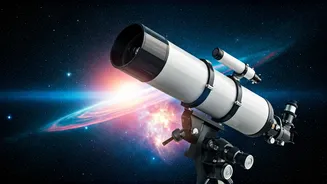









Smart Telescopes Explored
Smart telescopes represent a leap in astronomical technology, offering ease of use and automated features for beginners. These telescopes often include
built-in databases of celestial objects and can automatically locate and track them. For instance, the 'Best smart telescopes 2026' allow effortless observation of stars, galaxies, and nebulae. Features can include smartphone integration, making navigation and image capturing easier than ever. These telescopes typically use computerized systems to locate objects, saving time and ensuring accurate viewing. They often incorporate features like Go-To capabilities, which automatically move the telescope to a specific object. The convenience offered by smart telescopes makes them an excellent choice for those new to astronomy or anyone wanting a simplified viewing experience. Their user-friendly design fosters an immersive and educational approach to exploring the cosmos, encouraging an easy connection with the vast expanse of the night sky.
Beginner-Friendly Options
For those just starting out, the 'best telescopes for beginners 2026' offer an accessible entry point into astronomy. These telescopes prioritize ease of setup, intuitive controls, and a focus on visual observation. They are usually designed to be lightweight and portable, ideal for setting up in various locations. Beginners can focus on learning the night sky, identifying constellations, and observing the planets and the moon. Such telescopes often come with educational resources, such as star charts and guides, further assisting in the learning process. The best options often include features like simple alt-azimuth mounts, which are easy to maneuver, and high-quality optics to deliver clear views. These beginner telescopes help cultivate an appreciation for astronomy by simplifying the viewing experience, allowing newcomers to explore the universe without advanced technical knowledge. Moreover, they support the development of a lifelong interest in space exploration, offering a pathway for budding astronomers to learn and grow their knowledge of the universe.
Nebulae and Galaxies
Observing nebulae and galaxies offers some of the most spectacular sights in the night sky. The Orion Nebula (M42), a stellar nursery, is a particularly stunning target, with astrophotographers capturing its intricate details. The Carina Nebula and the Elephant Trunk Nebula also present captivating views, showcasing the cosmic dust and gas sculpted by energetic young stars. Space telescopes, such as the Euclid, capture the beauty of these galactic formations. These celestial objects provide a glimpse into the processes of star formation and the vast scale of the universe. The vibrant colors and complex structures of nebulae, and the grandeur of distant galaxies, are well within reach of dedicated amateur astronomers with suitable telescopes. Many observers have seen the 'rampaging lion' nebula, or observed galaxies that appear to be 'hugging' each other. Viewing these objects requires patience, dark skies, and the right equipment, but the visual reward is immense, as the cosmos unveils its deepest secrets.
Celestial Events: 2026
The year 2026 promises many opportunities to observe various celestial events. Comet 24P/Schaumasse was expected to make its closest approach to the sun, which offered a chance to witness a rare astronomical event. The moon, in its dance with bright stars like Regulus and Saturn, provides a fascinating spectacle visible with the naked eye or a simple telescope. Each event, whether the conjunction of planets or the appearance of comets, brings unique opportunities to appreciate the dynamic nature of the cosmos. Observing these events requires only basic telescopes and often, just a clear night sky. These events present an accessible avenue to enjoy the beauty of the night sky and deepen the appreciation for astronomy, whether witnessed from the backyard or a remote location. Additionally, they foster a sense of connection to the wider universe and increase public awareness and appreciation of celestial events.
Photo Opportunities
Astrophotography offers a way to capture the stunning beauty of the cosmos. The images of celestial objects like the Orion Nebula and the Elephant Trunk Nebula showcase the potential of modern telescopes. Readers can also explore the photography of nebulae and galaxies, showing that capturing such images requires equipment that enhances detail and the capacity to collect enough light. Deep-space astrophotography requires longer exposure times and specialized equipment. The results, however, are often incredible, allowing for the visualization of otherwise invisible structures and colors. Astrophotography is not just about the equipment; it also requires patience, technical skills, and a keen eye for detail. The images captured by astrophotographers inspire awe and encourage exploration of space. Sharing those photos promotes public interest in the wonders of the universe and deepens our appreciation for its majesty.