






Camel's Unique Defense
In a remarkable stride toward tackling dengue, a formidable disease that affects millions annually in India, researchers at IISER Mohali have unlocked
a potential game-changer derived from an unexpected source: camels. This pioneering work, led by Dr. Sharvan Sehrawat, focuses on harnessing nanobodies, which are essentially highly potent and compact versions of antibodies. The significance of this discovery is amplified by its ability to neutralize all four distinct strains of the dengue virus. This innovation is particularly crucial for India, which shoulders a substantial portion of the global dengue burden, experiencing approximately 60 lakh infections each year. The findings, detailed in the journal Immuno Horizons, represent a significant first for the country, presenting a promising avenue for a cure against a virus that often resurfaces, especially after the monsoon season. Dengue presents a complex medical challenge; unlike many other infections where a prior encounter confers immunity, a subsequent infection with a different dengue serotype can lead to a more severe, even life-threatening, illness. This phenomenon, known as Antibody-Dependent Enhancement (ADE), occurs when antibodies from an initial infection, while binding to a new strain, fail to neutralize it. Instead, they inadvertently facilitate the virus's entry into host cells, escalating the risk of severe complications like hemorrhagic fever and shock syndrome. This counterintuitive immune response has historically complicated the development of effective dengue vaccines worldwide.
Nanobodies: A Superior Weapon
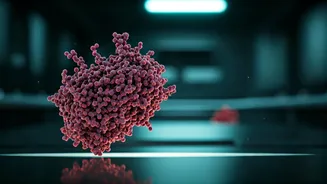
Camels possess an extraordinary biological characteristic that makes their immune system a valuable resource for medical science: they naturally produce antibodies that can be readily adapted into what are known as 'single-domain antibodies,' or nanobodies. These nanobodies are distinguished by their streamlined structure, comprising only the essential viral-fighting components, making them significantly smaller and more robust than conventional human antibodies. A critical advantage of nanobodies is their lack of an 'Fc region,' a specific segment in standard antibodies that is believed to be responsible for triggering the dangerous Antibody-Dependent Enhancement (ADE) effect observed in dengue infections. Dr. Sehrawat highlights the inherent safety of these nanobodies, stating that their absence of the ADE-promoting component renders them intrinsically safer for therapeutic use. Furthermore, their diminutive size and resilience allow them to access and target viral structures that larger human antibodies might miss. The research team's approach involved constructing an extensive 'molecular library' containing over 200 million unique antibody sequences derived from camel samples. Through meticulous screening of this vast library, they identified a specific nanobody with a remarkable affinity for the dengue virus's 'envelope protein.' This protein acts as the virus's key, enabling it to infect human cells. By effectively blocking this vital interaction, the nanobody halts the viral replication process. Preliminary laboratory studies and animal trials yielded astounding results, with mice suffering from lethal dengue infections demonstrating complete recovery. The treatment significantly reduced viral loads and mitigated organ inflammation without any reported adverse reactions, distinguishing it from existing experimental therapies.
Revolutionizing Production Methods
The IISER team is now actively pursuing innovative strategies for the large-scale production of these promising nanobody therapies, aiming to overcome the limitations of conventional, high-cost manufacturing. Their focus is on 'molecular farming,' a revolutionary approach that leverages plants to produce these therapeutic molecules. The researchers have already achieved success in cultivating these antibodies within laboratory plants such as tobacco and Arabidopsis, which are small flowering plants belonging to the mustard and cabbage families. The ultimate goal, however, is to transition this production to more common and readily available fruits, with bananas being a prime candidate. Dr. Sehrawat explains that plants can generate substantial biomass rapidly, a characteristic that makes them ideal for efficient production. He envisions a future where these dengue-fighting medicines could be harvested directly from fruits, dramatically reducing the cost of treatment and enhancing its accessibility for the general population. While the initial generation of the nanobody treatment is effective, it currently necessitates daily administration. To address this, the IISER team is developing a 'bivalent' version. This advanced therapy involves administering a single, potent 'super-antibody' to dengue patients via injection, aiming for a one-time treatment solution. Demonstrating the project's momentum, IISER has secured approval from the Indian Council of Medical Research (ICMR) for a three-year initiative dedicated to scaling up this groundbreaking therapy.