


Ikaria: Remote Exploration
Venture to Ikaria, a rugged and wild island in the eastern Aegean, for a truly adventurous experience. This less-traveled destination boasts dramatic mountains,
deep gorges, and lush forests, offering a unique cultural tapestry woven with legend, including ties to Dionysus and Icarus. Getting around requires your own transport, enhancing the feeling of discovery. Don't miss the striking Seychelles Beach with its azure waters, the family-run Afianes Winery, or the therapeutic hot springs of Therma. Explore ancient rock houses used for pirate evasion by traversing granite peaks via old footpaths. Ikaria is also a 'Blue Zone,' renowned for its high number of centenarians, a testament to its unique diet and lifestyle. Plan for at least two weeks to fully absorb its enchanting atmosphere. Ferries regularly connect Kos to Agios Kirikos, a journey of approximately 3.5 hours with intermediate stops.
Alonissos: Underwater Adventures
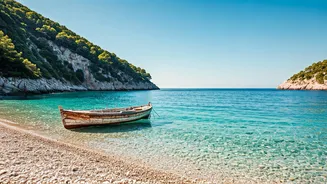
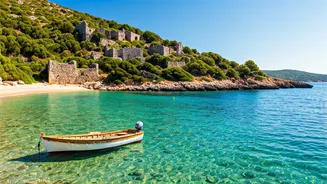
Alonissos, nestled in the Northern Sporades and often overshadowed by its famous neighbor Skopelos, offers a more serene Aegean experience. Here, the soundtrack is the gentle hum of cicadas and the soft lapping of waves against shores fringed by pine trees and dramatic cliffs, leading to brilliantly turquoise bays. Explore the island's charm on foot, by boat, or moped, uncovering timeless villages adorned with icon-covered chapels, sprawling vineyards, and abundant orchards. The former capital, Hora, with its whitewashed alleys and inviting pavement cafes, is particularly delightful when visited outside of peak season. The island's crowning glory is its expansive National Marine Park, a sanctuary for sea turtles, dolphins, and the endangered Mediterranean monk seal, offering opportunities for diving down to explore a Classical-era shipwreck. Getting to Alonissos is straightforward, with scenic 1.5-hour ferry rides available from Skiathos.
Crete: Minoan Wonders
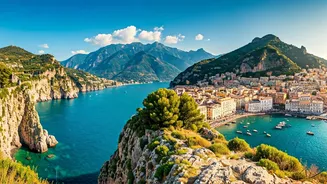
As Greece's largest island, Crete offers a comprehensive experience of the country, situated closer to North Africa than Athens. This diverse land presents everything from idyllic bays and secluded coves to challenging ravines perfect for hiking. Its allure extends to evocative Minoan ruins that transport visitors back to the Bronze Age, alongside vibrant cities and charming harbor towns rivaling Greece's prettiest. Beach lovers will find paradise at Preveli, located at the mouth of the Kourtaliotiko Gorge, at Vaï with its unique date palm fringe, and at Elafonisi, famed for its rose-hued sand. Natural marvels include the Dikteon Cave, a sacred site from Minoan times believed to be Zeus's birthplace, and the dramatic Samaria Gorge. Essential historical sites include the Palace of Knossos, the ancient capital of Minoan Crete, and Rethymno with its Venetian Fortezza. The Heraklion Archaeological Museum offers a deep dive into 5500 years of history, while Chania's Venetian harbor enchants with its pastel-hued architecture. Given its size, it's wise to select a base strategically, utilizing the island's two main airports in Iraklio and Hania. The shoulder seasons are recommended for exploration due to the intense summer heat.
Nisyros: Volcanic Landscapes
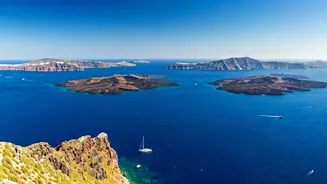
Nisyros, a captivating island in the Dodecanese, presents a volcanic beauty akin to Santorini but without the overwhelming crowds. Emerging from the Aegean Sea approximately 150,000 years ago, its heart features an active volcano and otherworldly lunar landscapes. Local folklore attributes the island's hissing fumaroles to a slumbering giant. Nisyros emanates a wonderfully relaxed ambiance, offering a glimpse into Greece before mass tourism. Days unfold at a leisurely pace in chalk-white villages perched on cliffs, marked by blue-domed churches. Amidst olive groves and vineyards, discover secluded coves with crystal-clear waters, or unwind in a traditional taverna or kafeneio for a leisurely lunch or a game of backgammon. The island provides a tranquil retreat. Reaching Nisyros is simple, with a brief 50-minute ferry ride from Kos.
Mykonos: Party & Charm
Mykonos gained international recognition through films, captivating many with its image of sunny beaches and a life of leisure. It has since established itself as the glamorous party hub of the Greek islands, attracting a diverse crowd from influencers to LGBTQ+ revelers to its legendary beach clubs like Paradise and Super Paradise during the day, and its high-energy megaclubs by night. Beyond the vibrant nightlife, the island invites exploration of the whitewashed lanes of its medieval capital, Hora, relaxation on soft sands at beaches like Agios Sostis, and scenic bike rides through the countryside to discover charming villages and the 16th-century Tourliani Monastery. For a more subdued experience, visiting during the shoulder seasons offers quieter surroundings and more affordable accommodation options. Alternatively, explore nearby tranquil islands such as Paros and Naxos.
Rhodes: Historical Grandeur
As the largest island in the Dodecanese, Rhodes has enchanted visitors for millennia with its potent blend of history, golden beaches, verdant valleys, and crystal-clear seas ideal for water sports. The island's historical significance is particularly dramatic, with Rhodes Town serving as a primary destination for cultural immersion. This UNESCO World Heritage site showcases layers of history from Byzantine and Classical periods through Ottoman and Italian influences. Its double-ringed medieval city offers a captivating journey back in time, featuring labyrinthine cobbled streets and the Knights' Quarter, where the Knights of St. John constructed fortress-like mansions and the impressive Palace of the Grand Master in the 14th and 15th centuries. The Archaeological Museum, housed in a former Knights' Hospital, displays ancient mosaics and marble statues. Further south, Lindos presents a picturesque scene of whitewashed houses cascading down to a turquoise bay, crowned by its striking Acropolis, offering magnificent sea views. To avoid peak crowds and intense heat, visiting outside of July and August is highly recommended.
Samothraki: Wild Nature Encounters
Nestled amidst the Northern Aegean, Samothraki is a remote and wild island cradled by high, rugged mountains, dense oak, cedar, and pine forests, and dynamic mountain streams. Its landscape is further defined by fern-laden gorges with cascading waterfalls. Towering over it all is Mount Fengari, at 1611 meters, said to be the vantage point from which Poseidon observed the fall of Troy. This island is ideal for those seeking a slower pace and an intimate connection with nature, whether it's cooling off in emerald-green natural plunge pools, hiking through goat-grazed heights, or relaxing on the creamy sands of beautiful bays like Pachia Ammos. Samothraki invites exploration of its ancient mysteries, including the Sanctuary of the Great Gods, a temple dating back to around 1000 BCE, known for its ancient Thracian fertility cult rituals. The site of the Winged Victory of Samothrace monument, once overlooking the sea, is also a significant draw. Daily ferries from Alexandroupoli on the mainland operate during summer, with the journey taking approximately 2 hours.
Kefallonia: Rugged Romance
Kefallonia, the largest and arguably most beautiful of the Ionian Islands, offers a magical atmosphere distinct from its popular neighbor, Corfu. This island of cinematic beauty captivates with its stretches of blond-sand beaches meeting startlingly turquoise seas, remote mountain peaks, and a hinterland rich with cypresses, oaks, vines, and olive groves. Its poetic landscapes famously served as the backdrop for the wartime romance film 'Captain Corelli's Mandolin.' Visitors can spend weeks exploring its hiking and cycling trails without uncovering all its secrets. Myrtos beach, accessible via a winding road down to a cliff-fringed bay with luminous blue waters, is a must-see. For a historical touch, explore the charming Venetian harbor of Fiskardo or the romantically ruined 16th-century Agios Georgios Kastro fortress, which offers panoramic island views. The nearby island of Ithaki, a short ferry ride away, is steeped in Homeric legend as Odysseus's mythical home and is perfect for exploring on foot.
Kythira: Relaxed Getaway
Situated where the Ionian and Aegean Seas converge, Kythira lies just south of the Peloponnese but feels worlds away from the hustle of modern life. This island, an outlier of the Ionian Islands, operates at a refreshingly slow pace, preserving a time-capsule charm. Its beauty is striking, with cliff-hugging bays, gorges adorned with waterfalls, and distinctive Cycladic sugar-cube architecture. Inland, tranquil roads wind through orchards, vineyards, and olive groves. Legend has it that Kythira is the birthplace of the goddess Aphrodite, adding to its romantic allure. To truly appreciate the island's soul, allow for several days, including visits to the photogenic village of Hora, topped by a Venetian fortress, and the medieval Paleochora, once the island's Byzantine capital. Ferries operate twice daily between Neapolis in the Peloponnese and Kythira during high season, with a crossing time of 1.25 hours.
Santorini: Volcanic Majesty
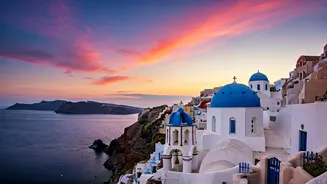
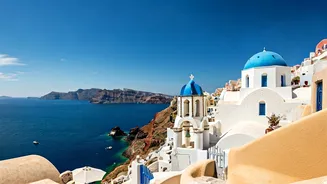
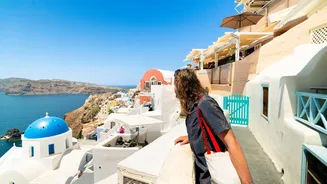
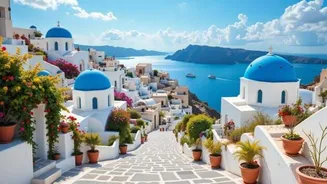
Arriving by sea into Santorini's vast, drowned volcanic caldera offers an immediate and profound sense of romance. The intense blue of the sea and sky contrasts dramatically with sheer, rugged cliffs that rise above black-sand beaches, leading the eye to clusters of whitewashed houses and iconic cobalt-blue domed churches, epitomizing the quintessential Greek postcard image. However, Santorini's fame has led to significant overtourism, with visitor numbers peaking at 3.4 million in 2024, far outnumbering its 15,500 permanent residents. For those who choose to visit, avoiding the peak summer months is crucial to escape the throngs of Instagrammers and cruise-ship day trippers. Nonetheless, the island's allure is undeniable. Towns like Oia and Fira, built on the steep caldera slopes, offer a luxurious experience with their cave houses, boutique hotels featuring infinity pools, and cliffside tavernas serving fresh seafood while overlooking breathtaking sunsets. For a deeper understanding of the island's geology, consider a guided hike up the active volcano or explore the remarkably preserved Minoan ruins of Ancient Akrotiri, often referred to as a real-life Atlantis. For a similar aesthetic without the crowds, a short 50-minute ferry ride can take you to the quieter island of Folegandros.
Samos: Wine & Valleys
Samos, situated in the eastern Aegean just a short distance from Turkey, immediately captivates with its cerulean waters and a coastline dotted with blond-sand beaches, backed by a wild, mountainous interior. The island's landscape is characterized by vineyards cultivated on dry-stone terraces known as 'pezoules,' and river-carved, densely forested valleys that ascend to the highest peak, Mount Kerkis, standing at 1434 meters. Grape cultivation has a long history here, dating back to 1200 BCE, and the island's Muscat wine, described as golden as the sun and sweet as honey, is highly acclaimed by wine enthusiasts. Samos is also steeped in history, being the legendary birthplace of the goddess Hera and home to the ancient sanctuary of Heraion. Other significant ancient sites include the Evpalinos Tunnel, a remarkable 6th-century BCE aqueduct, and the Archaeological Museum of Pythagorio. The island is particularly magical in spring, when opportunities abound for foraging wild herbs, listening to nightingales, and exploring trails through wildflower meadows leading to charming whitewashed villages in the hinterland.
Kéa: Near Athens Escape
Arriving on the wild, serene, and breathtakingly beautiful island of Kéa, it's remarkable to consider that Athens is only an hour's ferry ride away. While a favored escape for Athenians seeking respite from the summer heat, the island's charms are increasingly being discovered by others. The coastline features pine-clad cliffs plunging into golden-sand bays and tranquil, glassy waters, ideal for diving and exploring shipwrecks. Inland, time seems to stand still in charming, hill-hugging villages that offer an authentic taste of Greek life. Cobbled paths meander through vineyards, olive groves, and ancient oak forests, creating an idyllic atmosphere. History buffs can visit the Archaeological Museum in Ioulis, housing intriguing artifacts, or explore the ancient city of Karthaia and its acropolis temples, accessible only by boat or on foot. The 8-meter-long Lion of Kéa, carved from schist, also dates back to between the 9th and 6th centuries BCE. Further north, the dramatic coastal road leads to the clifftop 18th-century Kastriani Monastery, believed to have healing properties, offering spectacular views across the Aegean to the neighboring island of Andros. To experience Kéa with fewer crowds and a calmer atmosphere, it's best to visit outside of the summer holidays.