






Artemis Program Updates
The journey back to the Moon, known as the Artemis program, has undergone significant adjustments. NASA has restructured its approach, with the Artemis III
lunar landing now rescheduled for the Artemis IV mission, anticipated for 2028. This shift means the focus for Artemis III will be on systems testing in low-Earth orbit. The earlier Artemis II mission, a precursor to landing, also saw its spacecraft rolled back for further preparations. This evolving strategy aims to refine the complex operations required for sustained human presence on the lunar surface, building on lessons learned and technological advancements. Additionally, recent observations from the MAVEN Mars orbiter suggest the possibility of lightning on the Red Planet, building upon earlier indications from the Perseverance rover, further expanding our understanding of Martian atmospheric phenomena.
AI in Advocacy Power
The Planetary Society recently showcased how artificial intelligence significantly amplified its Space Policy and Advocacy team's capabilities. In a webinar, Casey Dreier and Jack Kiraly shared insights into how AI tools allowed their two-person team to achieve outcomes comparable to larger, more resourced teams. This innovative application of AI was particularly instrumental in their successful efforts to 'Save NASA Science in 2025,' demonstrating AI's potential to enhance efficiency and effectiveness in critical advocacy work. By leveraging these technologies, the Society was able to champion important funding for space exploration and research, ensuring that vital scientific endeavors continue to receive the necessary support for future discovery and innovation. This strategic use of AI underscores a forward-thinking approach to advocating for the advancement of space science.
Chang'e-7's Lunar Goals
China's forthcoming lunar mission, Chang'e-7, is poised to play a crucial role in lunar exploration, with a planned launch in 2027. This ambitious endeavor is designed to meticulously map resource potential in the Moon's south polar region, with a specific focus on locating water ice and other valuable volatile compounds within its permanently shadowed craters. These objectives align with China's broader vision of establishing an International Lunar Research Station, fostering a sustained presence and cooperative framework for future lunar activities. The mission's success would mark a significant step in understanding and utilizing lunar resources, potentially paving the way for expanded scientific research and long-term human endeavors on the Moon.
Cat's Eye Nebula's Beauty
The Hubble Space Telescope has provided a breathtaking close-up of the Cat's Eye Nebula, also known as NGC 6543. This celestial object, a planetary nebula, is a vivid example of a star's final evolutionary stages. Its name derives from its round appearance, reminiscent of planets when viewed through early telescopes. The European Space Agency's Euclid space telescope has also captured a wide-field view of this region, revealing a halo of colorful gas fragments surrounding the nebula, believed to be ejected from the star before the main nebula formed. By combining observations from both Hubble and Euclid, astronomers can achieve a comprehensive understanding of the nebula's complex structure, offering insights into stellar death that act as a cosmic 'fossil record' of a star's demise.
Celestial Escape Sweepstakes
An exceptional opportunity awaits space enthusiasts to win an unforgettable celestial escape to Mauna Kea in Hawaii. This sweepstakes offers a chance to experience the island's renowned night skies while simultaneously supporting The Planetary Society's vital mission. The grand prize includes exclusive behind-the-scenes access to the world-class Keck Observatory and a luxurious five-night stay for two at The Westin Hapuna Beach Resort. Participants can enhance their chances by using the code ESCAPE for 25% extra entries. This promotion not only provides an extraordinary travel experience but also directly contributes to advancing space science and exploration efforts.
Night Sky Guide
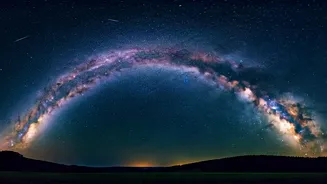
March's night sky presents a dazzling celestial display for observers. The planet Jupiter will be prominently visible high in the east shortly after sunset, outshining even Sirius, the brightest star, which is also nearby. In the western sky, observers can spot the yellowish hue of Saturn and the exceptionally bright planet Venus, both appearing low on the horizon in the early evening. These planetary alignments offer a wonderful opportunity for amateur astronomers and the public to engage with the cosmos. Further details and guidance for observing these celestial bodies can be found in the dedicated guide to March's night skies, making it easier for everyone to appreciate the wonders above.
Advocacy and Membership
Becoming a member of The Planetary Society is a direct way to fuel critical advocacy efforts and shape the future of space science and exploration. One significant achievement highlighted is the successful campaign to 'Save NASA Science in 2026,' where member support was instrumental in preventing drastic budget cuts to planetary exploration. This advocacy ensures the continuation of vital missions and scientific research across our solar system. Members are also invited to a virtual Q&A with the new CEO, Jennifer Vaughn, and outgoing CEO Bill Nye, to discuss the organization's evolving mission and passion for space. Furthermore, legislative action is underway as Congress begins NASA's fiscal year 2027 budget. The bipartisan Planetary Science Caucus is circulating a letter urging Congress to allocate $9 billion to NASA's Science Mission Directorate, a crucial step in maintaining the stability of high-priority scientific missions. Encouraging representatives to join this letter is a key action for those wishing to further support space exploration.
Interplanetary Life Potential
Intriguing research is shedding light on the possibility of life traveling between planets. A recent study published in PNAS Nexus has revealed that a resilient species of desert bacteria can remarkably withstand the extreme pressures associated with simulated asteroid impacts. This finding lends significant support to the theory of 'lithopanspermia,' which proposes that microbial life could potentially survive embedded within rocks ejected by asteroid collisions, thereby traveling across the vastness of space from one celestial body to another. This scientific advancement broadens our understanding of the potential mechanisms for life's spread throughout the universe, suggesting that the conditions for life's transfer might be more robust than previously imagined.