






The Power Hurdle
Modern computing, especially in data centers, faces a monumental challenge: meeting escalating energy needs while ensuring efficient power delivery. At
the heart of this issue lies the critical task of voltage conversion – transforming high incoming voltages into the much lower, precise levels required by sensitive electronic components like those in Graphics Processing Units (GPUs). For instance, data centers often operate with power distributed at 48 volts, but processors demand a mere 1 to 5 volts. Achieving this drastic reduction efficiently, especially within the confined spaces of modern hardware, has become increasingly complex. Traditional methods, heavily reliant on inductive components, are bumping against their physical limitations, making it difficult to scale them further for future demands. Senior author Patrick Mercier, a professor at UC San Diego's Jacobs School of Engineering, highlights that the sophistication of current inductive converters leaves little room for substantial improvements to meet the ever-growing computational requirements.
A Piezoelectric Solution
To overcome the constraints of traditional converters, researchers at UC San Diego explored a promising alternative: piezoelectric resonators. These minuscule devices harness mechanical vibrations to store and transfer energy. The potential benefits are substantial, including smaller form factors, higher energy density, improved efficiency, and simpler mass production compared to existing technologies. Mercier enthusiastically points out that piezoelectric technology offers significant scope for advancement and could ultimately outperform current solutions. However, early iterations of piezoelectric converters faced hurdles in maintaining efficiency and delivering adequate power when dealing with large voltage differentials. This presented a clear area for innovation to unlock their full potential for advanced computing applications.
Hybrid Design Breakthrough
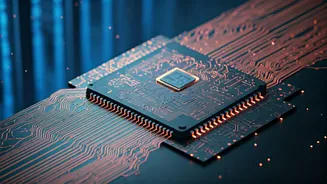
The breakthrough came with the development of an ingenious hybrid circuit design that integrates a piezoelectric resonator with strategically placed, readily available capacitors. This novel approach allows the converter to manage substantial voltage conversions with far greater effectiveness. The team successfully implemented this design in a prototype chip, which demonstrated remarkable performance in lab tests. It efficiently converted 48 volts down to 4.8 volts, a common requirement in data centers, achieving a peak efficiency of 96.2 percent. Furthermore, the chip delivered approximately four times the output current compared to previous piezoelectric-based designs, a testament to its enhanced capability. This hybrid architecture creates multiple power flow pathways, minimizes energy wastage, and alleviates strain on the resonator, collectively boosting both efficiency and power delivery with only a marginal increase in physical size.
Future Pathways
While this innovative technology is still in its nascent stages, it represents a significant stride towards addressing the inherent limitations of current power converters. Future research will concentrate on refining materials, optimizing circuit configurations, and developing advanced packaging techniques. A key challenge, as explained by Mercier, involves the integration of piezoelectric resonators, which vibrate physically and thus cannot be attached using conventional soldering methods, necessitating different assembly strategies. He emphasizes that while piezoelectric-based converters are not yet ready to supplant existing technologies, they offer a clear trajectory for future progress. Continued advancements in materials, circuit design, and packaging are crucial to making this technology viable for widespread deployment in data centers and other demanding computing environments.