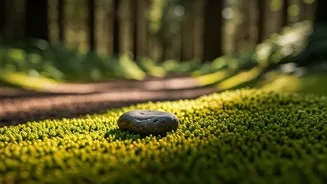









Ikigai: Your Reason
At the core of Japanese wellness is Ikigai, often translated as 'a reason for being.' This philosophy shifts the focus from external achievements, common
in Western culture, to finding daily meaning and the small joys that motivate you each morning. A 2026 follow-up analysis published in the Journal of Gerontology highlighted that individuals possessing a robust sense of purpose exhibited decreased risks of cognitive decline and enhanced psychological wellbeing. In an era frequently marked by burnout, Ikigai redirects attention from grand objectives towards the significance of everyday moments, thereby rendering life more manageable and fulfilling.
Wabi-Sabi: Perfect Imperfection
If Ikigai provides life's direction, Wabi-Sabi offers its peace. This profound philosophy centres on the acceptance of imperfection, impermanence, and simplicity. In today's intensely curated digital landscape, this notion feels exceptionally avant-garde. Research from the Journal of Positive Psychology in 2026 indicated that 'acceptance of imperfection is associated with reduced anxiety and increased emotional resilience.' Contemporary interpretations underscore how Wabi-Sabi assists individuals in relinquishing unrealistic expectations, consequently mitigating stress and perfectionism. Instead of striving for flawless existences, people are increasingly learning to find serenity in their current circumstances, appreciating them with all their inherent flaws.
Kaizen: Gentle Progress
While numerous cultures champion dramatic overhauls, the Japanese concept of Kaizen champions continuous, incremental advancement. Rather than establishing daunting aspirations, Kaizen advocates for small, consistent daily improvements, whether in habits, skills, or one's mindset. A 2026 study in Behavioural Sciences Journal found that 'incremental habit formation significantly outperformed large-scale behavioural shifts in long-term adherence.' In our fast-paced, overstimulating lives, Kaizen presents a sustainable alternative: achieving progress without succumbing to pressure.
Shinrin-Yoku: Forest Bathing
Known globally as 'forest bathing,' Shinrin-Yoku involves immersing oneself in nature, not for the purpose of physical exertion but for mindful presence. As urban existence becomes increasingly demanding, this practice is regaining significant traction for its remarkably calming effects on the human brain. Research published in Environmental Health Perspectives in 2026 revealed that 'short-term exposure to natural environments significantly reduced cortisol levels and improved mood states.' Even brief interactions with natural elements, such as parks, trees, or general greenery, can effectively reset mental overload and foster improved emotional equilibrium.
Oubaitori: Embrace Your Pace
One of the most profoundly underrated Japanese concepts, Oubaitori, imparts a simple yet potent lesson: cease comparing your life to others. Drawing inspiration from the natural phenomenon where different trees bloom at varying times, it encourages individuals to honour their unique growth trajectories. This philosophy is particularly pertinent in the age of social media, where constant comparison is the norm. A 2026 study in the Cyberpsychology Journal established that 'reduced comparison behaviours were linked to higher self-esteem and lower anxiety levels.' Oubaitori offers a powerful antidote to comparison culture, gently reminding us that personal progress is individual and not subject to external competition.