






Understanding Lunar Eclipses
A lunar eclipse is a magnificent astronomical event that occurs when the Earth aligns precisely between the Sun and the Moon. This alignment positions
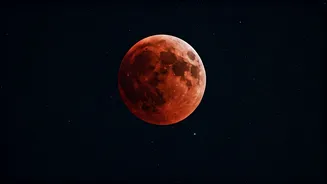
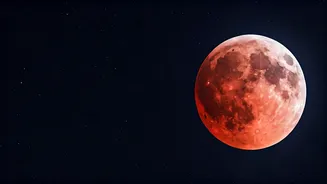
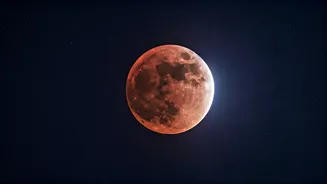
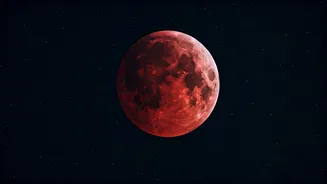
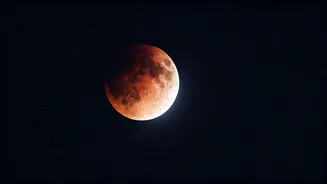
Earth's shadow to fall upon the lunar surface, obscuring direct sunlight. Such an alignment can only happen during the full moon phase. When this shadow engulfs the Moon, it causes the Moon to dim or take on a distinctive reddish coloration, famously known as a 'Blood Moon'. Unlike solar eclipses, which demand protective eyewear and are visible only from specific locations, lunar eclipses are entirely safe to observe with the naked eye and can be enjoyed from any point on Earth experiencing nighttime. These celestial displays are extended affairs, often lasting for several hours, with the full shadow phase, or totality, typically enduring for up to a couple of hours, offering ample time for observation and appreciation.
March 3rd Eclipse Details
The much-anticipated total lunar eclipse on March 3rd, 2026, promises a captivating viewing experience for observers across the globe, including those in India. While solar eclipses are notoriously fleeting and geographically limited, lunar eclipses offer a more inclusive spectacle. On the night of the eclipse, the Earth will be situated directly between the Sun and the Moon, casting its shadow. For residents in New Delhi and Noida, the celestial show is set to begin with the Moon rising in a partially eclipsed state around 6:26 pm Indian Standard Time, with the full eclipse concluding by approximately 6:46 pm IST. This timing allows for a significant portion of the eclipse to be observable during the evening hours, making it accessible for many.
The 'Blood Moon' Phenomenon
The striking crimson hue that the Moon adopts during the total phase of a lunar eclipse is a result of a phenomenon known as Rayleigh scattering, the same process that colors our sky blue. As sunlight passes through Earth's atmosphere during totality, the atmosphere acts as a filter. It scatters shorter, bluer wavelengths of light away, while allowing longer, redder wavelengths to penetrate and bend towards the Moon. This filtered sunlight then illuminates the lunar surface, giving it that characteristic rusty or 'Blood Moon' appearance. NASA indicates that this remarkable red phase of the eclipse typically lasts for about 59 minutes, providing a concentrated period of intense visual drama in the night sky.
Shadow Differences Explained
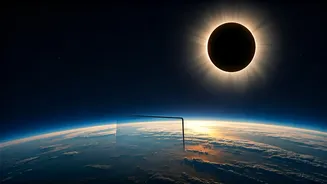
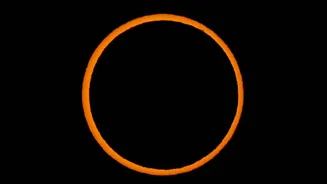
Understanding the mechanics of shadows in solar and lunar eclipses reveals key distinctions. In a solar eclipse, the Moon is positioned between the Earth and the Sun, and its shadow is relatively small, casting a narrow path across the Earth's surface. Consequently, only regions directly within this limited shadow experience the solar eclipse. Lunar eclipses, however, present a contrast. Here, the Earth stands between the Sun and the Moon, and its shadow is considerably larger, enveloping the Moon entirely. This broad shadow ensures that the lunar eclipse is visible over a much wider geographical area on Earth. The total lunar eclipse on March 3rd, 2026, is particularly noteworthy as it marks the first total lunar eclipse of the year, and the next such complete event won't occur until 2029.