



An Unconventional Partnership
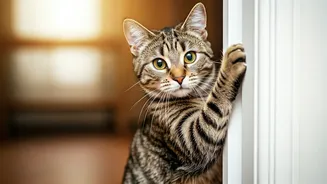
The story of cats and humans is quite unlike that of dogs. Instead of being actively trained or bred for specific tasks to serve us, felines took a more
independent route. They gradually gravitated towards human settlements, initiating a symbiotic relationship built on mutual advantages rather than a master-servant dynamic. This unique approach allowed them to maintain a significant degree of their natural instincts and behaviors, setting them apart from other domesticated species. Their integration into human society was a slow, organic process, driven by common interests rather than direct human intervention.
Ancient Roots of Coexistence
The earliest evidence of cats associating with people dates back an impressive 9,000 to 10,000 years ago, a period coinciding with the dawn of agriculture. As humans began to cultivate crops and store grains, these storable resources naturally attracted rodents. Observing this abundant prey, wildcats, specifically the African wildcat (Felis silvestris lybica), began to follow human settlements. These agile and resourceful hunters found a ready supply of food in the form of these pests, while humans benefited from a natural form of pest control. This mutually beneficial arrangement laid the groundwork for the close relationship we share with cats today.
Sacred Status in Egypt
By approximately 4,000 years ago, cats had ascended to an incredibly esteemed position within Ancient Egyptian society. Their value extended beyond mere practicality; they were legally protected and deeply intertwined with religious beliefs, often associated with powerful deities such as Bastet, the goddess of home, fertility, and protection. This reverence meant that cats were not only tolerated but actively cherished as household companions. The Egyptians recognized their role in safeguarding homes and granaries from vermin, further solidifying their revered status and ensuring their well-being.
Global Travelers and Independent Spirits
As human civilizations expanded and trade routes flourished, cats proved to be excellent travel companions. They journeyed alongside merchants and sailors, spreading their presence across Europe, Asia, and many other regions. Interestingly, their inherent independence meant that they retained much of their wild nature during this global dispersal. Unlike dogs, which were extensively bred for specific human-desired traits, domestic cats largely maintained their predatory instincts and self-sufficient demeanor. This preserved wildness is a key reason why modern domestic cats still exhibit behaviors characteristic of their wild ancestors, such as hunting and a penchant for independence.