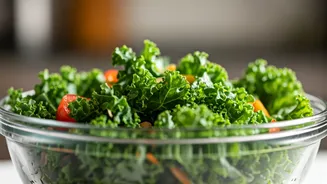







The Kale Dilemma
Kale, a nutritional powerhouse, often gets a bad rap for being too tough and difficult to chew in salads. This textural challenge can make an otherwise
delicious meal feel unpleasant, deterring many from enjoying its health benefits. The primary culprit behind this toughness is the structure of the kale itself. Its fibrous leaves require a little extra attention to break down and become palatable. Without proper preparation, kale can be a chore to eat, overshadowing its wonderful flavor and nutritional value. Understanding why kale can be tough is the first step towards achieving a tender and enjoyable salad experience.
Why Kale Gets Tough
The inherent toughness of kale stems from its cellular structure. Unlike more tender salad greens like lettuce, kale has a robust cellular makeup designed to withstand the elements. These rigid cells contribute to the leaves' firmness, making them resistant to easy chewing. When kale is simply chopped and tossed into a salad without prior preparation, these cells remain intact, resulting in a tough texture. This characteristic, though beneficial for the plant's survival, presents a challenge for salad makers. The fibrous nature of the leaves, while providing structure, can lead to a less-than-pleasant mouthfeel if not addressed before serving. The key is to find ways to relax and soften this structure.
Massage the Kale!
The simplest solution to transforming tough kale into a tender delight is to massage it. This process involves gently kneading the kale leaves with a dressing or a touch of acid, such as lemon juice. The massaging action helps to break down the tough fibers, softening the leaves and making them more pliable. The acid in the dressing assists by beginning the process of breaking down the cell walls. To massage the kale, start by removing the tough stems and chopping the leaves into bite-sized pieces. Add your chosen dressing and, using your hands, gently massage the kale for a minute or two. The kale will begin to wilt slightly, and its texture will soften significantly. This simple step unlocks a world of tender kale salad possibilities.
Adding Acidity for Help
Acidity plays a crucial role in the kale-tenderizing process. Lemon juice, vinegar, or even the acidity found in certain fruits can work wonders on the tough leaves. Acid helps to break down the kale's cell walls, accelerating the softening process and enhancing the flavor. When you massage the kale, incorporating an acidic element in your dressing is highly recommended. This could mean adding a splash of lemon juice to your olive oil and vinegar dressing or using a vinaigrette with a balsamic base. The acid not only tenderizes the kale but also brightens its flavor, complementing the inherent earthiness of the leaves. Experiment with different acidic ingredients to discover your preferred kale salad taste profile.
Choosing Your Dressing
The dressing you select is just as important as the massaging and acidity steps. Choose dressings that have a good amount of oil to coat the kale leaves effectively. Olive oil, avocado oil, and other similar options create a barrier that helps to further soften the leaves. Dressings that include some acid, as mentioned before, work particularly well. However, creamy dressings, such as those made with tahini or yogurt, can also work wonders. Just ensure you massage the kale well, as the creaminess might not tenderize the kale on its own. The dressing's role is to both flavor the kale and assist in the tenderizing process. The ideal dressing will include both an acid element and a carrier like oil, creating the perfect combination for transforming kale.
Experiment with Flavors
Once you've mastered the technique of tenderizing kale, feel free to get creative with your flavors. Kale salads are incredibly versatile and pair well with a wide array of ingredients. Add toasted nuts for crunch, dried cranberries for sweetness, or crumbled feta cheese for a salty tang. Experiment with different types of kale, such as curly kale or lacinato kale (also known as dinosaur kale), to discover your favorite texture and flavor. Don't be afraid to try unique combinations. Try incorporating seasonal fruits and vegetables to keep your salads interesting throughout the year. The key is to find the perfect balance of flavors and textures that suits your individual preferences, ensuring that every kale salad is an absolute delight.