
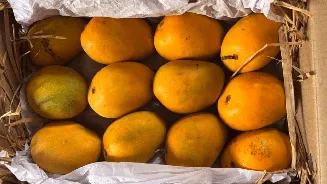
The Mango Season Deception
Mango season, a time of great anticipation for its sweet, aromatic fruits, has unfortunately also ushered in a wave of deceptive practices. Many consumers,
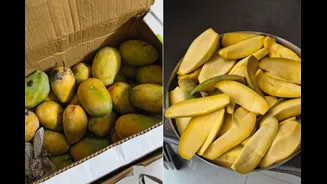
eager to enjoy pure, unadulterated mangoes, are willing to spend extra on fruits marketed as organic or chemical-free. However, one shopper's recent encounter revealed the stark contrast between these claims and reality. She invested a significant amount, Rs 1800, for 10 kilograms of mangoes, assured by the seller that they were of superior quality and completely free from chemical treatments. The exterior presented a picture of ripeness, with a vibrant orange hue that suggested they were ready to be savored. Yet, upon cutting into them, a disappointing truth emerged: the inside of nearly every mango was pale, lacking any flavor whatsoever, rendering them utterly tasteless. This experience, which quickly gained traction online, underscores a prevalent issue of misleading labeling designed to exploit consumer trust and command premium prices.
Confronting the Seller
Following the disappointing discovery, the shopper returned to the seller under the cover of evening, when a crowd had gathered, aiming to address the issue without immediate confrontation. She initiated the interaction by inquiring about the price again, to which the seller reiterated, "Rs 1800 for 10 kg." When she posed a hypothetical about the mangoes turning out to be bad, the seller confidently assured her, "Don't worry, madam. These are chemical-free mangoes directly from the farm. If anything is bad, return it." This promise provided the opening needed. The shopper then presented the unsatisfactory mangoes, stating, "Then take these back. I bought them 5 days ago and they turned out bad." In a telling move, the seller immediately refunded her money without any hesitation, checking, or argument. This swift and unquestioning reimbursement solidified her suspicion, leading her to conclude with certainty that the mangoes had indeed been chemically treated, a practice designed to deceive customers into paying more for falsely advertised "organic" or "chemical-free" produce.
Wider Market Concerns
The incident shared on social media resonated deeply with many individuals, highlighting a pervasive distrust in the purity of food products available today. Comments reflected a general sentiment that authenticity is increasingly rare, with one user noting, "Nothing is pure and natural these days." Another pointed directly to a common method of artificial ripening, stating, "They ripen mangoes with calcium carbide, then call them farm fresh." This practice of using chemicals like calcium carbide to expedite ripening, while making mangoes appear ready for sale, compromises their natural taste and can pose health risks. The discourse also brought to light other consumer strategies for verifying quality, such as the suggestion to buy and taste a single mango first before committing to a larger purchase. The frustration extends beyond mangoes, with some users expressing that the term "organic" has become synonymous with a fraudulent industry, allowing unscrupulous sellers to inflate prices for items that are far from genuinely chemical-free, with less than 5% of products truly meeting such standards.