



Rasmalai's Sweet Origins
Rasmalai, a cherished dessert in India, boasts a captivating history rooted in the culinary traditions of the subcontinent. Its origins trace back to the eastern
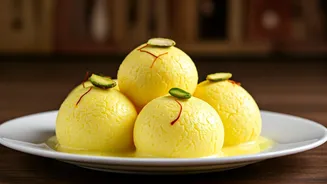
regions, particularly Bengal, where innovative sweet makers first crafted this delightful treat. The name itself speaks volumes, with 'ras' representing the juice or essence and 'malai' signifying cream, perfectly encapsulating the essence of the dessert. Over time, Rasmalai migrated across the country, adapting slightly in each region, showcasing India's diverse culinary tapestry. The popularity of this sweet grew immensely, becoming a staple at festivals, weddings, and family gatherings. Its creamy, milky base, combined with soft, spongy paneer balls, coated in sweet, aromatic milk, is now a beloved treat throughout India and beyond.
Key Ingredients Unveiled
The beauty of Rasmalai lies in its simplicity, with a core set of ingredients that contribute to its extraordinary taste. Fresh paneer, the star ingredient, is created from curdled milk, lending the spongy texture so characteristic of Rasmalai. The milk itself, simmered slowly, infuses the dessert with a rich, creamy consistency. Sugar, of course, provides the sweetness that balances the flavors. Aromatics such as cardamom and saffron impart a delicate, inviting fragrance and flavor profile, elevating the dessert to an elegant experience. Nuts, such as pistachios and almonds, are often added for a touch of texture and visual appeal. These carefully selected ingredients come together to form a balanced, harmonious composition, offering a sensory treat.
Crafting the Paneer Balls
Preparing the paneer balls, or 'chena' as they are sometimes called, is a key step in creating the perfect Rasmalai. Fresh, homemade paneer is essential to obtain the soft, spongy texture required. This paneer is then kneaded until smooth, a critical step to ensure that the final texture of the balls will be perfect. Small portions of the kneaded paneer are formed into smooth, round balls. These balls are then cooked in simmering sugar syrup, allowing them to expand and become fluffy, absorbing the sweetness from the syrup. During cooking, it’s important to avoid overcrowding the pan, as this might affect the shape of the balls. The resulting paneer balls are the core of Rasmalai's delightful characteristics.
Simmering the Milk Base
The milk base, or 'rabri,' is the soul of Rasmalai. Creating this involves slowly simmering milk until it thickens and reduces. The key to success is patience, allowing the milk to gently evaporate, concentrating the flavors and textures. During the simmering process, sugar and aromatic ingredients such as cardamom and saffron are added. The gentle heat allows these flavors to meld beautifully. Some recipes include nuts, imparting a gentle crunch and visual appeal. It is critical to keep stirring the milk gently to prevent the base from sticking to the bottom of the pan. The reduced, creamy milk is then allowed to cool. This step allows the flavors to deepen and the base to reach the right consistency for soaking the paneer balls.
Assembling the Delight
The final assembly of Rasmalai is where all the elements come together to create this dessert. The prepared paneer balls are gently placed in the cooled, thickened milk base. Ensure that the paneer balls are fully submerged in the milk. Allowing the balls to soak allows them to absorb the creamy sweetness, enhancing their taste and texture. This soaking process also ensures that the balls become soft and juicy, enriching the overall experience. The dessert is then chilled for a few hours. This step allows the flavors to blend harmoniously and sets the Rasmalai for serving. Garnish with chopped nuts and a sprinkle of saffron. The result is a perfect harmony of textures and flavors.
Serving and Enjoying
Rasmalai is best served chilled, allowing the flavors to fully develop. When serving, gently remove the soaked paneer balls from the sweet, creamy milk and arrange them in individual bowls or on a serving platter. A generous portion of the sweetened, saffron-infused milk should be ladled over the paneer balls. Garnish with chopped nuts such as pistachios or almonds, adding visual appeal and a pleasant texture. Consider serving Rasmalai after a meal or during celebrations and special events. This dessert is perfect as a standalone treat or paired with other Indian sweets. Enjoy the rich, creamy goodness, savoring each bite of this timeless Indian classic!