





Solar Eruption Unleashed
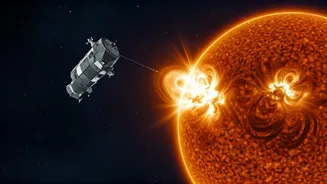
On March 29th, the sun exhibited a dramatic display of power with the emergence of an X-class solar flare. This flare, specifically an X1.2 event, originated
from sunspot region AR3614 and reached its peak intensity at 11:02 UTC. Solar flares are sudden, energetic releases of radiation from the sun's surface, with X-class flares representing the most potent category. These powerful bursts can influence Earth's environment in various ways, including interfering with radio transmissions, GPS navigation, and even impacting electrical grids. The current period marks an active phase in the sun's approximately 11-year cycle, which naturally leads to an uptick in solar phenomena such as flares and coronal mass ejections (CMEs). Although this particular flare did not eject a significant CME directly towards Earth, it serves as a potent reminder of the sun's dynamic nature and the inherent space weather risks that can affect our technological infrastructure and human space exploration endeavors.
Radio Blackout Impact
The powerful X1.2 solar flare unleashed on March 29th resulted in a notable radio blackout, significantly impacting high-frequency (HF) radio communications across affected regions. This event, classified as the most powerful type of solar flare, originated from sunspot region AR3614 and reached its peak at 11:02 UTC. While the immediate concern was the disruption to radio signals, the flare's occurrence just prior to the planned launch of NASA's Artemis 2 mission, set for April 1, 2026, prompted close monitoring. Although the radio blackout itself is not anticipated to pose a direct threat to the Artemis 2 launch, it underscores the unpredictable nature of space weather. The sun is currently in an active phase of its 11-year solar cycle, leading to an increase in solar activity, which means events like these are more frequent. Understanding these solar outbursts is crucial for mission planning and ensuring astronaut safety.
Artemis 2 Connection
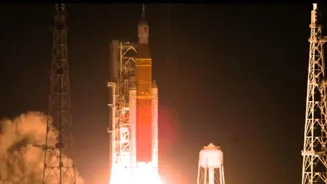
NASA's Artemis 2 mission, poised to be the first crewed journey to the moon since 1972, had its preparations shadowed by a significant solar event. On March 30th, an X1.4 solar flare erupted, causing widespread degradation of high-frequency radio signals across parts of Southeast Asia and Australia. This flare originated from active region 4405, a sunspot group with complex magnetic activity that was rotating into a more direct view of Earth. This positioning meant that any continued activity from this region could have more immediate implications for Earth and the Artemis 2 mission. The flare also released a coronal mass ejection (CME), with the possibility of it being directed towards Earth. While the launch is scheduled for no earlier than April 1, 2026, at 6:24 p.m. EDT, heightened solar activity necessitates careful observation and contingency planning to ensure the safety of the four astronauts on their 10-day lunar voyage.
Geomagnetic Storm Watch
Beyond the immediate radio disruptions, the solar flare event on March 30th also carried the potential for a geomagnetic storm, sparking excitement among aurora enthusiasts. The coronal mass ejection (CME) launched by the flare might deliver a glancing blow to Earth, potentially triggering geomagnetic storm conditions. NOAA's Space Weather Prediction Center issued a Geomagnetic Storm Watch for March 31, anticipating G2 (moderate) storm levels, with possibilities of G1 (minor) storm conditions on March 30 and April 1. Such conditions could lead to auroras visible at lower latitudes than typically observed. If the CME's impact aligns favorably, observers in states like New York, Wisconsin, and Washington could potentially witness auroras, even under G2 conditions. This heightened solar activity, while a spectacle for skywatchers, also emphasizes the need for NASA to closely monitor radio bursts that could affect critical launch operations and early orbital maneuvers for missions like Artemis 2.