





Fuel Costs Hit Kitchens
A growing scarcity and escalating prices of commercial Liquefied Petroleum Gas (LPG) are creating substantial operational hurdles for numerous Indian manufacturing
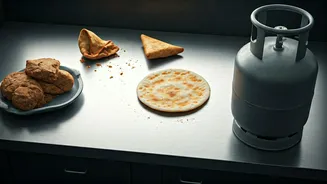
giants, including prominent names like Tata, Parle, and Mahindra & Mahindra. This energy crunch is directly impacting the daily operations within their staff cafeterias, prompting a strategic redesign of meal offerings. The core issue revolves around the significant amount of cooking gas required for certain popular dishes, leading companies to scrutinize and pare back their menus. This situation has escalated to a point where some facilities are operating with LPG reserves that might only last until the end of the week, creating a "hand-to-mouth" scenario. Consequently, items that are notoriously gas-intensive, such as the ubiquitous dosa, the savory samosa, and various non-vegetarian preparations, are gradually being removed from the standard canteen fare. In their stead, simpler, less fuel-dependent options are being introduced, aiming to ensure that employees continue to receive meals while managing the constrained energy supply.
Menu Makeovers Emerge
The impact of the LPG squeeze is clearly visible across a range of large-scale manufacturers. For instance, Parle Products, a leading packaged food company in India, has significantly reduced the variety of food served across its network of 10 company-run factories and 125 third-party production units. The canteen menus, which previously offered a broad selection, have been condensed to just a few select dishes. Traditional staples like chapati, dosa, and fried snacks are being supplanted by more straightforward options, such as sandwiches, which require minimal preparation and thus less gas. This shift affects nearly 4,500 employees who work across these Parle facilities. Mayank Shah, a vice president at Parle Products, noted that employees are generally understanding of the prevailing situation. He also highlighted that the energy constraints are not limited to canteens, with production itself being impacted in plants that rely on fuels like LPG, propane, and butane, potentially leading to the temporary cessation of certain shifts or production lines. The company is actively striving to maintain a balance between overall production output and the operational capabilities of plants that are least affected by these energy challenges.
Adapting to Shortages
In response to the pressing LPG shortage, other major industrial players are also implementing adaptive strategies. Mahindra & Mahindra, for example, has eliminated live food preparation counters and removed fried items from their canteens to curb gas consumption. Similarly, Tata Motors issued a notification to participants attending a supplier event at its Pune facility, informing them that the food menu would be restricted due to the energy situation. Generally, manufacturing plants in India employ between 3,000 to 5,000 workers, encompassing both permanent and contract staff, with canteen management often being outsourced to external catering vendors. Kamal Nandi, head of the appliances business at Godrej Enterprises, remarked that the LPG shortage has severely hampered essential industrial processes like brazing, which is critical in sheet metal operations. He described the situation as precarious, noting that their LPG supplies might only last until Saturday, precisely when demand for cooling appliances is at its peak. To ensure continued meal provision for their workforce, the company has reinstated the use of traditional firewood stoves in some of their canteens.
Innovative Solutions Deployed
To navigate the ongoing challenges posed by the LPG deficit, factories are actively exploring and implementing alternative cooking solutions. Among these innovations are the increased adoption of electric appliances, including induction cooktops, electric rice cookers, and electric roti makers, which offer a more sustainable and reliable energy source. In certain locations, the traditional 'chulha' or firewood stove has also made a comeback as a viable cooking method. GK Sharma, the India region chairperson for French auto parts manufacturer OP Mobility, indicated that the company has been investigating alternative energy sources such as electricity and solar power. Despite these efforts, LPG shortages continue to affect specific operational areas, particularly in processes like paint shops. He characterized the current period as "a tough phase" to navigate. However, not all manufacturing facilities have experienced such disruptions, primarily because many had already transitioned to alternative energy sources. Daimler India Commercial Vehicles, the producer of trucks and buses under the Bharat Benz brand, has maintained normal canteen operations. This resilience is attributed to their plant's kitchen running entirely on electricity, a result of the facility's complete switch to solar power, which effectively insulates them from the current LPG supply issues. The government's move to prioritize LPG for households amidst the deepening energy crisis, exacerbated by the Middle East conflict, is also a significant factor. Oil marketing companies have been directed to cap commercial LPG supplies at 20% of average monthly usage, with refineries instructed to maximize LPG production by repurposing propane and butane streams. Manufacturing companies are now assured of receiving up to 80% of their average supply from the preceding six months.