



Water from Thin Air
The global crisis of water scarcity affects over 2.2 billion individuals, according to vital statistics from the UN and WHO. This lack of accessible safe
drinking water creates immense hardship, forcing people in parched deserts and water-deprived urban areas to expend valuable time and energy collecting water, often from distant sources. Children miss educational opportunities, and agricultural productivity suffers immensely. However, a groundbreaking solution is emerging from the labs at MIT, spearheaded by Professor Evelyn N. Wang. Her pioneering work focuses on an ingenious method to extract drinkable water directly from the ambient air, presenting a tangible hope for communities battling constant drought and unreliable water infrastructure. This technology bypasses traditional water sources, offering a decentralized and potentially life-saving alternative.
Professor Wang's Vision
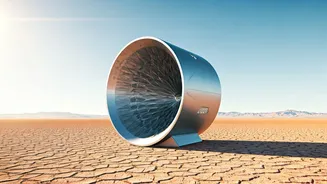
Dr. Evelyn N. Wang, a distinguished mechanical engineer and Ford Professor at MIT, is at the forefront of atmospheric water harvesting research. Her team's innovative devices are designed to capture the invisible moisture present in the air and transform it into liquid water. The core of this technology lies in the use of specialized porous materials that exhibit a remarkable ability to absorb water vapor, particularly during the cooler, more humid conditions of the night. As daylight arrives and the sun's warmth intensifies, these materials release the captured moisture. The released vapor then condenses into pure, potable water. Crucially, these devices are entirely solar-powered, eliminating the need for external electricity, which makes them an exceptionally suitable and sustainable solution for arid regions that often contend with inconsistent power supplies and a severe lack of water.
Academic and Career Path
Dr. Wang's exceptional expertise in heat transfer, a discipline fundamental to her water harvesting innovations, was honed through her rigorous academic journey. She earned her Bachelor of Science in Mechanical Engineering from MIT between 1996 and 2000. Subsequently, she pursued her Master of Science in 2001 and completed her Ph.D. in 2006, both from Stanford University. Following her doctoral studies, she conducted postdoctoral research at the renowned Bell Laboratories. Her illustrious career at MIT began in 2007 as an Assistant Professor. She steadily advanced to Associate Professor in 2011 and achieved the status of Full Professor in 2017. Her leadership was further recognized when she headed the Department of Mechanical Engineering from 2018 to 2022. More recently, she held a significant role leading the Advanced Research Projects Agency-Energy (ARPA-E) until early 2025, before assuming the crucial position of MIT's Vice President for Energy and Climate in April 2025, as reported by India Today.
Esteemed Recognition
The profound impact and ingenuity of Dr. Evelyn N. Wang's water harvesting technology have garnered significant national and international acclaim. Notably, both Scientific American magazine and the World Economic Forum recognized her arid-climate water technology as one of the 'Top 10 Emerging Technologies of 2017,' highlighting its potential to revolutionize water access in drought-stricken areas. The Device Research Lab at MIT, under Dr. Wang's guidance, continues to refine and advance these prototypes. Recent developments, as detailed in a 2020 MIT News article, showcase solar-powered systems capable of extracting drinkable water even from what are considered 'dry' atmospheric conditions, underscoring the ongoing progress and potential of this vital research.