



Visible Split Ends
Chemical hair colouring processes can significantly weaken the structural integrity of your hair shaft, making it more susceptible to developing split
ends. If you find yourself noticing an increased prevalence of frayed or visibly divided hair tips shortly after a colouring session, this is a strong indicator that the treatment has compromised your hair's strength. This phenomenon occurs because the harsh chemicals can disrupt the protective outer layer, the cuticle, leading to a breakdown of the hair fibre from the tip downwards, making it appear unkempt and unhealthy.
Loss of Natural Shine
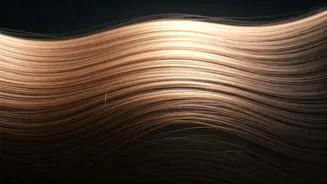
Healthy hair boasts a smooth, intact cuticle that efficiently reflects light, bestowing a natural lustre and radiance. When hair undergoes chemical colouring, especially with aggressive formulations, the cuticle can become roughened or lifted. This compromised surface loses its ability to reflect light effectively, resulting in hair that appears dull, lifeless, and devoid of its former vibrancy. The loss of shine is a clear visual cue that the hair's surface has been altered negatively by the colouring process.
Dryness and Brittleness
Many hair dyes, particularly those formulated with potent chemicals like ammonia and hydrogen peroxide, have a tendency to strip away the hair's natural oils. These essential lipids play a crucial role in keeping hair moisturized and supple. When they are removed, hair becomes excessively dry, feels brittle to the touch, and loses its elasticity. This state makes the hair much more prone to snapping and breaking under everyday stress, a direct consequence of the stripping action of certain colouring agents.
Increased Hair Fall
When the hair shaft and follicles are weakened by chemical treatments inherent in hair colouring, the hair becomes significantly more vulnerable to breakage and shedding. Experiencing a noticeable increase in the amount of hair you find on your brush, in the shower drain, or on your clothes following a colouring service is a critical warning sign. This excessive hair fall suggests that the chemical exposure has compromised the hair's anchoring to the scalp and its overall structural resilience.
Pronounced Frizziness
Frizz is often a consequence of a damaged hair cuticle. In healthy hair, the cuticle lies flat, creating a smooth surface that helps retain moisture. However, chemical colouring can lift and roughen this outer layer, creating an uneven surface. This disruption allows precious moisture to escape from the hair shaft, while simultaneously permitting external humidity to penetrate, leading to the hair swelling unevenly and resulting in that characteristic frizzy appearance.
Scalp Discomfort and Irritation
Some individuals may experience an adverse reaction to the chemicals present in hair dyes, manifesting as itching, redness, or a burning sensation on the scalp. This reaction can be indicative of either an allergic response to specific ingredients or a direct chemical irritation caused by harsh components. A sensitive or compromised scalp is a clear signal that the colouring process has had a detrimental effect, potentially disrupting the scalp's natural barrier function.
Rapid Colour Fading
If your vibrant hair colour seems to wash out much faster than anticipated, it could be a sign that your hair shaft has become overly porous due to damage. A damaged cuticle structure creates openings within the hair shaft, essentially making it more permeable. This increased porosity allows the colour molecules, which are meant to be locked within the hair, to escape more readily with each wash, leading to premature fading and a loss of the desired hue.
Altered Hair Texture
Significant damage to the hair's structure, often a result of intensive chemical colouring, can lead to a noticeable change in its natural feel and texture. Instead of being soft and smooth, hair might start to feel rough, coarse, or even somewhat gummy. This alteration in texture is a direct physical manifestation of the damage to the protein bonds and cuticle layers within the hair strand.
Styling Difficulties
Hair that has been compromised by colouring treatments often becomes less cooperative and more difficult to manage. This is because the damage affects the hair's elasticity, strength, and smoothness, making it prone to tangling and breakage. As a result, achieving desired hairstyles can become a challenge, with hair often resisting styling attempts or becoming unruly due to its weakened state and compromised structure.