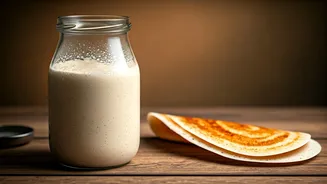









Shelf Life Secrets
For the best quality and safety, homemade dosa batter should ideally be consumed within 3 to 4 days of preparation. While refrigeration helps slow down
bacterial growth, extending this period significantly can compromise both the taste and edibility of your batter. Over-fermentation beyond this timeframe can lead to a decline in desirable qualities and, more importantly, introduce health risks. It's a delicate balance between convenience and consuming food that is at its peak freshness and safety. Always prioritize using your batter within this recommended window to ensure a delightful and safe culinary experience.
Signs of Spoilage
As dosa batter ferments, a natural process occurs, but over-fermentation signals a point where it becomes unsafe. Watch out for distinct indicators: a strong, unpleasant odor that deviates from the usual fermented tang is a major red flag. Similarly, if the taste has become excessively sour or acrid, it's best to discard it. Another critical visual cue is the appearance of a grey or even blackish layer on the surface of the batter; this often signifies mold or bacterial contamination. These are not merely aesthetic issues but direct warnings that the batter has passed its prime and poses a risk to your digestive health.
Health Risks Unveiled
Consuming dosa batter that has gone bad can lead to unpleasant and potentially severe health consequences, commonly manifesting as food poisoning. Symptoms can include nausea, vomiting, debilitating diarrhea, and significant stomach pain. Certain demographics are particularly vulnerable; young children and the elderly, due to their less robust immune systems, face a higher risk of complications. In severe cases, these symptoms can lead to dehydration, requiring medical attention. It's imperative to recognize that even seemingly minor changes in smell or appearance can indicate the presence of harmful microorganisms.
Fridge Isn't Foolproof
While keeping dosa batter in the refrigerator is a standard practice to extend its usability, it's crucial to understand that the cold environment doesn't grant indefinite safety. Exposure to air, even within the confines of your fridge, can still foster the growth of unwanted fungi and molds. These microorganisms might not always be overtly visible, but their presence can still negatively impact your digestive system if the batter is consumed. Therefore, relying solely on refrigeration without considering the time elapsed since preparation can be misleading regarding the batter's safety.
Best Practices for Use
For optimal results, allow your freshly prepared dosa batter to ferment for a period of 8 to 12 hours. This crucial fermentation stage not only contributes to the characteristic texture and flavor of dosas but also cultivates beneficial probiotics that can aid digestion. When handling and storing the batter, always use clean spoons to prevent cross-contamination, and opt for steel or glass containers instead of plastic ones, as these materials are generally considered safer for food storage and less prone to leaching.
Freshness Reigns Supreme
The most reliable approach to enjoying safe and delicious dosas is to prepare your batter fresh every 2 to 3 days. While storing batter can be convenient, prioritizing frequent preparation ensures you are always working with ingredients at their peak. If, at any point, you observe an unusual odor, a strange texture, or any visual signs of spoilage, it's always wisest to err on the side of caution and discard the batter. Your health should always take precedence over minimizing food waste. When in doubt, throw it out.