








BNP Declares Landslide Victory
In a significant political shift, the Bangladesh Nationalist Party (BNP) has announced its triumph in the 2026 parliamentary elections, asserting that
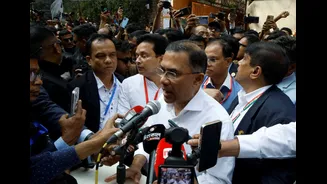
it has secured a commanding majority. Reports indicate the party has clinched more than 200 seats in the 300-member Jatiya Sangsad, the national parliament. This electoral success positions the BNP to form the upcoming government. The party chairman, Tarique Rahman, is reported to have achieved substantial wins in the Bogura-6 and Dhaka-17 constituencies. The Election Commission of Bangladesh has officially recorded a nationwide voter turnout of 60.69 percent for this 13th parliamentary election, reflecting a considerable engagement from the electorate. The BNP and its affiliated parties have collectively registered a dominant performance, a victory that has been widely anticipated given the political landscape leading up to the polls. The declaration of victory by the BNP Media Cell on X underscored their readiness to assume governmental responsibilities.
Election Context and Key Contenders
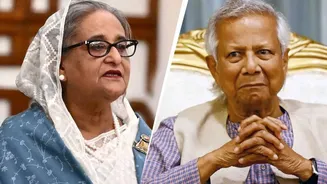
The 2026 elections in Bangladesh were held under unique circumstances, occurring approximately 18 months after the removal of former Prime Minister Sheikh Hasina, a consequence of widespread student-led demonstrations in July 2024. The electoral contest largely boiled down to a direct competition between the BNP and its former associate, Jamaat-e-Islami. Notably, the Awami League, the party of the ousted premier Sheikh Hasina, was precluded from participating in the elections due to a ban. This situation created a distinct dynamic, focusing the national attention on the rivalry between the BNP and Jamaat-e-Islami. The US Ambassador to Bangladesh, Brent T. Christensen, extended congratulations to the nation for a successful election process and specifically to Tarique Rahman and the BNP for their notable victory, expressing the United States' eagerness to collaborate on shared objectives of prosperity and security.
Jamat-e-Islami's Stance
While the Bangladesh Nationalist Party (BNP) confidently declared victory and prepared to form the next government, Jamaat-e-Islami, a significant political entity and former ally of the BNP, expressed dissatisfaction with the election results. This divergence in sentiment highlights the complex and potentially contested nature of the electoral outcome. Although the BNP has claimed a substantial majority, Jamaat-e-Islami's reservations suggest that the final tally and the interpretation of the results might be subject to further scrutiny or political maneuvering. The absence of the Awami League from the electoral arena had already reshaped the traditional political landscape, and Jamaat-e-Islami's reaction adds another layer of intrigue to the post-election scenario. Their stance indicates that the political consolidation for the newly elected government may not be entirely straightforward, even with the claimed majority.