




Unveiling the Pink Moon
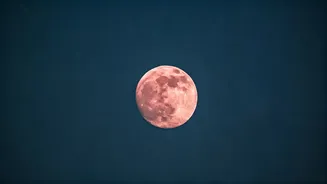
The April full moon, affectionately termed the Pink Moon, signals the official arrival of spring in the Northern Hemisphere. Contrary to its evocative
name, this celestial event does not imbue the moon with a rosy hue. Instead, the moniker is derived from the vibrant blooming of the creeping phlox (Phlox subulata), a native North American wildflower renowned for its intense pink blossoms that herald the warmer season. Historically, this moon has been recognized by various cultures, often linked to themes of renewal and new beginnings. Indigenous communities, for instance, might have referred to it as the Breaking Ice Moon or Budding Moon, reflecting the profound seasonal shifts. Similarly, Anglo-Saxon traditions sometimes called it the Egg Moon, a symbol of fertility and the burgeoning life of spring.
Key Dates for 2026
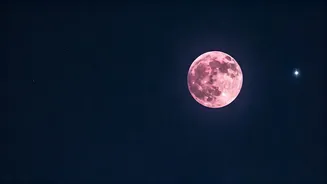
Mark your calendars for April 1, 2026, as this is when the Pink Moon will achieve its zenith of illumination at 10:11 p.m. EDT. For observers in India, this translates to the early hours of April 2. However, the moon's luminous presence will be captivating for a few nights surrounding this peak; it will appear almost fully illuminated on both March 31 and April 2. A particularly noteworthy aspect of the 2026 Pink Moon is its close conjunction with Spica, the most luminous star within the Virgo constellation. On April 1, the full moon will be in striking proximity to Spica, creating a visually stunning celestial pairing. The following evening, the moon, then in its waning gibbous phase, will drift even nearer to Spica, offering another compelling opportunity for skygazers.
Optimal Viewing Strategies
To best appreciate the April full moon of 2026, timing is key. Experts suggest observing the moon shortly after it rises above the horizon, typically around sunset. This low-altitude perspective often enhances the moon's apparent size and can lend it a warmer, golden hue due to atmospheric refraction and optical illusions. For an enhanced experience, seek out a location far from urban light pollution, ensuring a dark sky canvas. Clear atmospheric conditions are paramount for visibility. While the Pink Moon is easily visible to the naked eye, using binoculars can reveal finer details and add depth to your observation, especially when it's near celestial companions like Spica. Imagine the scene: clear spring evenings, perhaps with blooming landscapes below, mirroring the seasonal symbolism of the Pink Moon itself.
Cultural and Calendar Significance
The Pink Moon holds significant meaning beyond its astronomical timing. In the Jewish tradition, the April full moon in 2026 aligns with the commencement of Passover (Pesach), beginning at sunset on April 1. For Christians, this lunar event plays a crucial role in determining the date of Easter. The calculation dictates that Easter Sunday is celebrated on the first Sunday that follows the first full moon occurring after the vernal equinox. Given that the spring equinox falls on March 20 and the Pink Moon graces the sky on April 1, Easter in 2026 will be observed on April 5. This deep-rooted connection highlights the enduring influence of lunar cycles on major religious observances across diverse cultures worldwide.
Upcoming Lunar Events
Following the splendor of April's Pink Moon, the lunar calendar continues its rhythm with the arrival of the Flower Moon on May 1, 2026. May is set to be a particularly exciting month for moon gazers as it will host two full moons. The second full moon of May, occurring on May 31, is designated as a Blue Moon. This phenomenon, where two full moons fall within a single calendar month, is a relatively infrequent occurrence and adds another layer of celestial wonder to the year's progression.