






A Culinary Revolution
The Indian culinary landscape is currently experiencing a dynamic transformation with the arrival of Korean street food. Traditionally, Indian streets
were dominated by momos and chaat stalls, offering familiar flavors to locals. However, this is changing as Korean street food, with its unique taste profiles and cooking styles, captures the attention of food lovers. The increasing visibility of Korean food carts and stalls is evidence of a growing appetite for these exotic tastes. This trend signifies more than just a passing phase; it illustrates a larger movement toward a broader and more global palate, reflecting the evolving preferences of Indian consumers.
Kimchi, Tteokbokki, More
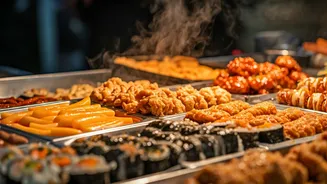
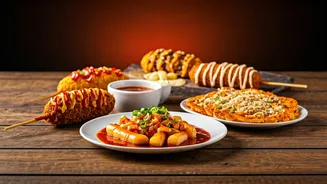
At the forefront of the Korean food invasion are dishes loaded with bold flavors and varied textures. Kimchi, a spicy fermented cabbage, is rapidly becoming a staple, beloved for its distinctive tang and health benefits. Tteokbokki, chewy rice cakes cooked in a fiery gochujang sauce, presents a combination of sweet, savory, and spicy sensations that Indian palates adore. Alongside these signature dishes, Korean street food offers a spectrum of other options, including Korean fried chicken with its perfectly crispy exterior and diverse sauce options, and kimbap, a flavorful seaweed roll packed with rice, vegetables, and meat. This variety guarantees that there's something for every taste, driving the increasing popularity of these dishes among Indian food enthusiasts.
Why This Craze?
Several factors contribute to the rising popularity of Korean street food in India. First, the influence of K-dramas, K-pop, and other Korean cultural exports has heightened curiosity about the nation's cuisine. Secondly, the adventurous spirit of Indian food lovers, always ready to explore new flavors and gastronomic experiences, plays a significant role. Finally, the affordability and accessibility of street food make it particularly appealing to a broad demographic. The combination of these factors has enabled Korean street food to enter the mainstream, offering a fresh and exciting alternative to conventional Indian snacks and meals. This convergence of cultural influence, consumer curiosity, and accessible pricing has led to a noticeable shift in dietary habits, reflecting a new chapter in the history of Indian street food.
Adapting to India
Korean street food in India is not merely a replication of original dishes; it often undergoes modifications to suit local tastes and preferences. For example, some vendors modify the level of spiciness in their dishes to accommodate the Indian tolerance for heat. Vegetarian options are also growing, providing choices that cater to the sizable vegetarian population. Moreover, the integration of Indian ingredients and flavors with Korean cooking techniques presents a new fusion cuisine. This adaptation, which embraces a range of cultural contexts, results in a more inclusive culinary encounter. Such modifications, while staying true to the basic flavors of Korean street food, establish relevance and acceptance, confirming that it is here to stay.
The Future Trend
As Korean street food continues to grow in popularity, its long-term impact on India's culinary scene appears significant. The presence of Korean food stalls not only diversifies street food options but also creates new business possibilities for local entrepreneurs. This trend could motivate the emergence of fusion eateries, integrating Korean dishes with regional Indian cuisines, generating innovative culinary experiences. The increasing interest in Korean cuisine may also lead to broader changes in the food supply chain, including the importation of authentic ingredients and spices. As this trend evolves, it promises a vibrant and constantly changing food landscape, reflecting the diverse and evolving tastes of the Indian population.