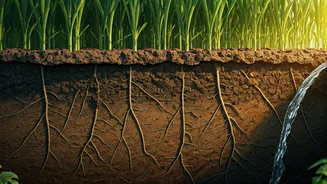




The Ground Beneath
At the heart of successful contemporary farming lies the health of the soil. It's the fundamental determinant of how stable your crop yields will be, how efficiently
you use vital resources like fertilizers and water, and how well your plants can weather the vagaries of a changing climate. Everything crucial for a bountiful harvest originates from the complex ecosystem thriving below the surface. A robust soil system cultivates stronger root development and fosters a vibrant community of beneficial microorganisms. This synergy empowers crops to withstand environmental stressors such as extreme heat, unpredictable rainfall patterns, and increased pest challenges far more effectively than relying solely on external agricultural inputs can achieve. When your soil is in good condition, it provides a natural foundation for resilient and productive agriculture.
Stronger Root Systems
The quality of your soil directly influences the strength and reach of your crop's root network. When soil possesses good structure, meaning it's well-aerated and not compacted, roots are able to penetrate deeper and spread wider into the earth. This enhanced root architecture grants plants superior access to available water reserves and essential soil nutrients that might otherwise be out of reach. Consequently, crops are better equipped to remain vigorous and productive, even during periods of significant environmental stress or water scarcity. The ability of roots to explore a larger volume of soil is critical for drawing the necessary sustenance and moisture to keep the plants thriving, thereby contributing to overall crop health and resilience throughout the growing season.
Natural Nutrient Cycling
A lively and active soil biology is instrumental in the continuous breakdown of organic matter, a process that ensures nutrients are perpetually recycled and remain in a form that plants can readily absorb. This inherent biological activity significantly reduces the farm's reliance on frequent and often substantial applications of external chemical fertilizers. By fostering a rich microbial population, the soil itself acts as a natural nutrient provider, releasing essential elements as organic materials decompose. This reduces the need for costly synthetic inputs, leading to a more circular and sustainable nutrient management system that benefits both the crop and the farmer's bottom line, minimizing the environmental impact and the financial burden of fertilization.
Reduced Farming Expenses
When the soil functions optimally, it naturally supports plant growth with fewer external interventions. This enhanced efficiency translates directly into lower recurring expenses for farmers. The necessity for costly fertilizers, pesticides, and other corrective treatments diminishes as the soil's inherent fertility and resilience take over. A well-functioning soil ecosystem minimizes the need for costly chemical inputs, thereby reducing the overall operational expenditure. This shift towards a more self-sufficient soil system not only improves profitability but also contributes to more environmentally sound agricultural practices by reducing the reliance on synthetic chemicals and their associated costs.
Efficient Water Management
Healthy soil possesses an extraordinary capacity to retain moisture, much like a well-functioning sponge, and it releases this water gradually to plant roots as needed. This characteristic significantly curtails the frequency of irrigation, leading to more efficient water usage and conservation. Crops are better equipped to withstand dry spells and periods of low rainfall, as the soil acts as a natural reservoir, providing a consistent moisture supply. This improved water-holding capacity is crucial, especially in regions prone to drought or inconsistent precipitation, ensuring crop survival and sustained growth without excessive reliance on irrigation systems, which saves water and energy resources.
Consistent Yield Improvement
Rather than experiencing dramatic fluctuations between high yields in ideal conditions and disappointing harvests during challenging periods, robust soil health promotes a more stable and predictable output. Good soil helps crops maintain consistent productivity across different seasons, even when faced with unpredictable rainfall patterns or fluctuating temperatures. This stability is a significant advantage for farmers, providing greater certainty in their harvest volumes and income. The resilient nature of crops grown in healthy soil ensures that farmers can rely on a steady supply, mitigating the risks associated with extreme weather events and contributing to long-term agricultural security and economic stability.
Minimizing Hidden Losses
In many agricultural settings, poor soil conditions can lead to a subtle but significant reduction in nutrient uptake by crops, often without any visible signs of distress above ground. This leads to what is often termed a 'silent yield gap,' where the potential harvest is not fully realized due to limitations in the soil's ability to deliver nutrients. By actively improving soil health, farmers can effectively close this overlooked gap, ensuring that crops are able to absorb and utilize nutrients to their fullest potential. This not only maximizes the potential yield from existing land but also ensures that the resources invested in seeds and initial planting are fully leveraged for optimal growth and productivity.
Enhanced Crop Quality
The balanced conditions provided by healthy soil play a pivotal role in improving the overall quality of the harvested crops. Well-nourished plants grown in nutrient-rich soil tend to develop better grain filling, achieve more uniform sizing, and exhibit improved nutritional value. These enhanced characteristics can significantly strengthen market acceptance and potentially lead to better pricing for the farmer's produce. Consistent quality ensures that crops meet consumer and market demands, leading to greater economic returns and building a reputation for reliable, high-quality agricultural products. This attention to quality, stemming directly from soil health, is a vital component of long-term farming success.
Foundation for Sustainability
Ultimately, the long-term viability and success of any farming operation depend critically on the health of its soil. Soil health is now recognized as the indispensable foundation for truly sustainable agricultural systems. Without adequate attention to soil vitality, productivity is likely to decline over time, leading to increased costs and reduced efficiency. Conversely, with a proactive approach to nurturing the soil, farms can remain resilient in the face of environmental and economic challenges, ensuring sustained productivity and financial stability for generations to come. It represents a commitment to an enduring and prosperous agricultural future.