
Matcha's Global Appeal
Matcha, finely ground green tea powder, has garnered immense popularity worldwide, not just for its rich flavor but also for its health advantages. It
has roots in Japanese tea ceremonies, but its appeal has expanded significantly, finding a place in various culinary applications globally. Its vibrant color and unique taste, which is both slightly bitter and naturally sweet, have made it a favorite in lattes, smoothies, and baked goods. Matcha's health benefits, including high levels of antioxidants and potential cognitive enhancements, have driven its popularity as a key ingredient. The global embrace of matcha signifies a broader shift toward health-conscious eating and the appreciation of cultural influences in food.
Street Food Innovation
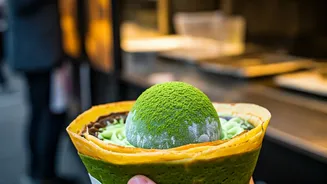
The incorporation of matcha into street food represents a fascinating evolution of culinary trends, where global tastes meet local flavors. Street vendors are continuously innovating to attract customers, and matcha has emerged as a perfect ingredient for unique offerings. From matcha-infused teas served in traditional kulhads to matcha-flavored sweets and snacks, the possibilities are diverse. This creative integration not only offers a new gastronomic experience but also adds an element of cultural fusion. These innovations showcase how street food adapts to incorporate elements from different cultures, offering a familiar yet exciting taste of modern culinary trends. This also shows the entrepreneurial spirit among street vendors eager to meet changing consumer preferences.
Cultural Fusion Highlighted
The merging of matcha and street food vividly reflects the globalization of tastes and the fusion of different culinary traditions. Matcha, originating from Japanese tea culture, finds a new identity when combined with the diverse flavors and preparation techniques of street food from various regions. This cross-cultural exchange showcases how food can act as a bridge, bringing different cultures together through shared culinary experiences. The use of traditional vessels like kulhads to serve matcha beverages exemplifies the effort to combine local customs with global trends. The end result is not just the creation of novel dishes but also the promotion of a dialogue about cultural exchange and the evolving nature of food consumption.
Health Benefits Explored
Matcha is well-regarded for its significant health benefits, making it an appealing ingredient for health-conscious consumers. Rich in antioxidants, particularly catechins, matcha can help fight cell damage and reduce the risk of chronic diseases. The unique processing of matcha, where the entire tea leaf is consumed, allows for the intake of a high concentration of nutrients. Studies suggest that matcha may boost energy levels, improve focus, and promote a sense of calm due to its L-theanine content. This combination of effects makes matcha a versatile option for both refreshment and well-being. Adding matcha to street food offerings is a clever marketing strategy and a way to introduce these benefits to a wider audience, catering to consumers who prioritize health.
Consumer Reactions Noted
The integration of matcha into street food has created excitement and curiosity among consumers. Many people welcome the innovation, appreciating the novel flavor combinations and the health aspects of matcha. The availability of matcha-infused treats adds to the variety of street food options, and the trend has gained significant traction online. People express interest and curiosity through social media, sharing their experiences and recommendations, and therefore playing a crucial role in promoting and spreading these new culinary experiences. Overall, the consumer response indicates a positive trend and the growing acceptance of such fusions, proving that global culinary elements can mix nicely with local culture.
Vendors' Strategies
Street food vendors have adopted strategic approaches to integrate matcha into their menus. Some vendors start small, experimenting with one or two items before expanding the range based on customer response. Presentation matters; the vibrant green color of matcha makes it visually appealing, and vendors leverage this to make their products stand out. They often combine matcha with familiar flavors or traditional street food staples to make new items more approachable. Marketing also plays a crucial role. Vendors frequently use social media platforms to promote their matcha creations, sharing images, and videos. Vendors are effectively creating demand for their products by embracing culinary creativity, which helps them meet customer needs and ensure business growth.
Future Trends Predicted
The future of matcha in street food is bright, promising even more creative integration and flavor combinations. Expect to see greater diversification, with vendors exploring matcha in savory dishes, desserts, and beverages. The expansion of matcha-infused street food could lead to further fusion, integrating matcha with flavors from different regions. Additionally, as consumers become more aware of the health benefits of matcha, vendors may focus more on providing health-conscious alternatives. The trend is expected to grow, boosted by social media and word-of-mouth marketing, making matcha a mainstream ingredient in street food across different markets. Innovation and consumer demand will play crucial roles in shaping the future of this trend, making the journey exciting.